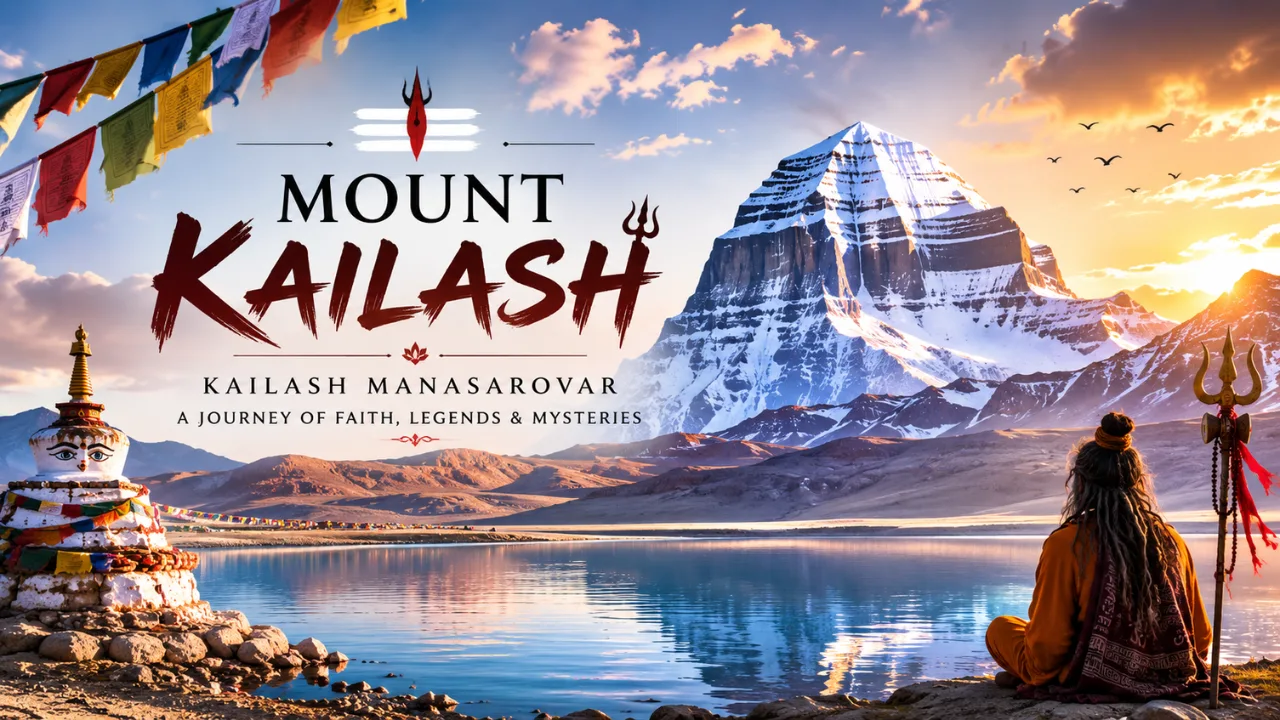
Mount Kailash is beautiful but mysterious also.
Mount Kailash is one of the world’s most sacred mountains. Hindus believe it to be the home of Shiva. Buddhists see it as the center of the universe For Jains it is where the first Tirthankara, Rishabhdev, attained liberation, while followers of the Bon religion consider it their holiest mountain.
But the mysteries connected to this mountain give it a special place. So let’s explore the 15 unsolved mysteries and secrets of Mount Kailash.
The Mysteries of Kailash Parvat
Why Has Nobody Ever Climbed Mount Kailash?
It is one of the biggest mysteries of the mountain. Mount Kailash isn’t the highest peak in the world, yet its summit is untouched.
As per Hindu tradition, the mountain is the divine home of Lord Shiva, and climbing over it is considered disrespectful. In Buddhism and Jainism also it is having great importance.
There have been a few attempts over the years, but none resulted in a climb. Some climbers even reported feeling an unexplained fear or losing the desire to continue. Whether it’s because of the spiritual significance of the mountain or the deep respect for it, the mystery is still unsolved.
Is Mount Kailash Really a Perfect Pyramid?
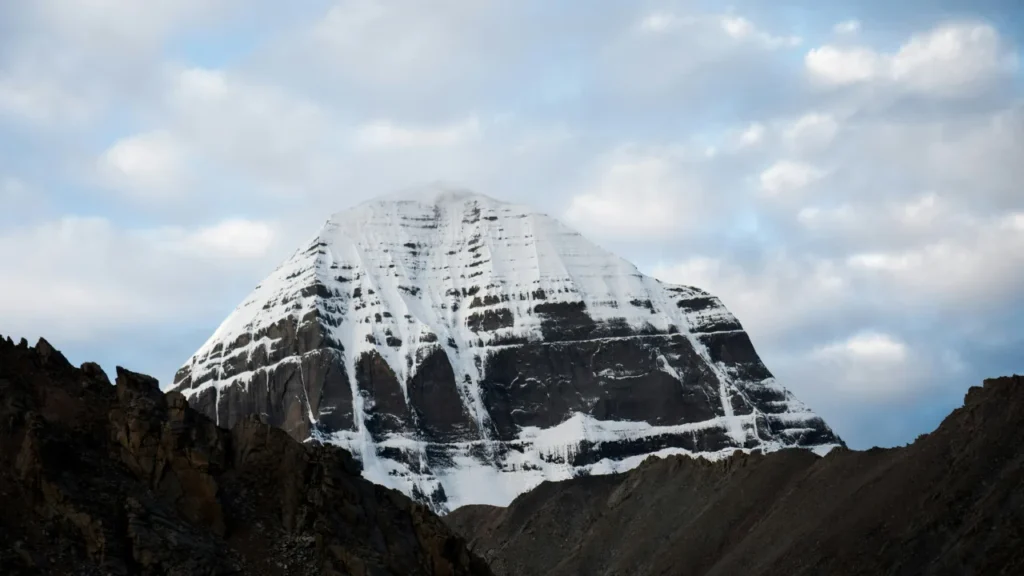
Many people notice that Mount Kailash looks surprisingly symmetrical.
When seen from multiple angles, it looks like a big pyramid whose four almost identical sides point towards the four directions. Some researchers believe that this shape was formed by natural geological processes over millions of years.
It is also believed that it could be an ancient man-made structure hidden beneath rock and ice. However, no scientific evidence supports this claim.
Does Time Really Move Faster Near Mount Kailash?
One of the most famous legends says people near Mount Kailash experience rapid aging. Some visitors said their hair and nails grew much faster during the journey.
Scientifically, there is no evidence that time moves differently around Mount Kailash. Even so, this story keeps drawing in curious travelers.
Is Mount Kailash the Center of the World?
In ancient traditions, Mount Kailash is considered as the “Axis Mundi“—the point where heaven and earth meet.
Interestingly, some researchers have noted mathematical connections between this mountain and ancient sites across the world, although these claims are still heavily disputed.
It is seen as the center of the spiritual existence; many visitors experience unusual calm in the area.
Why Do People Hear the Sound of “Om”?
Among the most fascinating tales about Mount Kailash is that of a mysterious sound some pilgrims claim to hear during their trek. Many visitors describe a deep, humming noise similar to the sacred ‘Om’ mantra, while others say it resembles the sound of a damru.
However, there is no scientific belief again on this concept. But for devotees, it is because of the presence of the divine in the area.
Does Mount Kailash Show the Face of Lord Shiva?
Many devotees claimed that they have seen the face of Lord Shiva naturally formed on one side of Mount Kailash.
Depending on the sunlight, snow, and viewing angle, rock formations can look like human faces. Scientists call this pareidolia—the human tendency to see familiar shapes in natural things.
But for believers, it is the reminder that the mountain belongs to Shiva.
Is Mount Kailash a Gateway to Higher Dimensions?
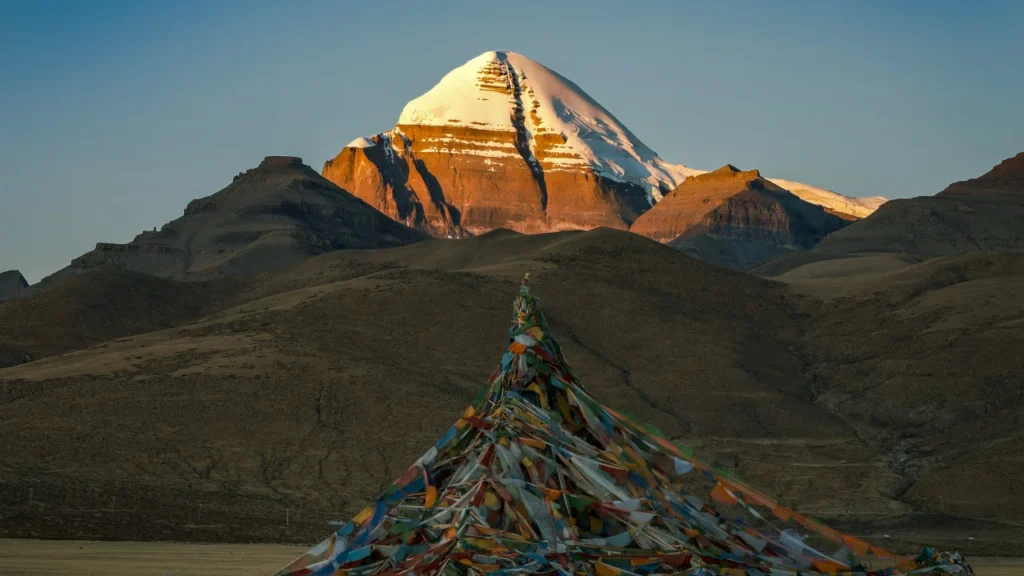
Some yogis and sages consider Mount Kailash to be a gateway to higher realms, where enlightened beings exist beyond the reach of human consciousness.
Popular stories claim that Mount Kailash emits strange electromagnetic waves and radiation. Many believe Kailash to be a site of great transformation also.
Mystery of Kailash Parikrama
Walking around Mount Kailash, known as the Kora or Parikrama, is considered one of the holiest pilgrimages in the world. The full journey is about 52 kilometers.
Many devotees believe that completing one parikrama washes away sins, while doing 108 parikramas can grant liberation from the cycle of birth and death.
Why Do Birds Avoid Flying Over Mount Kailash?
Another popular mystery is the belief that birds avoid flying directly over the mountain. As per Hindu beliefs, no living creature dares to cross its highest point out of respect to the divine.
If seen from a scientific point of view, the extreme altitude, freezing temperatures, thin air, and lack of food can naturally reduce bird activity in the region. Still, this belief is popular and adds yet another layer to the mystery of the mountain.
Lake Manasarovar and Lake Rakshastal
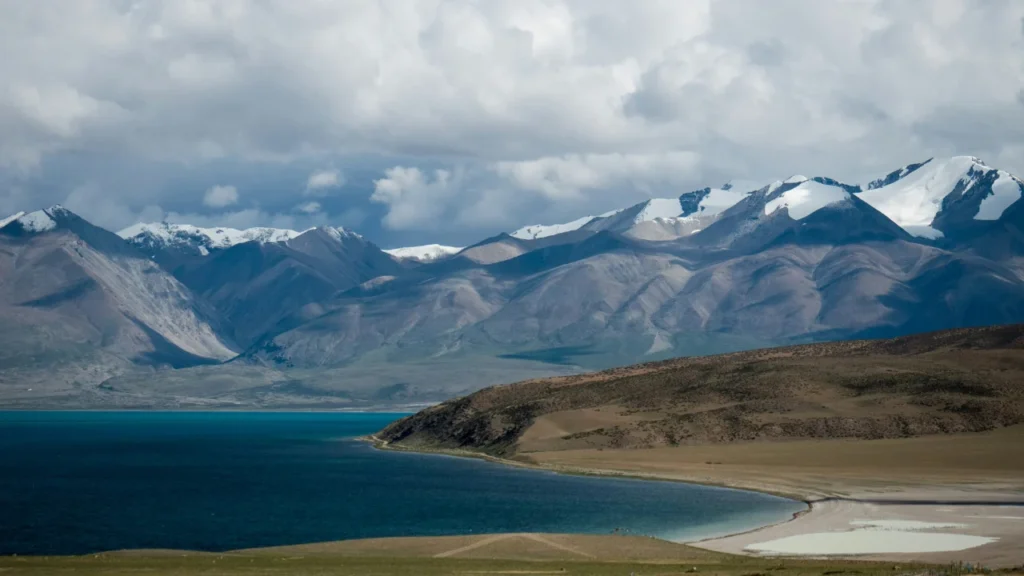
Near Mount Kailash, there are two neighboring lakes—Manasarovar Lake and Rakshastal.
Lake Manasarovar has clear blue water and is considered one of the holiest lakes in the world. Right next to this is Rakshastal Lake, famous for its dark waters and ancient legends associated with Ravana.
The two lakes are different in nature. Mansarovar is freshwater; it supports life and is round in shape (like the sun), while Rakshas Tal is saltwater, devoid of any aquatic life, and is shaped like a crescent moon.
The Shivling-Like Shadow of Mount Kailash
The shape of Mount Kailash is unique; many devotees believe it resembles a large Shivalinga, which is one of the holiest symbols of Lord Shiva.
At certain times of the year, the shadow resembles a Shivalinga, leading many pilgrims to believe that nature itself is paying tribute to Lord Shiva.
How Do Four Major Rivers Start Near One Mountain?
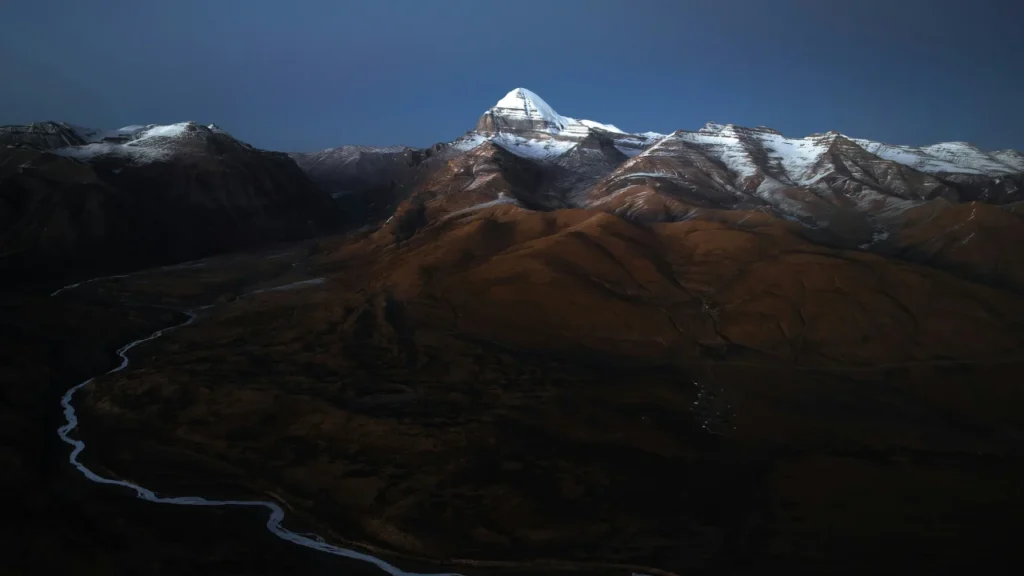
One of Earth’s most fascinating geographical mysteries is found around Mount Kailash. Four major rivers begin close to this sacred mountain:
- Indus
- Sutlej
- Brahmaputra
- Karnali (a major tributary of the Ganga system)
These rivers flow in completely different directions and feed millions of people across Asia. Because of this, the region is also popularly known as the Water Tower of Asia.
Yeti Sightings Around Mount Kailash
For decades, stories of the legendary Yeti, also called the “Abominable Snowman,” have been associated with the Himalayas, including the remote areas surrounding Mount Kailash.
Some locals and travelers have claimed to have seen large footprints in the snow or human-like shadows walking down the distant mountain slopes. Others tell stories of strange noises echoing through the valleys at night.
Despite these interesting reports, no solid scientific evidence has ever proven that the Yeti exists.
Mystery of the Swastika Shadow
During sunrise and sunset, the shadows on Mount Kailash sometimes appear to form a swastika-like pattern. In Hinduism, Buddhism, and Jainism, the swastika is an ancient symbol of peace, prosperity, and good luck.
Some people believe this shadow is a divine sign. Others say it is just the result of sunlight hitting the mountain peaks at a specific angle.
Strange Lights in the Sky
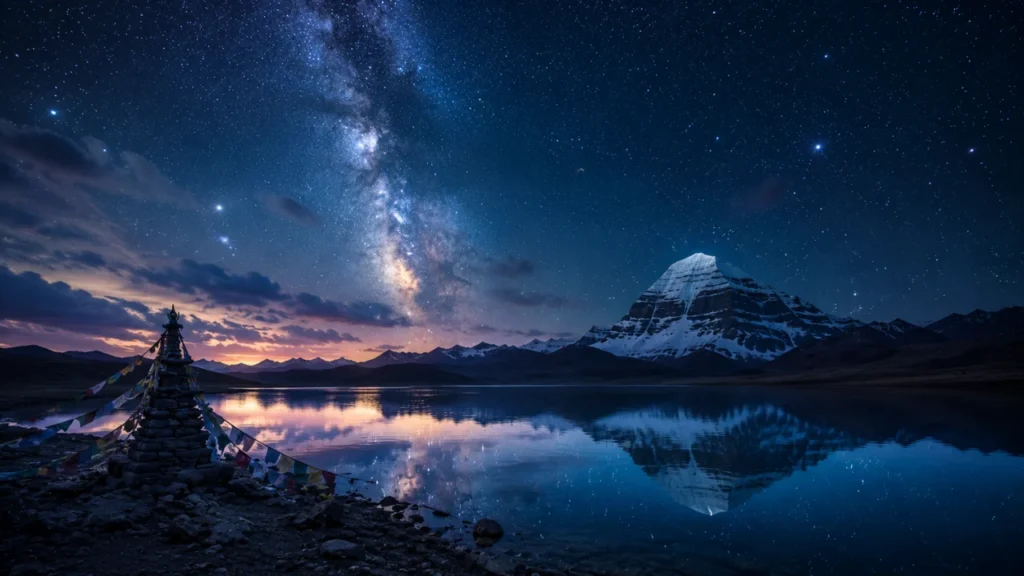
Some visitors have reported seeing bright orbs, strange glows, or flashing lights near Mount Kailash. There is no definite explanation for this.
There are a few possible reasons for this, like atmospheric effects, reflections off ice crystals, or rare natural light phenomena. Even so, many people believe that these lights have a spiritual origin.
Have interest in the Mysterious Skeleton Lake: Roopkund