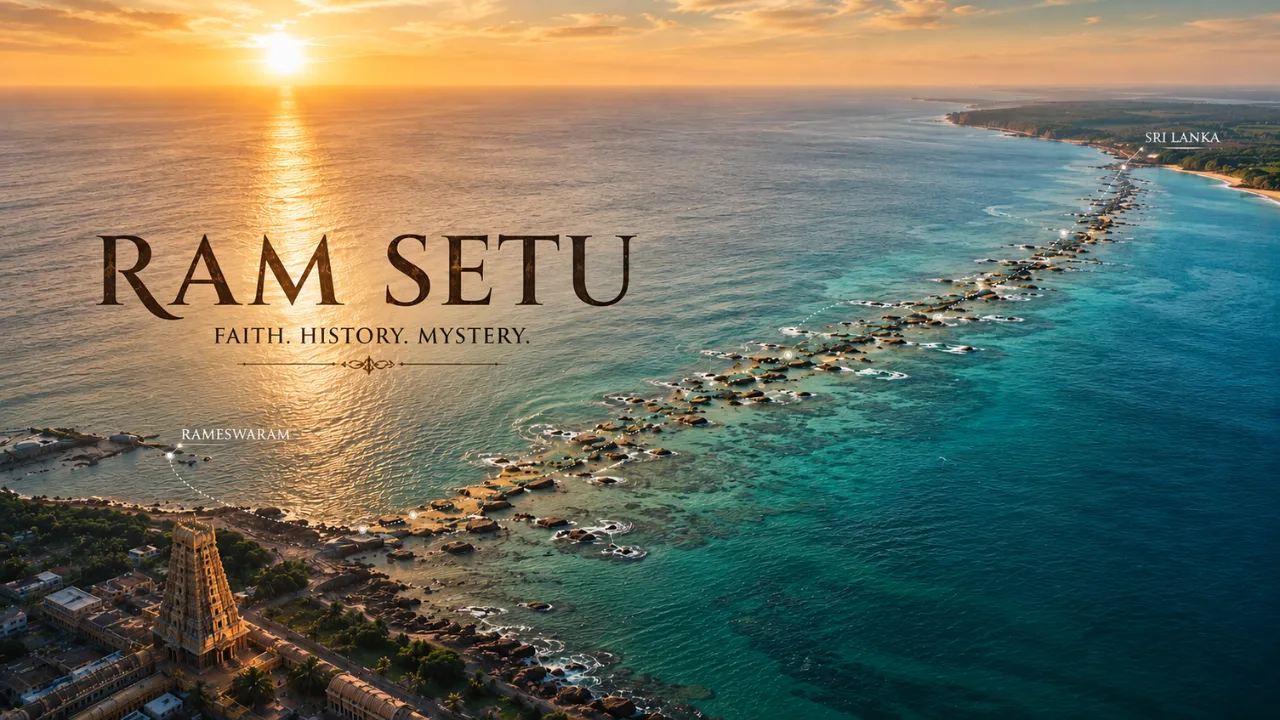
There are very few places in the world where mythology, history, and science blend as beautifully as they do at Ram Setu. Hidden beneath the shallow waters between India and Sri Lanka is a formation that has been the subject of debate for generations.
Is it the legendary bridge built by Lord Rama’s Vanara Sena, or is it a natural wonder shaped by time? This mystery remains, making Ram Setu one of India’s most fascinating destinations.
Table of Contents
What is Ram Setu?
The Rama Setu is a chain of limestone shoals that extends between Rameswaram in Tamil Nadu, India, and Mannar Island in Sri Lanka. This bridge-like structure is approximately 48 kilometers (30 miles) long.
Today, most of it lies underwater, but many parts are shallow enough that large ships cannot pass through. The satellite image of the place shows a bridge connecting two countries.
For Hindus, the bridge has a deep connection to the mythological story of Lord Rama’s journey.
Story of Ram Setu in the Ramayana
According to the Ramayana, when Ravana kidnapped Mata Sita, Shri Rama decided to rescue her. But the biggest challenge was crossing the vast ocean.
He prayed to Samudra Deva (the Sea God) for help but got no answer. So he prepared to dry up the entire ocean with his divine arrows. Samudra Deva appeared and suggested making a bridge across the sea.
The Nala and Neel played a crucial role in the bridge formation. It is believed that stones floated because the name of Lord Rama was written on them.
Is Ram Setu Mentioned in Ancient Texts?
The Ram Setu is mentioned in various ancient Hindu texts.
Skanda Purana—The Skanda Purana describes Rameswaram as the sacred place where Lord Rama worshipped Lord Shiva prior to his departure for Lanka. It also mentions the construction of the bridge by Nala and Neel.
रामेण सागरान्तस्थो बन्धः कृतः सदा स्मृतः। सेतुरामः समाख्यातः पापहा सर्वसिद्धिदः॥
Meaning: A bridge was built over the ocean by Lord Rama, which will always be remembered. Known as Setu Rama, it removes sins and provides spiritual attainments.
Vishnu Purana—The Vishnu Purana gives a brief account of the bridge’s construction and highlights divine intervention in Rama’s mission to defeat Ravana.
रामेण निर्मितः सेतुः सेतुबंधे महात्मना। जनानां पापनाशाय पुण्यदः स्मृतिवर्धनः॥
Meaning: The great Lord Rama built this bridge to eliminate sin and strengthen Dharma, which is known as Setubandha.
Agni Purana—The Agni Purana highlights the holiness of Rameswaram and urges pilgrims to see the Rama Setu as a divine path that Lord Rama himself traveled.
रामसेतुः सदा पूज्यः पुण्यः सर्वेषु मानवः। दर्शनात् कीर्तनाद् यस्य पापं नश्यति तत्क्षणात्॥
Meaning: The Ram Setu is always considered sacred by all people. Seeing it or praising its glory instantly erases sins.
Brahmanda Purana—The Brahma Purana considers this bridge to be a sure proof of Rama’s dedication, bravery, and divine mission.
सेतुः पवित्रः पुण्यश्च रामेणैव महात्मना। योऽत्र स्नात्वा गच्छति वै मुक्तिं प्राप्यति मानवः॥
Meaning: This bridge was built by the great Lord Rama and is considered sacred and auspicious. Anyone who bathes near it is said to attain moksha.
What Does Science Say About Ram Setu?
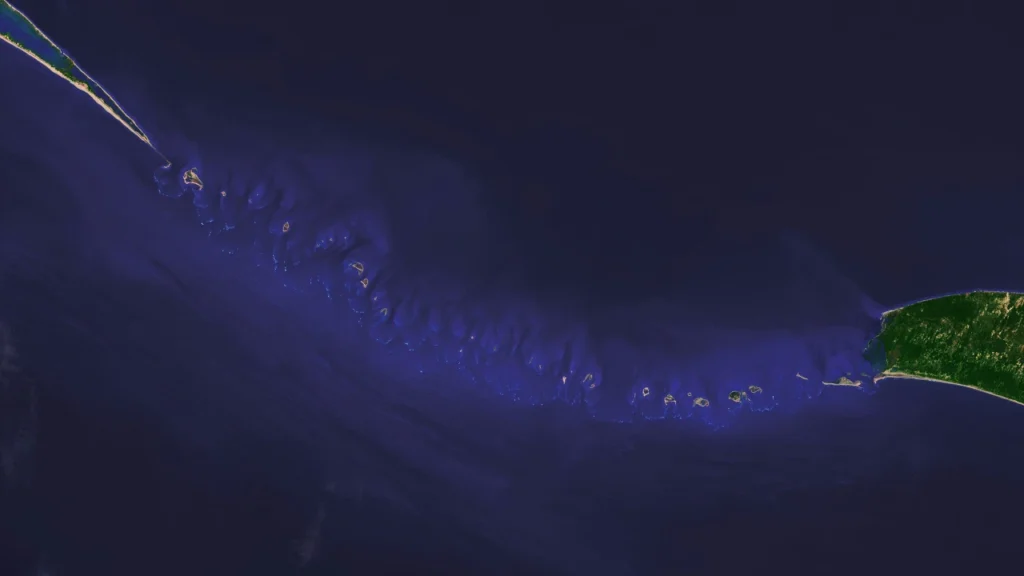
As per science, Ram Setu (Adam’s Bridge) is considered a chain of natural limestone shoals, sandbanks, and coral formations created over thousands of years ago.
It is also suggested that different parts of the formation may have developed at different times, and this makes it one of fascinating subject for geological research.
As of now, there is no scientific consensus that this bridge was built by humans, but there remains interest in understanding how this bridge was built.
Mystery of the Floating Stones
The mystery of floating stones is one of the most popular stories about Rama Setu.
Scientists explain that certain volcanic rocks, like pumice, float due to the presence of small air pockets. However, natural pumice is rare in this region, and not every stone that is claimed to be part of Ram Setu has been scientifically verified.
For devotees, these stones are the reminders of the miracle described in the Ramayana.
Can You See Ram Setu Today?
Yes. However, most of the bridge is underwater; it can still be seen from:
- Satellite images.
- Aerial photographs.
- Certain viewpoints near Dhanushkodi.
- Boat rides offered in some nearby areas, depending on local regulations and weather conditions.
Connection Between Ram Setu and Dhanushkodi
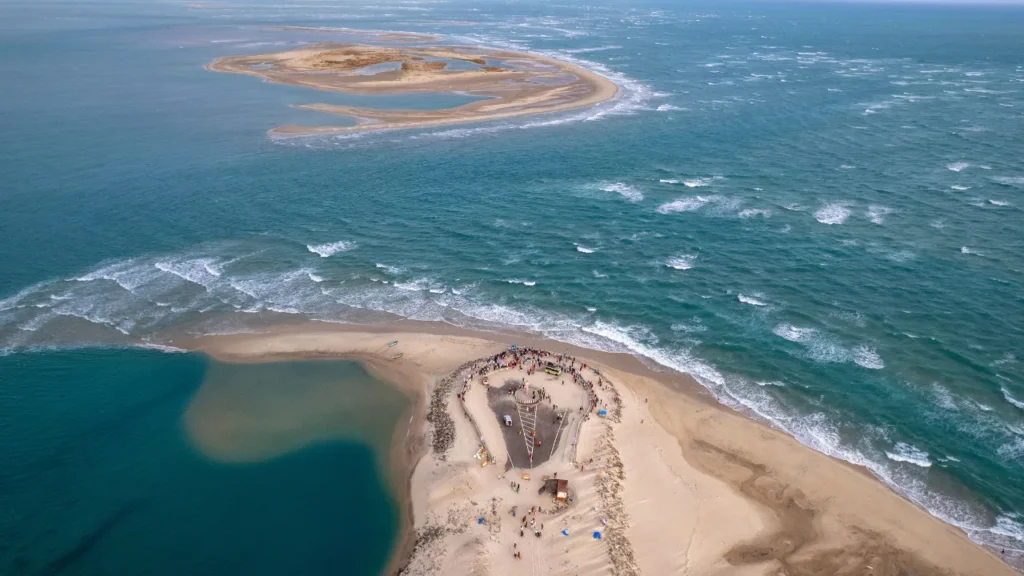
Dhanushkodi is a small town near Rameshwaram. According to mythology, Lord Rama when returing with Sita from Lanks, used the tip of his bow (“Dhanush”) to break a part of the bridge so that it would not be misused.
For this reason, this place is called Dhanushkodi, meaning “the end of the bow.”
Today, the place is also famous for the stories of ghost and is also known as a ghost town after it was devastated by a powerful cyclone in 1964.
You may also like to read about 15 Mysteries and Secrets of Mount Kailash
Final Thoughts
Whether you believe it to be the famous bridge constructed by Lord Rama’s army or a unique natural formation, its importance to India’s cultural and spiritual heritage is undeniable.
Even after thousands of years, Ram Setu continues to inspire devotion, spark scientific curiosity, and remind us of one of the greatest stories ever told.