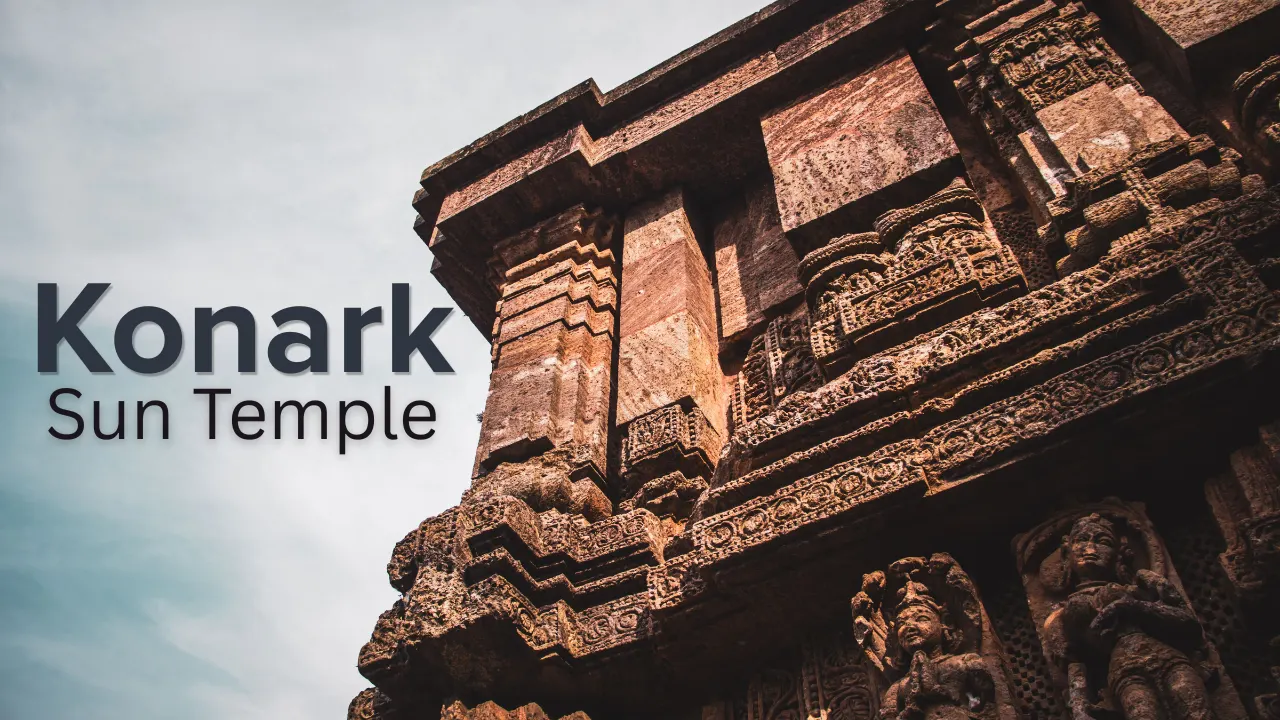
Konark Sun Temple is one of India’s greatest architectural wonders. Located on the coast of Odisha, this UNESCO World Heritage Site has been attracting travelers, historians, and devotees for centuries.
Built 750 years ago, this giant stone chairot is filled with fascinating legends, mysterious stories, and remarkable engineering. So, let’s take a journey through the timeless beauty of one of India’s most extraordinary temples.
Table of Contents
Where is Konark Sun Temple?
Located in the Puri district of Odisha, the Konark Sun Temple is about 35 km from Puri and 65 km from Bhubaneswar. It is also known as the Black Pagoda, as it is built with black stones.
The temple stands close to the Bay of Bengal and is part of the famous Golden Triangle of Odisha, along with Puri and Bhubaneswar.
Who Built the Konark Sun Temple?
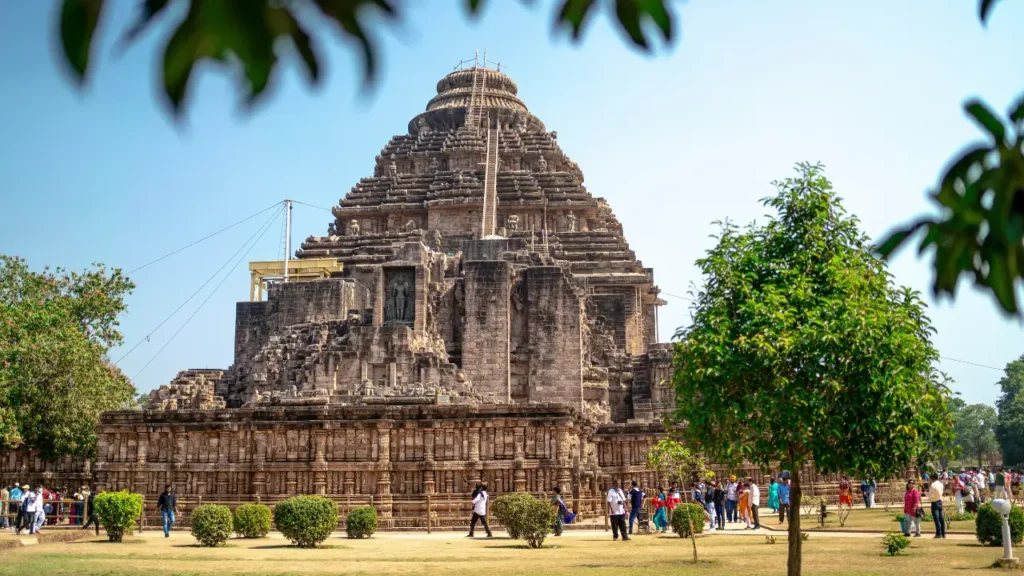
The temple was built by King Narasimhadeva I of the Eastern Ganga Dynasty around 1250 CE. It is believed that he built the temple to celebrate his victory over invading armies.
The temple was dedicated to Surya Dev (the Sun God), who has been worshipped in India since ancient times. In that time, building such a huge temple without modern machines was an incredible achievement.
You may also like, Is Ram Setu Man-Made? The Great Indian Mystery
Why is the Temple Called Konark?
The name “Konark” comes from two Sanskrit words.
- Kona means corner.
- Arka means Sun
So, together, Konark means “Sun at the Corner” because the temple was built on the northeastern coast, where the first rays of the morning sun beautifully touched the temple.
Temple Designed Like the Sun God’s Chariot
The shape of the temple is the most fascinating feature. The entire temple is designed like the grand chariot of Surya Dev. It includes:
- Beautifully covered walls with carvings
- Seven stone horses
- Twenty-four giant stone wheels
As per Hindu mythology, the seven horses represent the seven days of the week. The 24 wheels symbolize the 24 hours of a day. This design beautifully connects the temple with the movement of the sun across the sky.
Amazing Stone Wheels
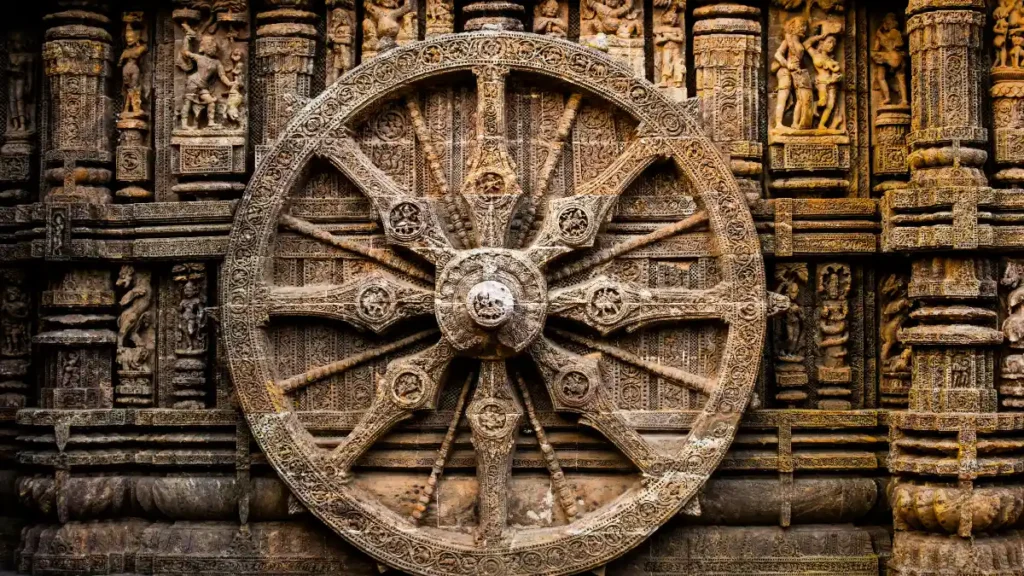
One of the biggest attractions of Konark Sun Temple is its giant stone wheels. Each wheel is about 3 meters (10 feet) in diameter. Many historians believe they were designed to work as ancient sundials.
It is amazing how people could tell the exact time just by looking at the shadows on the spokes. No two wheels are exactly the same. Each wheel features detailed carvings depicting flowers, dancers, animals, musicians, and scenes of daily life.
Why is Most of the Temple Missing Today?
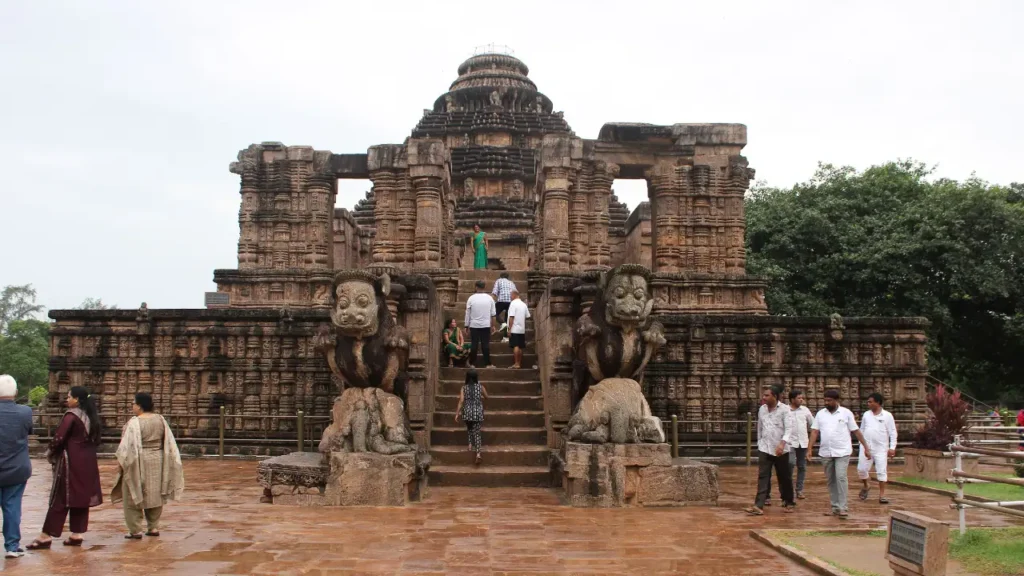
Today, only parts of the temple remain. Once the main tower was 60 m tall and was collapsed many centuries ago. Historians believe that several reasons may have contributed to this. Cyclones from the Bay of Bengal, foundation weakening, weather changes, and human attacks are some of them.
Even after losing its main tower, the temple still remains one of India’s greatest architectural masterpieces.
Mystery of the Giant Magnet
It is believed that the temple once had a giant magnet placed on its top. The magnet was so powerful that it affected the compasses of ships sailing nearby.
The story also says that the temple’s stones were held together using magnetic force. However, there is no scientific or historical evidence behind this, but this adds a level to the mystery of this extraordinary temple.
Why Was the Temple Built Facing the East?
The temple faces the east and is so beautifully aligned along an east-west axis that the first rays of the rising sunlight enter the temple and illuminate the idol of Surya Dev inside the sanctum.
This perfect alignment reflects how advanced the ancient Indian builders were in astronomy and architecture.
Three Forms of the Sun God
The temple features the three forms of the Surya dev:
- Mitra—the morning sun
- Punsan—the midday sun
- Haritasa—the evening sun
Each carving represents a different stage of the Sun’s daily journey across the sky.
Konark Dance Festival
Every year, the famous Konark Dance Festival is held near the temple. The classical dancers from across India perform styles like Odissi, Bharatnatyam, Kuchipudi, Kathak, Kathakali, and Mohiniyattam.
Watching these performances with the illuminated temple in the background is truly a magical experience.
Entry Fee and Timings
Timings: 6:00 AM to 8:00 PM
Approximate Entry Fee
- Indian Visitors: ₹40
- Foreign Visitors: ₹600
- Children below 15 years: Free
Since ticket prices can vary, make sure to check the current details before you go.
Final Thoughts
The Konar Sun Temple is a masterpiece of art, engineering, astronomy, and devotion. Every stone tells a story, every carving shows amazing craftsmanship, and every corner reminds us of the rich cultural heritage of India.
When you stand before this magnificent stone chariot, it is easy to understand why it has been astonishing people globally for over seven centuries.