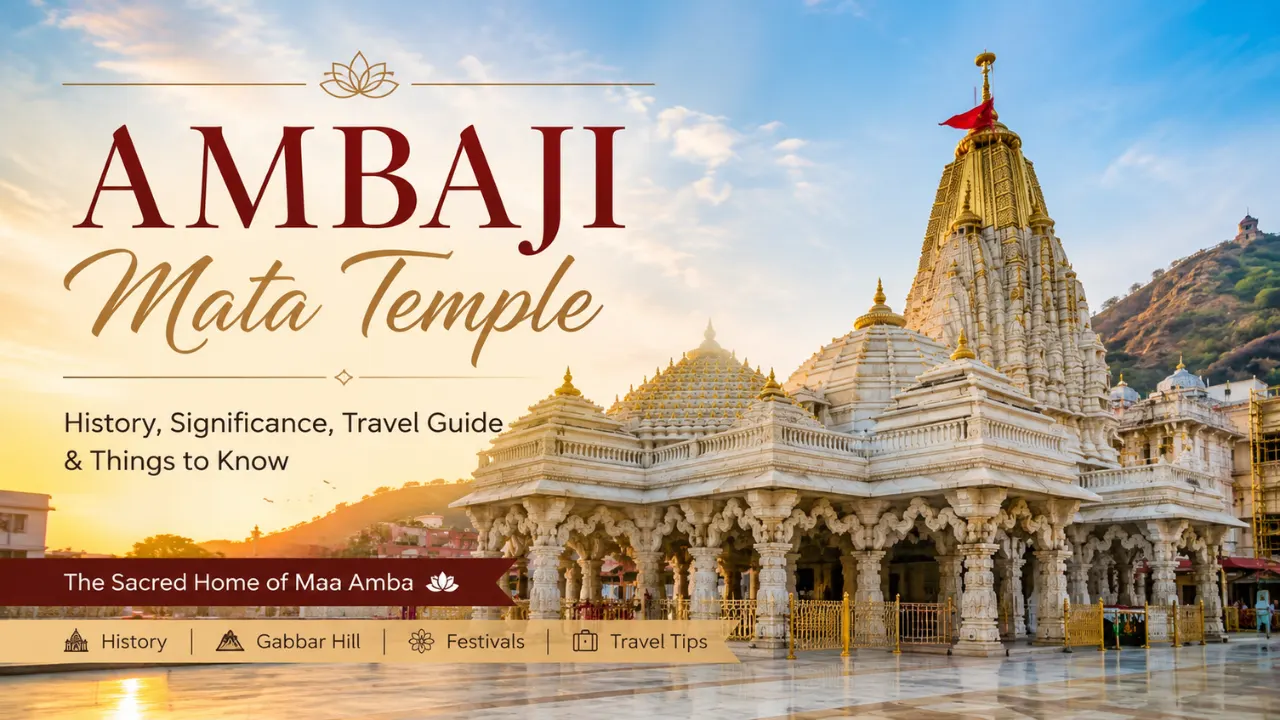
If there is any place in Gujarat where devotion is not only peacefully present but also feels blended into the air, it is the sacred Ambaji Mata Temple. Situated near the Gujarat-Rajasthan border, this temple is not merely a religious destination—it is an experience and a feeling that you carry with you long after you leave.
Let me take you there… not just with words, but with the vibe.
Table of Contents
Where Is Ambaji Mata Temple Located?
The Ambaji Mata Temple is a Hindu pilgrimage site in Banaskantha, Gujarat, close to the Rajasthan border, beautifully surrounded by the Aravallis Hills.
Ambaji is well-connected by road and can be reached from major cities in Gujarat as well as from nearby Rajasthan. The famous Gabbar Hill, considered a significant sacred site dedicated to Maa Amba, is also located near the temple.
Why Is Ambaji Mata Temple So Famous?
Ambaji Mata Temple is considered one of the major Shakti Peethas of India.
Devotes believe that this place has incredible spiritual power. Maa Amba is seen as a protective mother who gives strength and courage to her devotees.
Another interesting fact about Ambaji is that there is no traditional idol of the goddess inside the main temple. Instead, devotees worship a sacred Shree Yantra.
Story of Maa Amba
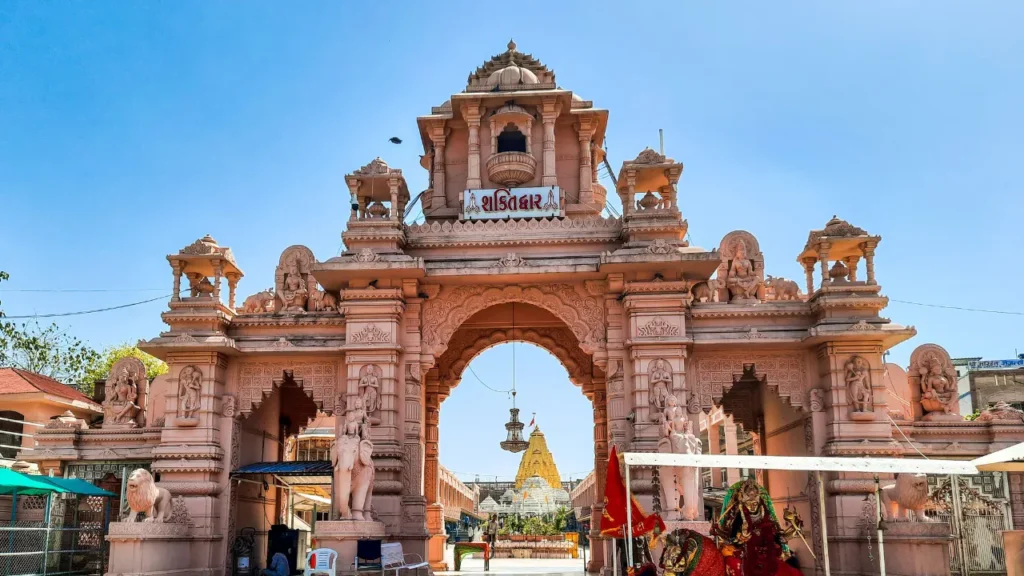
According to Hindu beliefs, after Goddess Sati gave up her life, Lord Shiva, overcome with grief, began performing the cosmic dance while carrying her body. To stop this, Lord Vishnu used his Sudarshan Chakra, and it is believed that different parts of Sati’s body fell at various locations.
Ambaji is traditionally associated with the heart of Goddess Sati, making it one of the most visited Shakti Peeths.
Maa Amba is considered a form of Goddess Shakti and is worshipped as a powerful mother goddess. Throughout history, kings, saints, and ordinary people have visited this place, bringing their hopes, worries, and prayers but leaving with calm.
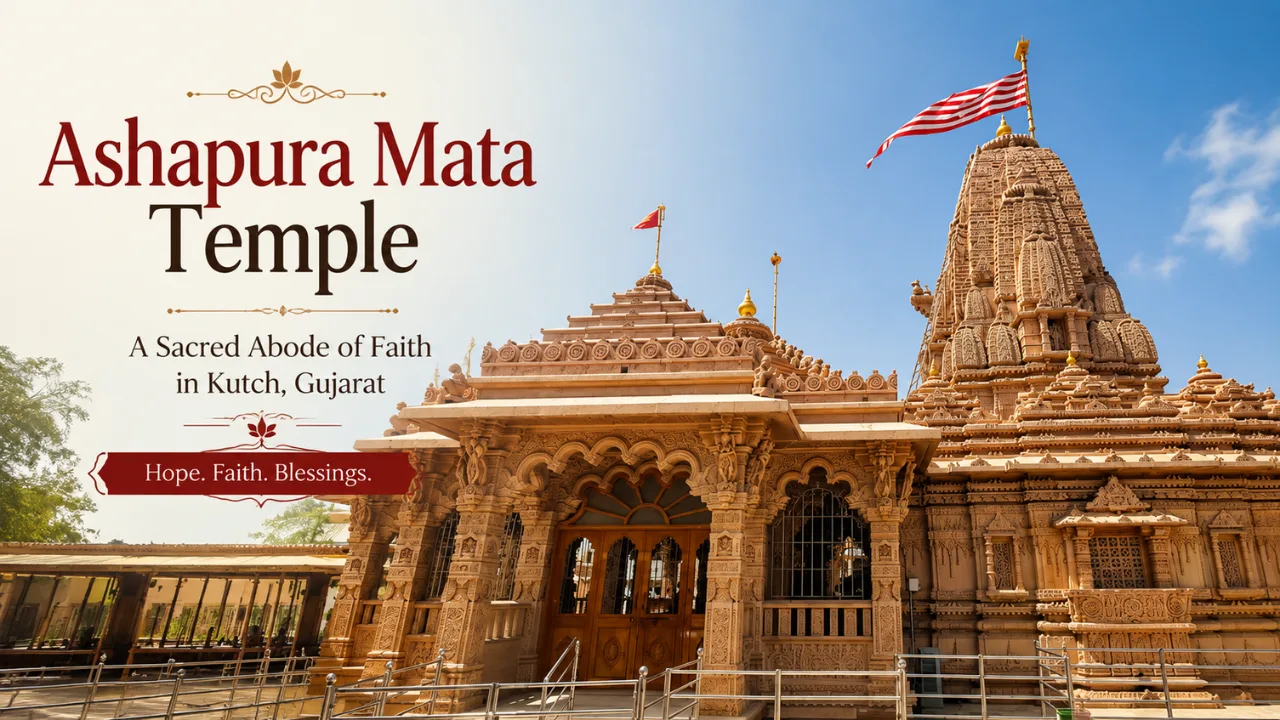
You can also continue your spiritual journey with our guide to Ashapura Maa.
Sacred Shree Yantra
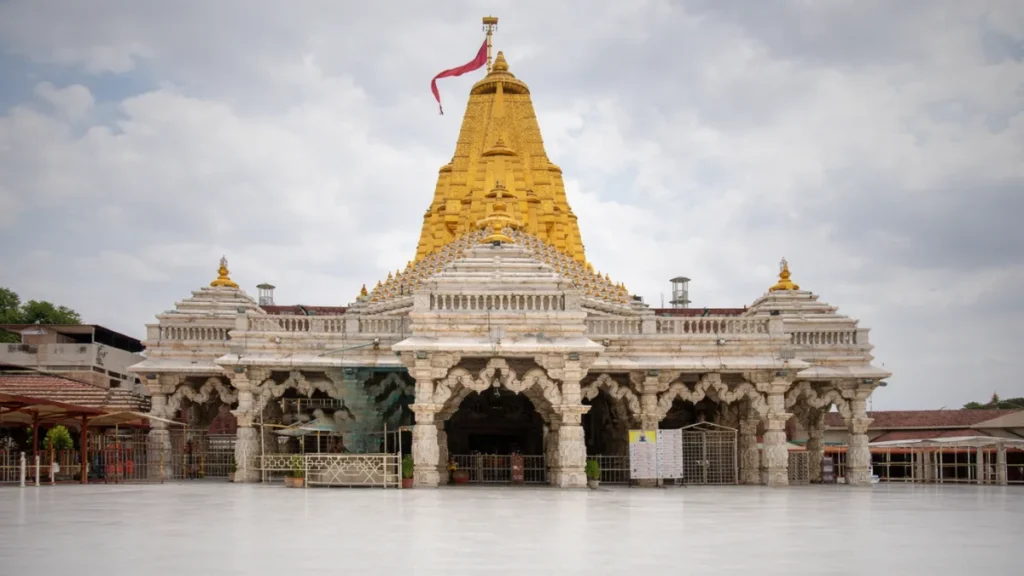
A unique feature of the Ambaji Mata Temple is the way Goddess Amba is worshipped.
There is no idol representing the goddess in the sanctum. Instead, the main object of worship is a sacred Shree Yantra.
The Shree Yantra is a powerful geometric symbol associated with the divine feminine energy (Shakti). Traditionally, it is worshipped as a symbol of divine energy and is considered extremely sacred.
The temple follows specific rituals for its worship, adding to the mystery and spiritual importance of the place.
Gabbar Hill: Real Seat of Ambaji
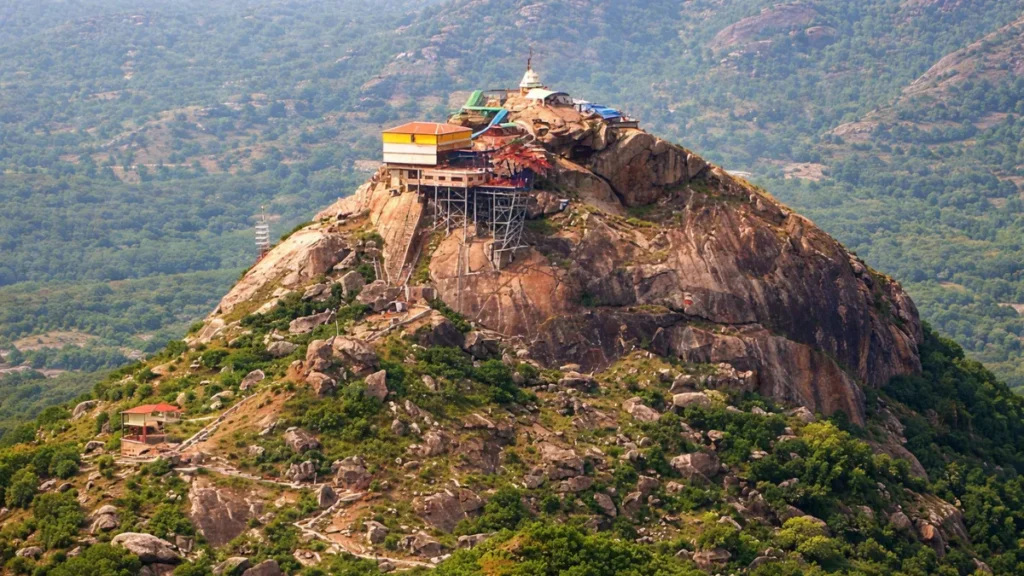
A visit to Ambaji is considered incomplete without visiting Gabbar Hill.
The Gabbar Hill is located about 3 to 5 km from the main temple. According to the mythology, it is believed to be the exact spot where the heart of Goddess Sati fell.
It is also believed that the footprints of the goddess can be found on the hill, which is known as Charan Paduka.
To get to the top, you can either climb 999 steps or use the ropeway.
Ambaji Mata Temple During Navratri
Navratri is one of the most important festivals dedicated to Goddess Shakti. Ambaji attracts a huge number of devotees during this period.
The temple and surrounding town become full of devotion, music, lights, and celebrations.
People from various parts of Gujarat and other states come to offer prayers and join the celebrations. Gujarat’s famous Garba traditions further enhance the festive atmosphere with a special cultural touch.
Bhadarvi Poonam Mela
One of the biggest celebrations at Ambaji is the Bhadarvi Poonam Mela, held around the full moon of the Hindu month of Bhadrapada.
Thousands of devotees visit Ambaji during this time. Many pilgrims traditionally walk long distances, which is called Padyatra, to reach the temple, singing “Bol Mari Ambe Jai Jai Ambe” and carrying sacred flags (dhwaja).
Chachar Chowk comes alive with traditional folk dances and devotional music performed by visiting groups.
Best Time to Visit
This temple is open all year round. However, if you really want to enjoy Ambaji at its best, come during the Bhadarvi Poonam Mela (around September). As a sign of devotion, lakhs of devotees walk miles to reach the temple.
Another great occasion is Navratri, when the entire town comes alive with devotion, garba at Chachar Chowk, and spiritual energy. It’s celebratory, emotional, and wonderful all at once.
To avoid any inconvenience later, it is best to book your stay in advance during peak times. Get the best discounts on hotel bookings.
How to Reach Ambaji
Ambaji has good road connectivity and is accessible from various parts of Gujarat and neighboring Rajasthan.
By air: The nearest airports are Sardar Vallabhbhai Patel International Airport in Ahmedabad and Maharana Pratap Airport (Udaipur Airport); from there you can continue the journey by road. Get the best deals on flight bookings.
By train: The nearest railway stations include Abu Road in Rajasthan and Palanpur in Gujarat. From these stations, taxis and buses are available for Ambaji.
By road: One of the easiest ways to reach Ambaji. Regular buses and taxis connect the town with nearby cities and towns.
What to See Around Ambaji
You can include several places in your visit.
- Gabbar Hill
- Koteshwar Mahadev Temple
- Kumbhariya Jain Temples
- Kamakshi Mandir
- Balaram Ambaji Wildlife Sanctuary
- Kailash Hill Sunset Point
Final Thoughts
Visiting the Ambaji Mata Temple can be a wonderful experience, whether you are highly religious or just interested in learning about India’s ancient temples and traditions.
Take some time to sit peacefully, explore Gabbar Hill, observe the devotees around you, and simply enjoy the atmosphere. Because sometimes, the most memorable part of a pilgrimage isn’t what you see—it’s how the place makes you feel.
Jai Maa Ambe!