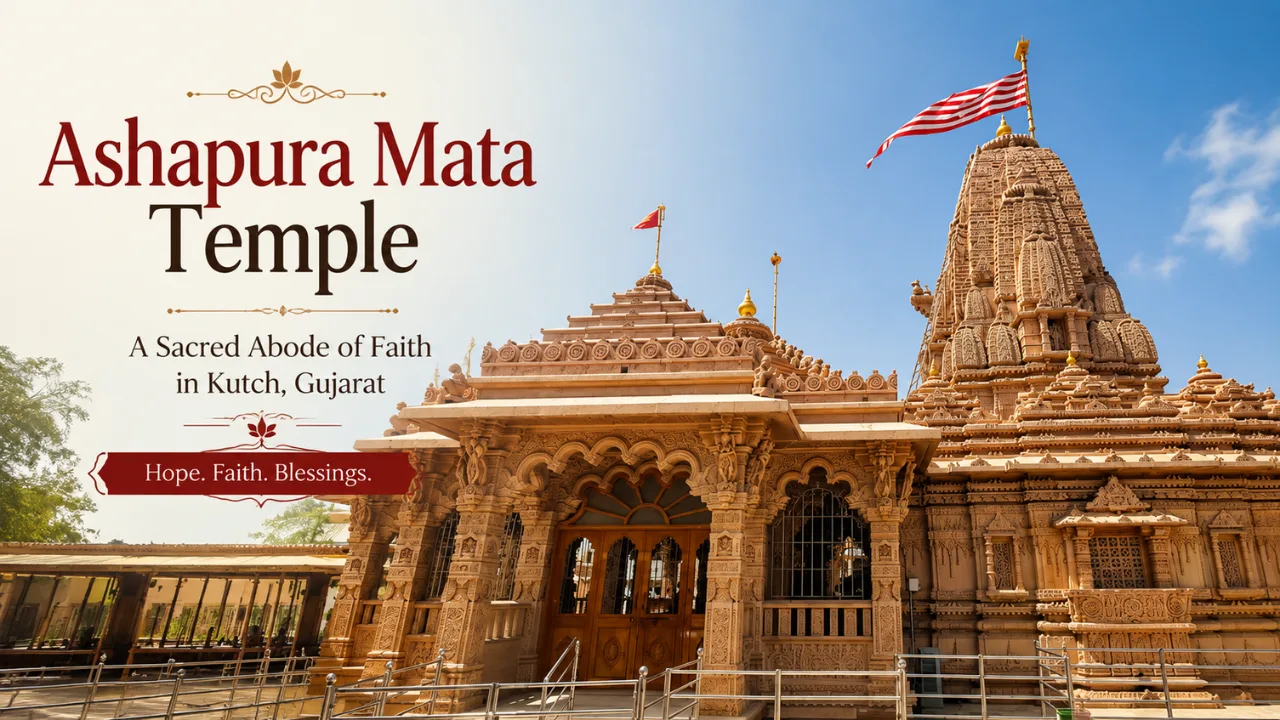
In the heart of Kutch, there’s a temple where hope has been a part of worship for generations. The sacred temple of Ashapura Mata at Mata No Madh is one of the holiest temples in Gujarat.
Devotees come here with the hope that Maa Ashapura will listen to their wishes and bless them. This temple attracts thousands of devotees, especially during Navratri, when the whole place is filled with prayers, lights, and festive celebrations.
Let’s take a closer look at the story, beliefs, and traditions surrounding Ashapura Mata.
Table of Contents
Where Is Ashapura Mata Temple?
The famous Ashapura Mata Temple is located in Mata No Madh in Kutch, Gujarat. Located in a remote area of the Kutch region, it is surrounded by a landscape that has its own charm.
Maa Ashapura is worshipped as the divine form of Shakti, especially respected in Gujarat and Rajasthan, where she is revered as Kuldevi (family goddess).
Ashapura Mata is also referred to as Shakambhari Devi and Desh Devi—the goddess of the region.
Why Is Ashapura Mata So Famous?
The biggest reason behind the popularity of the temple is the strong faith people have in Maa Ashapura.
The name Ashapura itself has a beautiful meaning. It is made from two words—Asha, meaning hope or wish, and Pura, meaning to fulfill. Devotees come to the temple with different wishes. Some come to pray for their families, some for success, and some simply to receive peace and blessings.
Did you know that the Ambaji Temple has no idol? Despite this, why do millions of people visit?
Story Behind Maa Ashapura
The story of Maa Ashapura is closely connected with the history and traditions of Kutch.
This temple is thought to be centuries old, deeply connected to the faith of local communities, particularly the Jadeja rulers of Kutch, who revere Ashapura Mata as their family deity.
According to a popular story, Devchand, a Jain merchant from Marwar, visited Kutch during Navratri. He set up camp, established a sacred spot, and prayed to the goddess with deep devotion. Pleased with his sincere devotion, Maa Ashapura appeared in Devchand’s dream, granting his wish and instructing him to build her temple at that very spot.
Unique Idol of Ashapura Mata
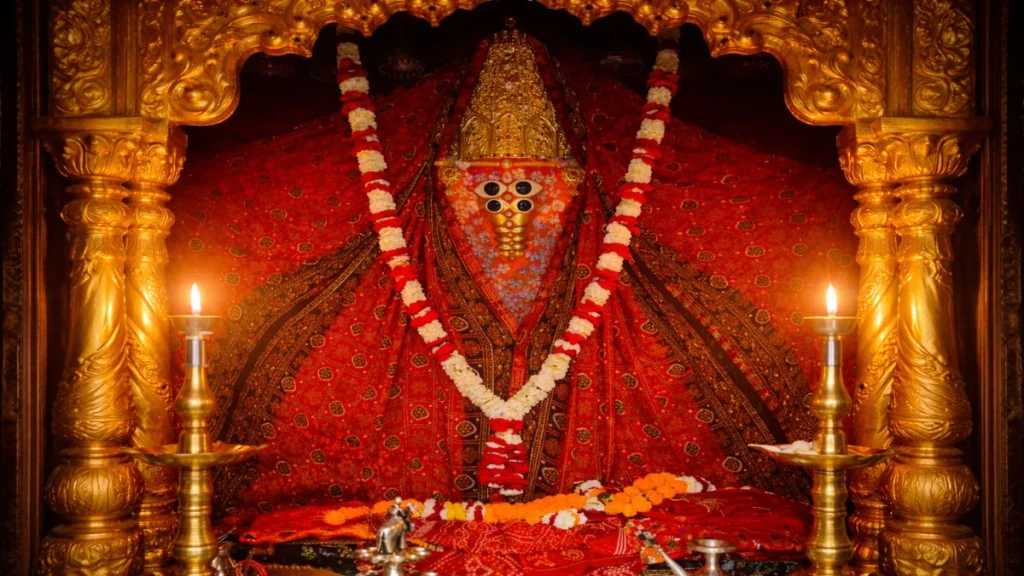
A highly interesting feature of the temple is how Maa Ashapura is worshipped in the traditional manner.
The idol of Ashapura Mata is depicted with seven pairs of eyes, a feature that makes her form quite distinctive. These eyes are traditionally linked to the goddess’s divine energy and her power to protect her devotees.
According to mythology, the idol of Maa Ashpura is self-mainfested (Swayambhu).
Best Time to Visit Ashapura Mata Temple
The temple can be visited throughout the year, but the experience can be different depending on the season.
Navratri is the perfect time to visit if you want to see the temple at its most colorful and vibrant. To avoid any trouble during the peak season, it is highly recommended to book your accommodation beforehand. Get the best deals on hotel bookings.
If you prefer a quiet trip, plan your visit outside of peak festival seasons. The winter months are ideal for visiting Kutch because the weather is much more pleasant than in the hot months.
How to Reach
You can travel to this area by road from the major cities and towns of Kutch. Bhuj is a primary hub where tourists typically begin their trip to Mata No Madh.
Since Bhuj has both an airport and a railway station, you can pick either one and continue the rest of the journey by road. Get amazing discounts on flight bookings.
Why You Should Visit Ashapura Mata Temple (At Least Once)
The Ashapura Mata Temple is more than just a famous pilgrimage site in Kutch. For countless devotees, it’s a place where faith, tradition, and personal prayers come together.
Whether you’re deeply religious or simply interested in exploring India’s temples and cultural heritage, Mata No Madh offers a memorable experience.