

If you’ve ever imagined a world where walls tell stories, doors resemble pieces of art, and every street seems like a canvas—welcome to Mandawa. This small village in the Shekhawati region isn’t just a destination; it’s like visiting an open-air museum without the “Do Not Touch” warnings.
Let’s explore Mandawa like a traveler would: slowly, attentively, and with wonder.
Content
Town Frozen in Art
Mandawa offers something unique. It’s not the hustle and bustle you’d expect from a regular tourist destination. Instead, it is peaceful and even poetic. The real magic is in the fresco-painted havelis, which were created centuries ago by rich merchants.
These aren’t just structures; they’re storytelling canvases. From famous scenes to British-era influences, the walls depict history in the most vibrant way possible.
Mandawa Fort
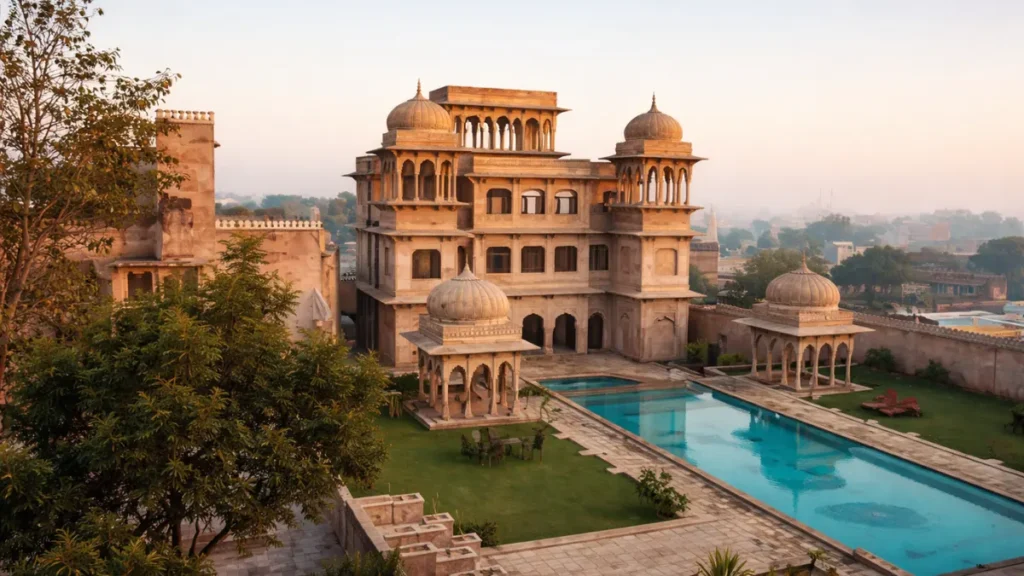
Start your trip at the famous Mandawa Fort. This majestic central fort is impossible to miss.
What makes it special isn’t just its structure—it’s the atmosphere. It has been converted into a heritage hotel, but even if you don’t stay there, you can still wander in and explore. The mirror work, intricate paintings, and royal corridors transport you to a different era.
Pro tip: Visit during sunset. The golden light reflecting on the fort walls? Absolutely magical.
Havelis That Tell Stories
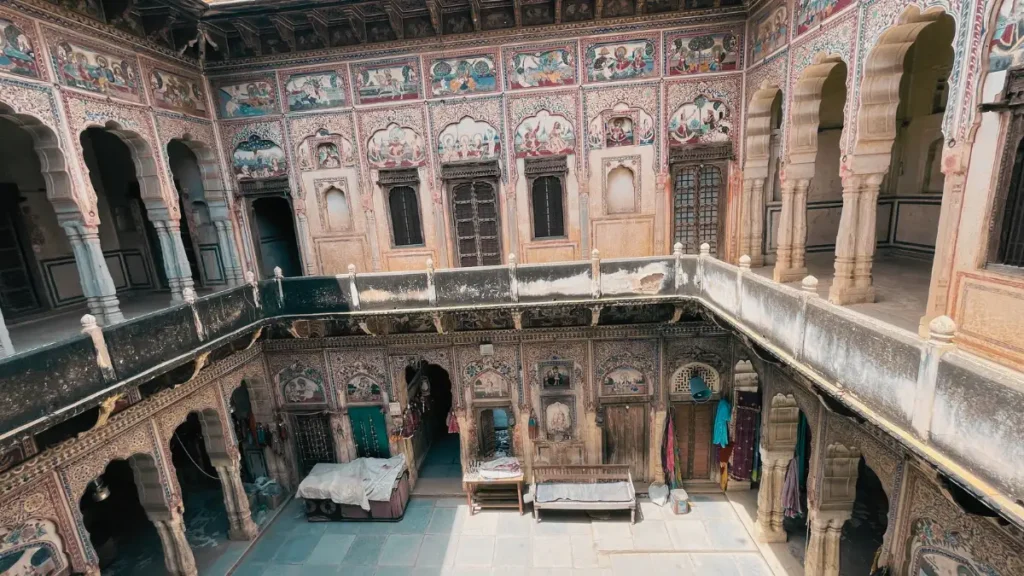
Mandawa is famous for its havelis, and this is where you’ll spend the majority of your time.
One of the must-see attractions is Hanuman Prasad Goenka Haveli. The detail here is incredible—look closely, and you’ll see paintings of gods, animals, and even European influences.
Another lovely location is Jhunjhunwala Haveli. This one feels quieter and less crowded, allowing you to truly appreciate the art instead of rushing through it.
And then there’s the Murmuria Haveli—one of the most unique havelis. It features paintings inspired by modern people and British-era elements, which feels surprising in a town so rooted in tradition.
Walking through these havelis is like scrolling through centuries-old Instagram—the only difference is that each “post” is hand-painted and will last forever.
Don’t miss Nawalgarh and Jhunjhunu if you really want to enjoy the charm of Rajasthani havelies.
Streets of Mandawa
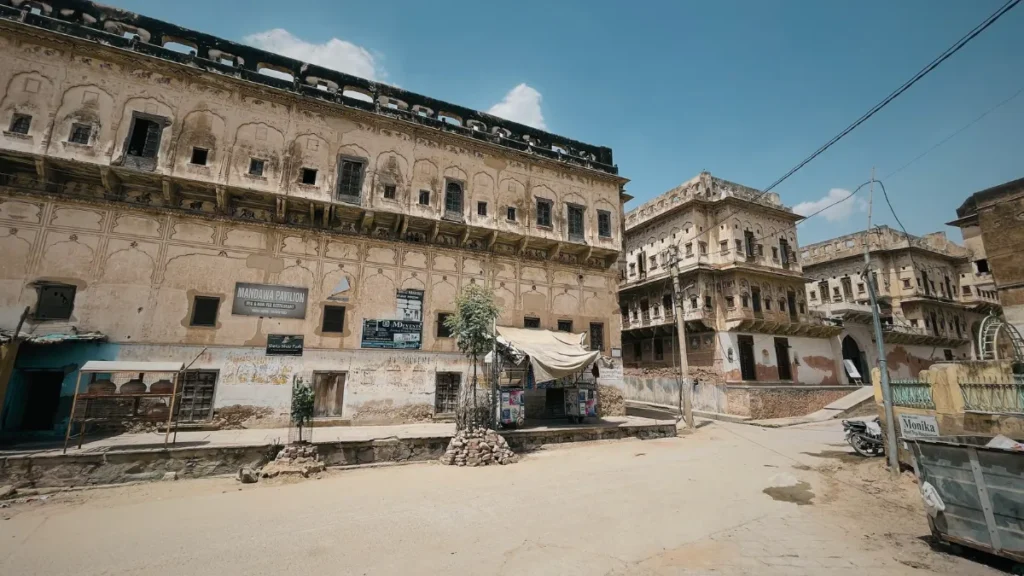
The point is—Mandawa isn’t a place where you just look at the location. The real experience is in getting lost.
Take random turns. Walk the narrow lanes. Look up often—you’ll find artwork even on rooftops and balconies. The beauty of Mandawa is that it doesn’t try too hard. It simply exists, beautifully.
You’ll also find local artisans and small shops selling handicrafts, tie-dye clothing, and traditional Rajasthani items. Even if you don’t buy anything, the conversation will be worthwhile.
Glimpse of Rural Rajasthan
If you have a little extra time, venture out of the main town area. The surrounding villages provide a true look into rural Rajasthan.
Camel carts, mud huts, and villagers going about their everyday lives—it’s simple but deeply grounded. It reminds you that travel does not necessarily have to be about luxury; it can also be about connection.
If you’re exploring the Shekhawati region, don’t stop at Mandawa—nearby towns like Nawalgarh offer equally stunning havelis and rich history worth discovering.
Food Breaks
Mandawa isn’t a famous food destination like Jaipur, but what it offers is authentic and comforting.
Think hot dal baati churma, fresh rotis, and spicy sabjis. Most small eateries offer home-style food, and frankly, that’s the best thing to do after a long day of sightseeing.
If you’re staying at a heritage hotel, don’t miss their traditional dinner setup—some even offer rooftop dining under the stars.
Best Time to Visit
The best time to visit is between October and March. Summers can be extremely hot, and believe me, exploring the havelis under the scorching sun is no fun.
Winter, on the other hand, is perfect. Pleasant weather, mild sunshine, and ideal conditions for long walks.
Mandawa is just one piece of Rajasthan’s beauty—there are countless destinations across the state that offer completely different experiences.
How to Reach Mandawa
Mandawa is well connected but still feels remote (in a good way).
- Nearest major city: Jaipur (around 170 km)
- From Delhi, it’s roughly a 5–6 hour drive
The road trip itself is quite easy and a great weekend getaway.
Few Things No One Tells You
Here’s where things get interesting—tips you won’t find everywhere:
- Some havelis are privately owned, so always ask before entering.
- Many frescoes are fading, so what you see today may not be there in a few years—this will make your visit even more special.
- Early morning or late afternoon is best for photography (dark light and fewer people).
- Local guides are surprisingly knowledgeable—a good guide can turn a simple walk into a storytelling session.
Why Mandawa Feels Different
It’s not just its architecture that makes Mandawa special—it’s the feel.
It’s not overly commercialized. It doesn’t scream for attention. Instead, it quietly impresses you. You come here expecting a short trip, but you leave with peace and a camera full of stories.
So if you’re planning a trip and want something different—something that feels both historic and personal—Mandawa awaits you.