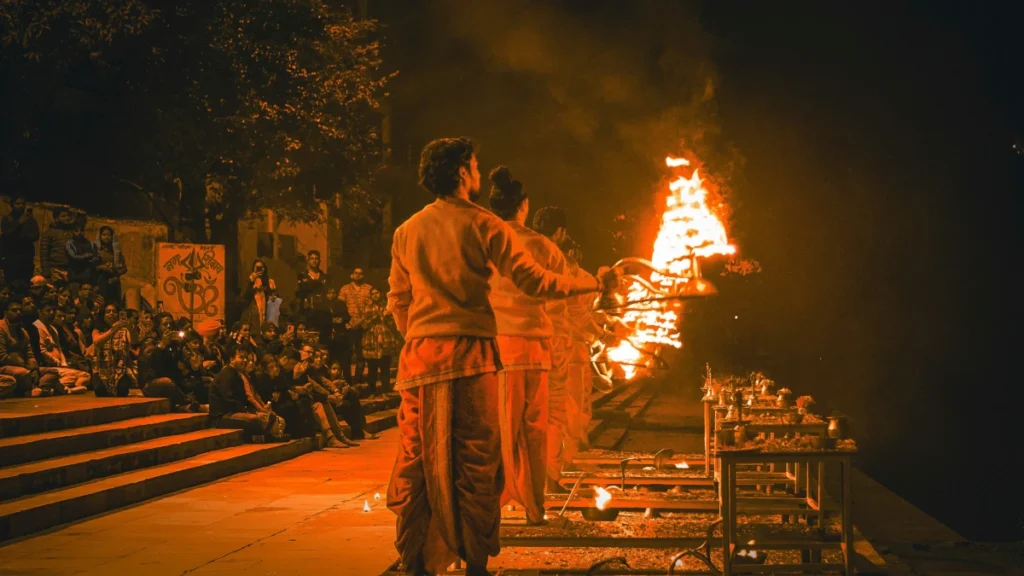
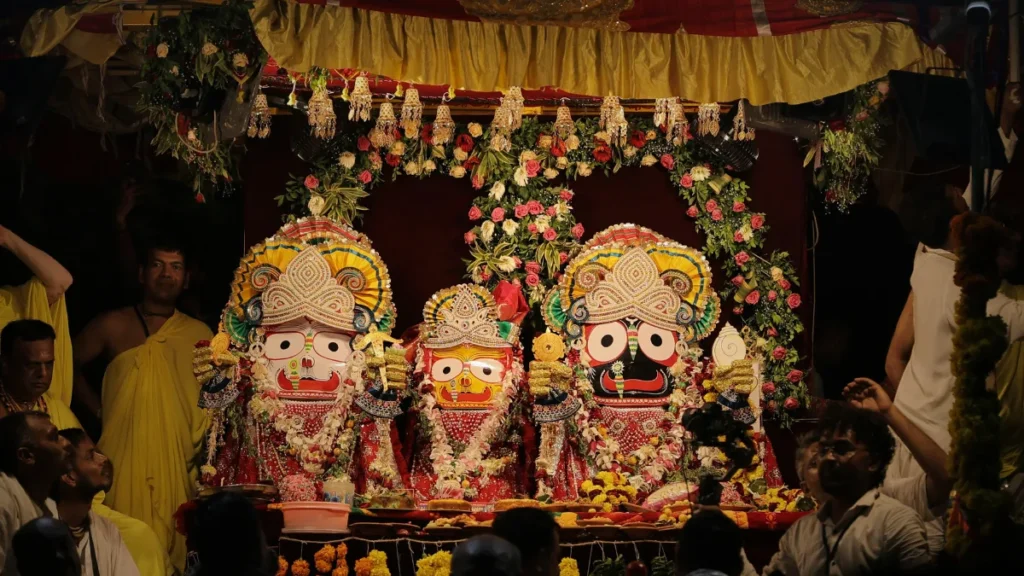
If there’s one place in India where faith seems almost alive, it’s the Jagannath Temple in Puri. This isn’t just another temple story; it’s a place where everyday experiences seem like quiet wonders, where science takes a break and devotion takes over.
Let’s look at some of the most remarkable and almost miraculous things that occur here—things that make this place unique.
Silence of the Sea at Singhadwar
The first thing you’ll notice when you enter the Singhadwar (Lion Gate) is that the ocean’s sound has suddenly disappeared.
The Bay of Bengal’s crashing waves can be heard right outside the shrine. However, once inside the Singhadwar, the sound fades almost instantly. When you step out again, it reappears.
Historically, locals believe this is not a coincidence. According to temple legend, Lord Hanuman is present here as a divine protector. It is believed that Hanuman controls the wind and sounds, keeping the shrine quiet for pilgrims. This idea is commonly referred to as the “Hanuman Wind Shield,” which represents his duty as a guardian who filters out distractions from the outside world.
Sudarshan Chakra Mystery
The Sudarshan Chakra placed on top of the temple creates a wonderful visual illusion.
Regardless of where you are in Puri, the chakra appears to face you straight. It’s as if it’s watching over the entire city.
Historically, the Sudarshan Chakra has been associated with Lord Vishnu, representing protection and power. The placement and architecture of this chakra represent ancient architectural mastery, where spirituality and geometry blend perfectly.
Flag That Defies the Wind
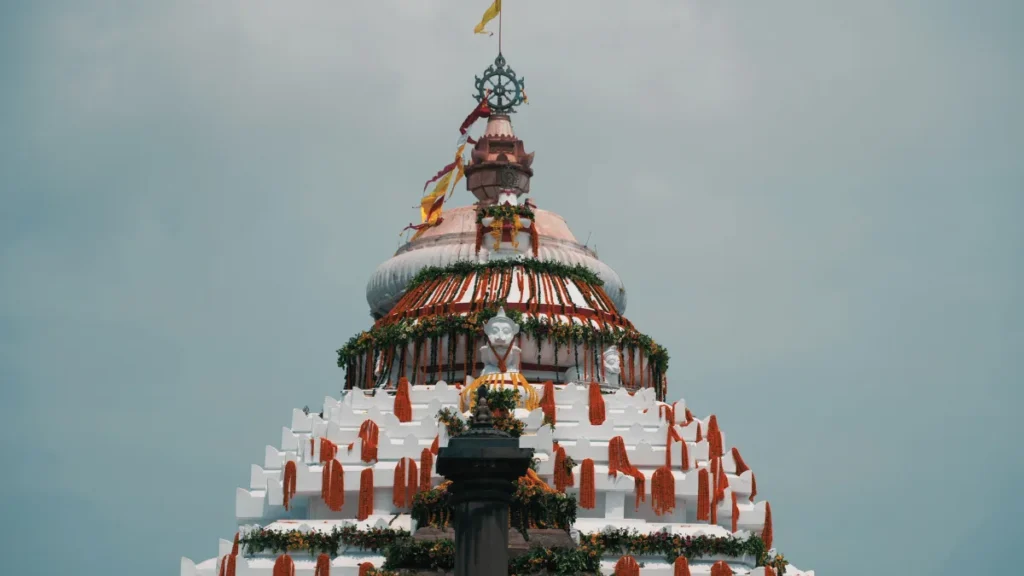
Take a glance at the temple’s flag, and you’ll notice something intriguing: it always flutters in the opposite direction of the wind.
No matter whatever direction the wind blows along the coast, the flag on top of the temple appears to oppose it. This has remained inexplicable for generations, despite attempts by contemporary science to decode it.
There is also a fascinating ritual associated with it. Every day, a priest climbs the temple without safety equipment to change the flag. Devotees believe that discontinuing this ceremony would result in the temple closing for the next 18 years. For decades, this tradition has been carried on without interruption.
And if spiritual places fascinate you, Somnath Mahadev is another powerful destination you should definitely check out.
No Shadow of the Main Dome
Another strange thing is that the main dome of the temple does not cast any shadow at any time of the day.
Whether it’s morning, noon, or evening, there’s no clear shadow of the structure on the ground. While some contend that it is due to architectural accuracy, others feel it is a miraculous reflection of the temple’s spiritual power.
Given that the temple was built in the 12th century, such precision adds to its mystique.
Reverse Direction of Wind
Even more surprising is that throughout the day, the wind in Puri blows from land to sea, which is the opposite of the regular coastal pattern. At night, it reverses again.
This strange natural behavior further enhances the temple’s mystical atmosphere. Locals often associate this phenomenon with divine balance, implying that the temple also influences natural phenomena.
Mahaprasad That Never Falls Short
The temple kitchen is one of the world’s largest, but it follows a surprising rule: food is never wasted or runs out.
No matter how many devotees come on a particular day, the Mahaprasad is perfectly sufficient. Even on days with unexpected crowds, the food somehow manages to serve everyone.
Since ancient times, this has been considered a blessing from Lord Jagannath. The food is cooked in clay pots stacked one above the other, with the top pot cooking first—another small but interesting mystery.
If you enjoy exploring places with deep history and stunning architecture, you might also love reading about the Konark Sun Temple.
Jagannath’s Rath Yatra
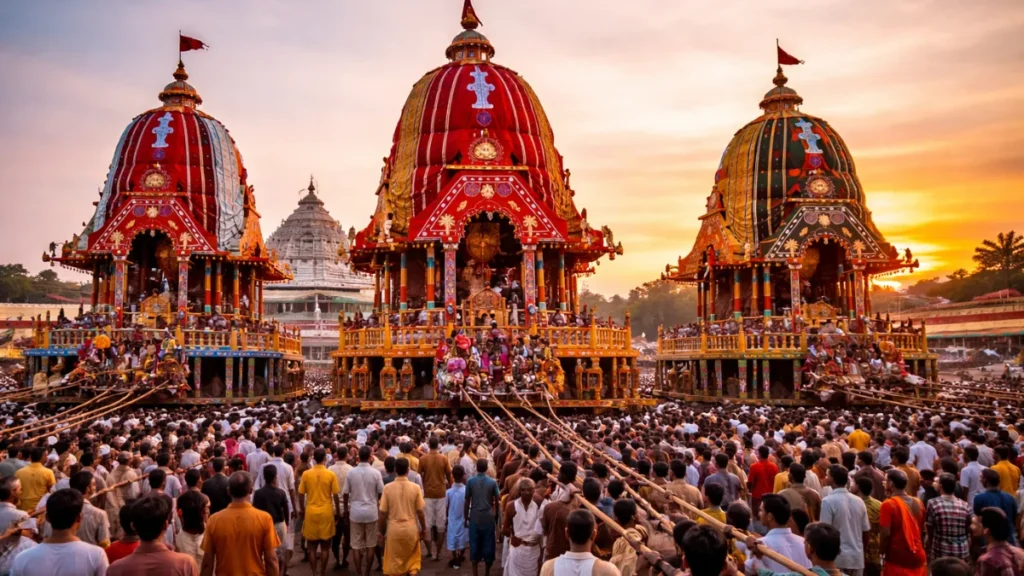
The famous Rath Yatra is not just a festival—it’s an emotion.
On this grand occasion, deities are taken out of the temple on large chariots so that everyone, regardless of caste or background, can receive blessings. This tradition is centuries old and symbolizes inclusiveness and devotion.
Historically, it reflects a time when temples were not easily accessible to everyone. The Rath Yatra broke those barriers, bringing God closer to the people.
Final Thoughts
The Jagannath Temple is a blend of faith, science, and mystery that consistently draws visitors from around the world.
Whether it’s the disappearing sound of the ocean, the rebel flag, or the never-ending Mahaprasad, each mystery adds its own charm to this sacred place… and perhaps that’s its beauty: you don’t always need answers. Sometimes, experience is enough.
If you ever get the chance to visit, don’t go as a tourist; go with curiosity. This is one of those places where every step tells a story and makes you think.