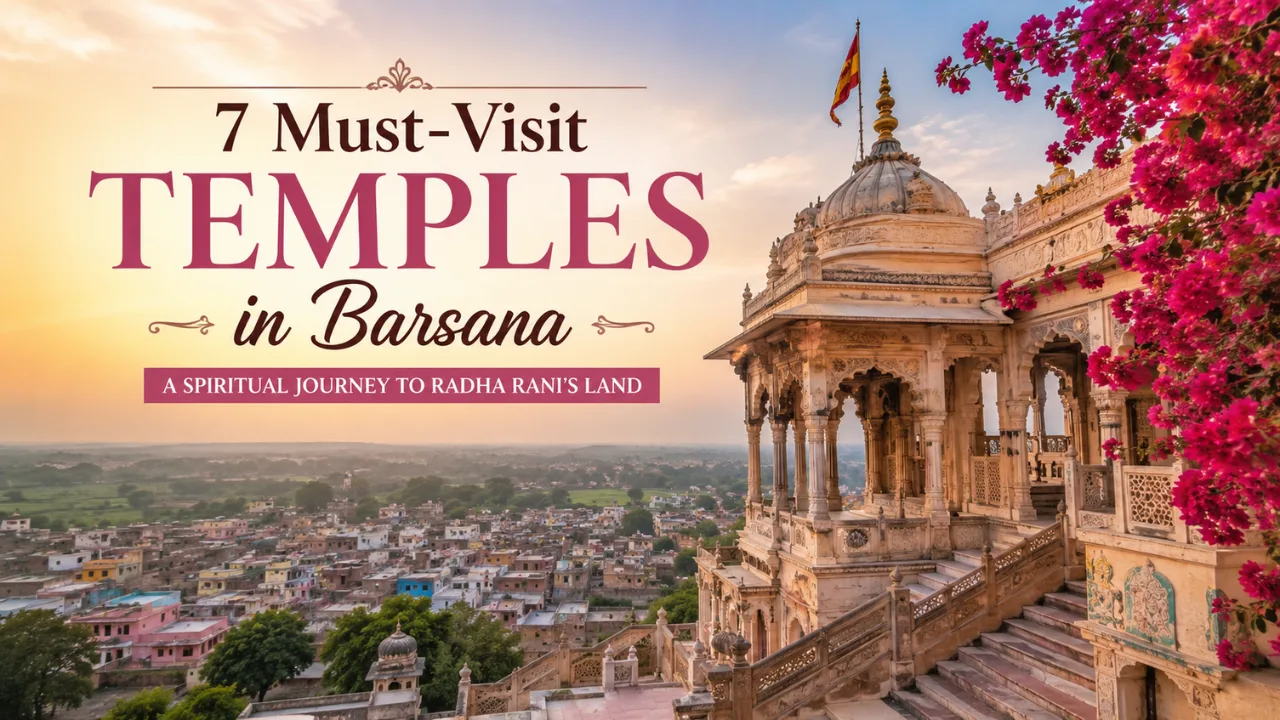
In Barsana, it feels like there is a story hidden around every corner. Famous as the land of Radha Rani, this lovely town in Uttar Pradesh is packed with temples, holy ponds, colorful streets, and locations connected to Radha and Krishna’s stories.
So let’s explore the 7 must-visit temples you should add to your list.
Content
Shri Radha Rani Temple (Ladli Ji Mandir)
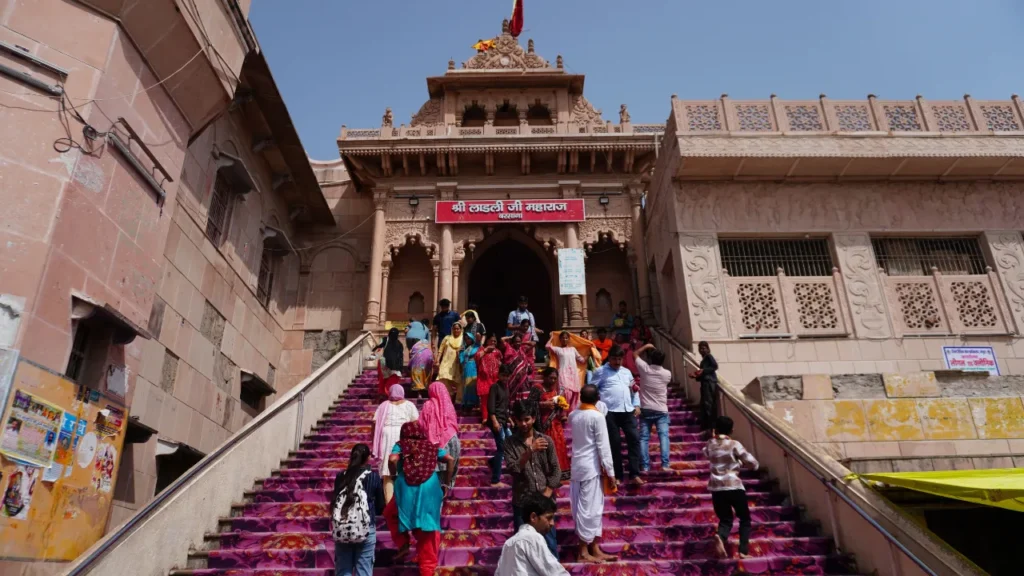
The heart of Barsana is Radha Rani Temple, also known as Shriji Temple or Ladli Ji Temple. The temple is located on the Bhanugarh hill and is believed to be on the site of Radha’s childhood home.
The atmosphere is peaceful and devotional. You’ll see devotees singing bhajans and chanting Radha’s name.
On Holi, Radhashtami, and Janmashtami, you’ll experience the festive vibe of the temple.
Bring grace to your home with the Manmohak Radha Krishna idol.
Maan Mandir
Maan Mandir is one of the more interesting places to visit around Barsana.
The temple is situated on the top of Maan Garh, which is part of the Brahmagiri hills.
According to the belief, this is the place where Radha Rani would come and sit after getting angry with Shri Krishna, and Krishna would cheer her up. With the calming atmosphere of this temple you’ll realize that almost everything in Barsana has a story.
Mor Kutir
Mor Kutir, also known as Mayura Kutir, is one of the most beautiful corners of Barsana. This temple is believed to be the place where Radha and Krishna once performed the Mor Raas, the divine peacock dance.
According to the legends, when Radha was angry with Krishna, he tried to please her, so he started dancing like a peacock. Radha smiled and joined him, and they performed the Mor Raas.
There are paintings of dancing peacocks on the walls of the temple, which will make you feel the story.
Kirti Mandir
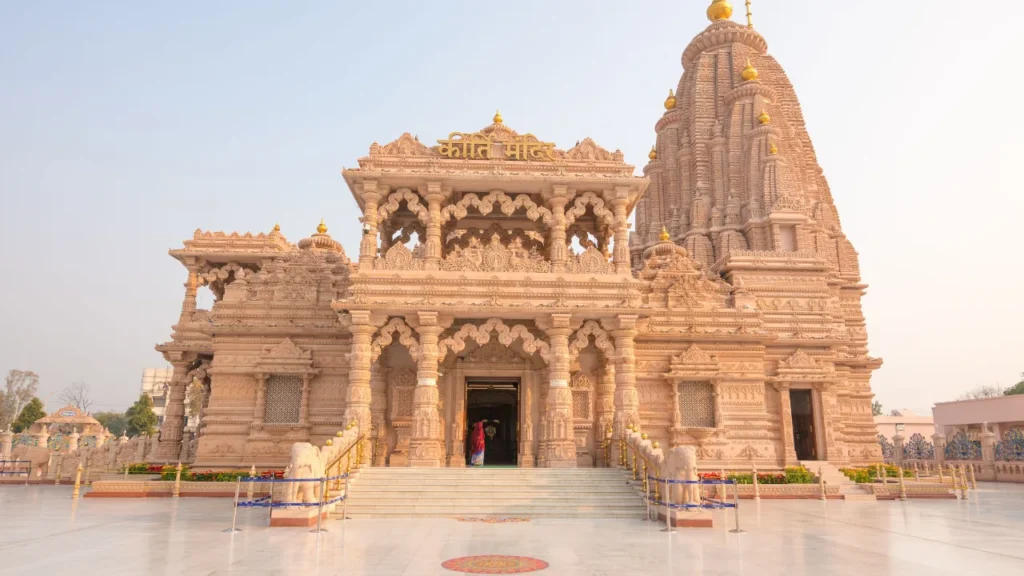
Kirti Mandir is dedicated to Radha’s mother, Kirti Maiya. This is the only temple in Barsana where Radha is depicted as a child sitting in her mother’s lap.
The temple is located near the Rangeeli Mahal with a peaceful and elegant appearance, making it a lovely place to spend some quiet time
Here you’ll experience the sweet connection of Radha with her mother.
Shri Kushal Bihari Temple
The Kushal Bihari Temple is another fascinating place to visit in Barsana. It is also known as Jaipur Mandir and is built by Maharaja Madho Singh II.
It is said that the king wished to move the primary deities from the Radha Rani Temple to this temple. But Radha Rani came to him in a dream and stated that her real home was there. Respecting her words, he consecrated the beautiful idol of Shri Kushal Bihari Ji.
The temple has the royal Rajasthani fort or haveli look.
Prem Sarovar
Prem Sarovar is not technically a temple but has a connection with the Radha and Krishna stories.
It is located between Barsana and Nandgaon. It is said that this lake was formed by the tears of Radha and Krishna when they were overwhelmed by emotional longing and loving separation.
It is also known as the Lake of Divine Love. The place is particularly beautiful around sunrise and sunset.
Dan Bihari Ji Temple
Dan Bihari Ji Temple is one of the beautiful temples of Barsana, located on the Dangarh Hill.
The temple is connected with the Daan Leela of Shri Krishna. According to mythology, Krishna and his friends would ask for the daan, or toll, to the gopis as they passed through the area. The stories are about the playful interactions, teasing, and affection between Radha, Krishna, and the gopis.
The temple gives visitors another glimpse into the unique culture of Braj.
Final Thought
Barsana is a place where you really don’t need to rush. Take your time, wander its colorful streets, visit temples, listen to the sound of bells, and experience the peaceful side of Braj.