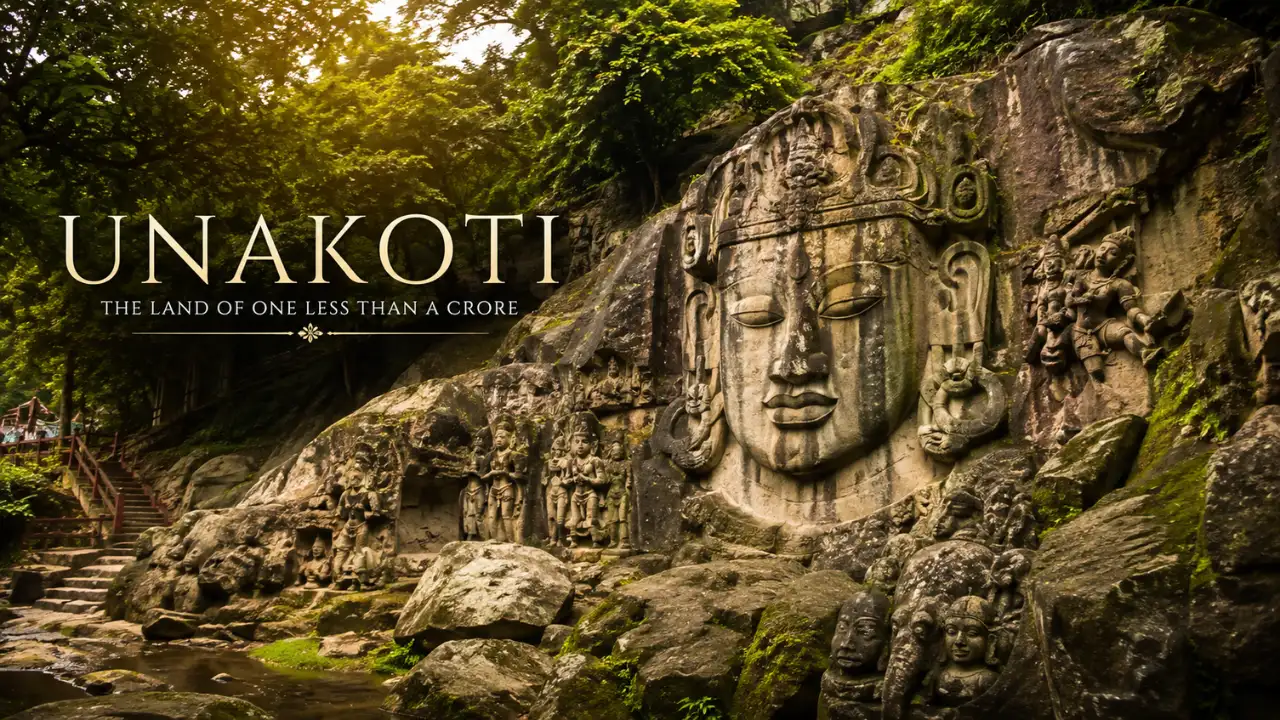
Unakoti, one of India’s most mysterious and underrated heritage sites. Located in the beautiful state of Tripura, this place is famous for massive rock carvings, ancient sculptures, and the famous legend of Shiva.
If you love mythology, history, photography, or peaceful places away from the crowds, Unakoti deserves a spot on your travel list. So let’s explore this place together.
Content
Where is Unakoti?
Unakoti is the smallest district in Tripura and is around 180 km from the state’s capital, Agartala. The site is located deep inside the lush green forest surrounded by streams and hills.
Unlike the famous temples or heritage sites in India, this place is an open-air archaeological site where huge rock carvings are carved directly into the hillside.
What Does “Unakoti” Mean?
The name Unakoti literally means “one less than a crore,” or 99,99,999. According to local mythology, this figure reflects the number of gods and goddesses connected to the site.
Why one less than a crore? Well, that’s where the story gets interesting.
Mythological Story Behind Unakoti
The most popular legend connects the site to Lord Shiva.
It is believed that Shiva once travelled to the Kashi Vishwanath Temple with 99,99,999 gods and goddesses. They stayed here for the night. Shiva instructed everyone to get up before sunrise so they could continue their journey.
But the next morning, only Shiva awoke.
Angered by their laziness, Shiva punished the other gods and turned them all into stone. That’s why the place is known as Unakoti—one less than a crore.
Another interesting story associated with this place is about a sculptor named Kallu Kumhar. It is said that Kallu wanted to accompany Lord Shiva to Mount Kailash. Shiva agreed, but on one condition—Kallu had to create 1 crore carvings in a single night.
Kallu worked very hard and almost succeeded, but by sunrise he had carved one image less than the required number, and because of this, he was never able to complete his dream journey with Shiva.
Giant Stone Rock Carvings
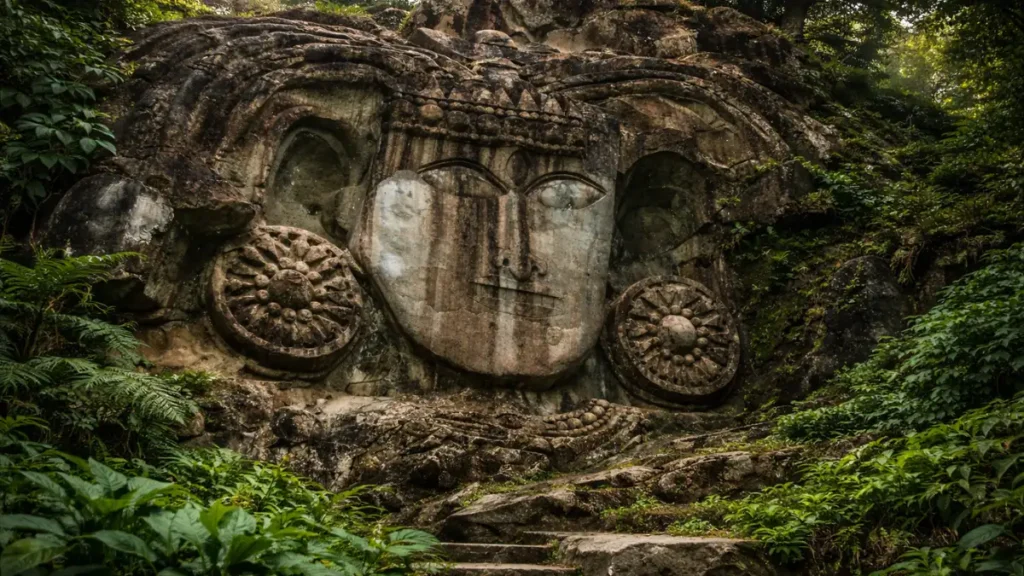
The biggest attraction of this place is its enormous rock-cut sculptors.
The most famous carving is the huge face of Lord Shiva, known as Unakotiswara Kal Bhairava. It is about 30 feet high, with the large crown on top adding another 10 feet, making it one of India’s largest rock carvings.
The detailed earrings, crown, and facial features are truly magnificent. Many visitors stand in silence, simply admiring its scale.
You’ll also find carvings believed to represent Ganesha, Durga, Nandi, and other mythological figures.
What’s fascinating is that these carvings are not inside caves or temples—they are spread across a forested hillside, making the whole place feel like an open-air gallery from ancient times.
Who Built Unakoti?
Although these tales are old, historians believe that these sculptures were made between the 7th and 9th centuries.
Experts say the carvings were influenced by Shaivism, a tradition dedicated to the god Shiva. The style combines tribal art influences with classical Indian sculpture.
Interestingly, no one knows who created these sculptures or why they chose this remote hill as their canvas. This mystery is what makes Unakoti so interesting.
Spiritual Festival in Unakoti
Unakoti is not only a historical place but also a spiritual destination.
Every year, thousands of devotees come here to take a holy bath in the local streams and worship Lord Shiva during the Ashokastami Mela, which usually held around March.
People come from different parts of Tripura, Assam, and Bangladesh to take part in prayers and celebrations. The event transforms the peaceful hills into a lively gathering full of rituals, devotion, and cultural festivals.
Best Time to Visit Unakoti
October to March is considered the months to visit this beautiful site. The weather remains pleasant with clear views of the carvings, making the visit comfortable.
How to Reach Unakoti
To reach this extraordinary place, you can go with the following routes:
- The nearest airport is Maharaja Bir Bikram Airport (check the best deals on flight bookings)
- Kumarghat Railway Station & Dharmanagar Railway Station are both close to Unakoti. The rest of the journey can be covered by road.
- Regular buses and taxis connect Agartala, Dharmanagar, and nearby towns to Unakoti.
Entry Fee and Timings
The site is usually open during the day.
Opening hours and ticket prices can change, so please check the latest details before you plan your visit.
Travel Tips
- Wear comfortable walking shoes.
- Carry water, especially in summer.
- Visit early in the morning for fewer crowds.
- Be careful during the monsoon, as paths may be slippery.
- Respect the heritage site and avoid climbing on the sculptures.
Why Unakoti Is So Special
India is home to thousands of temples and historical sites, but Unakoti stands out for several reasons:
- It is one of India’s largest rock-carving sites.
- The sculptures are massive and carved directly into natural hills.
- The site combines mythology, history, and mystery.
- It remains relatively unknown compared to other well-known heritage sites.
Because of its uniqueness, Unakoti has been proposed as a UNESCO World Heritage Site candidate.
Have you ever heard of Kumbhalgarh?
Final Thoughts
Places like Unakoti remind us that India is full of hidden wonders beyond the typical tourist destinations. Huge stone deities silently watching over the forested hills, ancient stories carved into the rocks, and legends that still resonate through time—all of this creates an experience that feels almost magical.
If you ever visit northeastern India, don’t miss the opportunity to visit this place.
You may come as a traveler, but you’ll surely leave with a curiosity about the mysteries this ancient hill still holds.