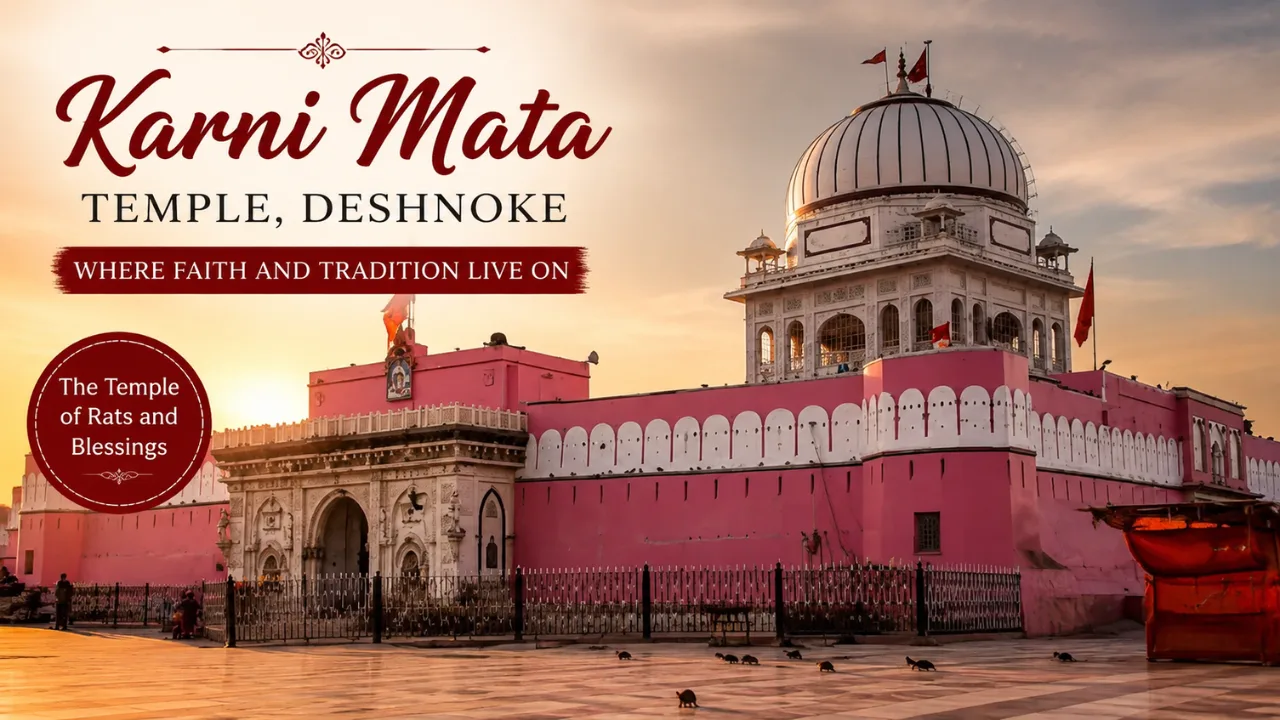
Have you ever heard of a temple where thousands of rats freely run around, eat from the same food offered to devotees, and are actually treated with great respect?
This exactly happens in the Karni Mata temple of Rajashtan. Located in the Deshnoke district, this temple is one of India’s most unique religious sites. Devotees don’t come here to avoid rats. Rather, they consider them sacred and believe that seeing them is a blessing.
Come with us on a simple journey into the story of Karni Mata to learn why this temple is so special.
Table of Contents
Who is Karni Mata?
It is believed that Karni Mata was a 14th-century Hindu mystic and an incarnation of Goddess Durga.
According to the traditions, she was born in the Charan community of Rajasthan and is known for her spiritual powers, kindness, and strong devotion.
She played a major role in regional history by blessing the founding rulers of Bikaner and Jodhpur. Over time, many fascinating stories became a part of her life. However, the most famous one explains why rats are considered sacred in her temple.
Why Are Rats Worshipped at Karni Mata Temple?
According to the story, her stepson, Laxman, was drowned in a lake. Karni Mata asked Yama (the god of death) to bring him back to life. Yama refused, as he was already reborn as a rat.
Karni Mata then proclaimed that after death, members of her Charan community would not go to the realm of Yama. Instead, they would be reincarnated as rats in her temple and ultimately take human form once again.
These sacred rats are known as Kabbas.
Famous White Rat
Among the thousands of rats in the temple, there are a few white rats. These are considered especially sacred.
According to local belief, seeing one of these white rats is considered very lucky. Some devotees believe that the white rats are manifestations of Karni Mata and her family members.
Because they are rare, people often feel especially blessed when they spot one.
Architecture of Karni Mata Temple
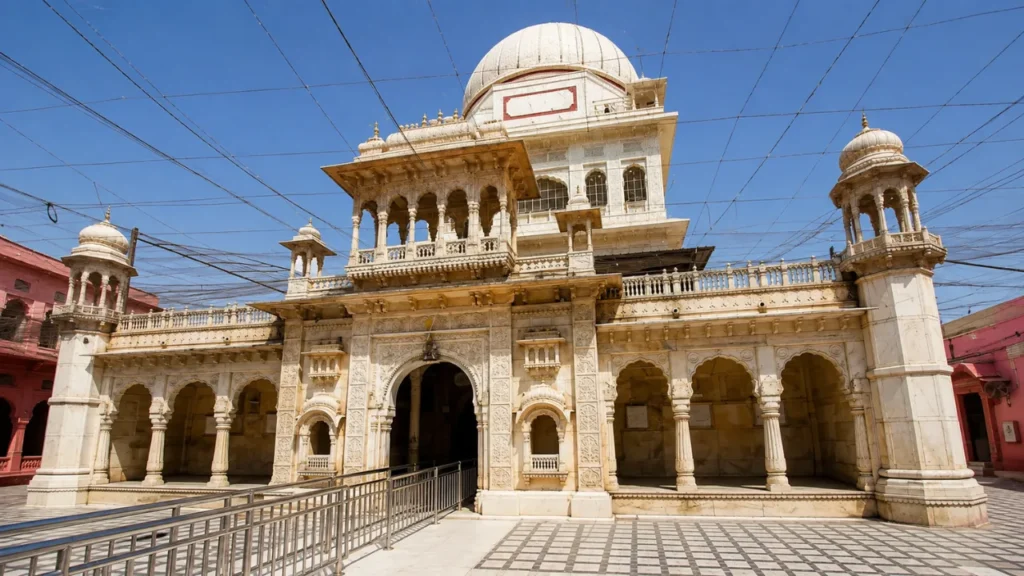
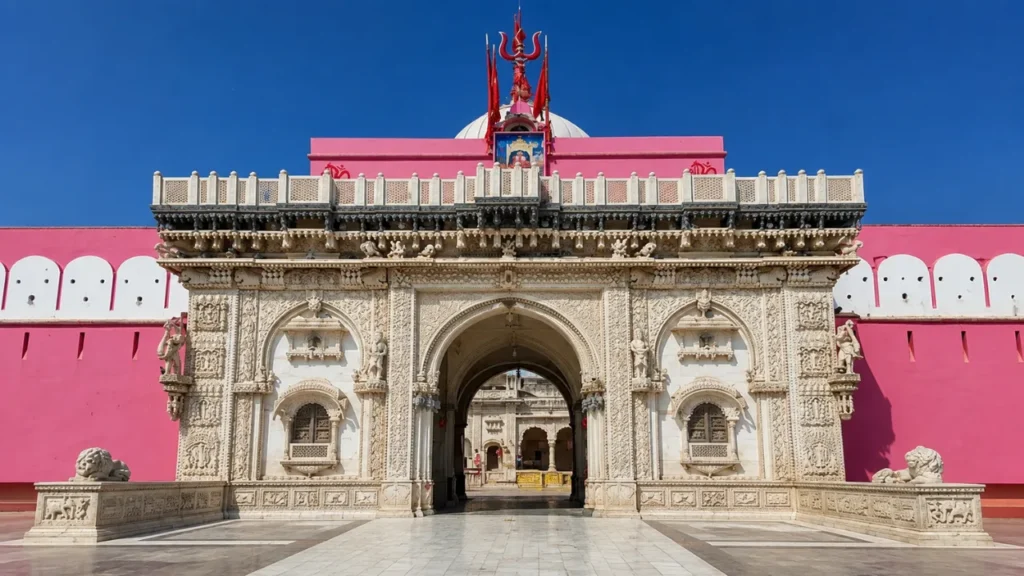
Apart from its famous rats, this temple is known for its beautiful architecture. It is made of white marble with detailed carvings and silver decorations. The temple is among the most beautiful temples of Rajathan.
The main entrance itself is magnificent, with beautifully designed doors and intricate artwork.
Inside, the atmosphere is quite different from what you might expect from such a famous attraction. The temple is filled with peaceful and devotional feelings. Thousands of devotees visit the temple with deep faith and hope.
What Do Devotees Offer at the Temple?
Devotees regularly bring food offerings for Karni Mata and the sacred rats. Milk, sweets, grains, and other food items are commonly found around the temple.
An interesting belief is that food eaten by the sacred rats is considered blessed. According to temple tradition, sharing food with the sacred rats is considered a good and auspicious act.
Another interesting temple to explore is Sanwariya Seth.
What Happens If You Accidentally Step on a Rat?
This is a natural concern for visitors. Since numerous rats wander around the temple floor, one might accidentally step on them.
As per local beliefs, accidentally killing a holy rat is considered inauspicious. Traditionally, a devotee might be expected to offer a silver or gold rat as compensation.
The temple also has a wire mesh roof to keep the rats safe from birds.
Daily Rituals and Worship
The day begins early in the morning at the temple, with devotees arriving for darshan and puja. The exact time may vary by the season or temple arrangements, so it’s a good idea to check around for aarti times before planning. A commonly published schedule is
- Mangla Aarti: Around 4:30 AM in summer and 5:00 AM in winter—the first major prayer of the day.
- Bhog Aarti: Around 8:00 AM—food is offered as bhog.
- Shringar Aarti: Around 3:45 PM—the deity is worshipped and adorned.
- Sandhya Aarti: Around 7:00 PM in summer and 6:00 PM in winter—the evening prayer.
- Shayan Aarti: Around 9:00 PM—the final worship before the temple closes.
Devotees also offer sweets, milk, and other food to the sacred rats, which are called kabbas by the locals. Offerings are also made to the priests and the temple’s maintenance.
Famous Karni Mata Fair
If you want to see the temple at its most vibrant, visit during the Karni Mata Fair. This fair happens twice a year during the Navratri festivals:
- March–April (Chaitra Navratri)
- September–October (Ashwin Navratri)
Thousands of devotees come to Deshnoke at this time to seek the goddess’s blessings. Families frequently bring their children here for their first haircut ceremony (Jadula), which is a traditional practice in many Rajput families.
The whole town comes alive with prayers, offerings, and spiritual festivities.
How to Reach Karni Mata Temple
Since the Karni Mata Temple is in Deshnok, just 30 km away from Bikaner in Rajasthan, traveling there from Bikaner is quite simple.
By Train: Deshnoke has its own railway station, located roughly 0.5–1 km from the temple.
By Road: From Bikaner, you can reach Deshnoke by bus, taxi, or private car.
By Air: The nearest airport is Bikaner Airport, roughly 42–44 km from the temple. From the airport, you can continue by taxi or another local transport option. Get the best deals on flight bookings.
Best Time to Visit Karni Mata Temple
The temple remains open throughout the year. However, the cooler months, roughly from October to March, are generally more comfortable for travelling around Rajasthan.
You can also visit during the festive seasons like Navratri to experience the special lively atmosphere of the temple. But expect large crowds during this period and book your stays in advance. Get the discount on hotel bookings.
Final Thoughts
Karni Mata Temple occupies a unique position in Rajasthan’s spiritual realm.
Whether you visit because of your faith, curiosity, history, or simply because you want to experience something completely different, Karni Mata Temple offers a glimpse into one of Rajasthan’s most fascinating traditions.
Maybe you’ll be lucky enough to spot one of those rare white rats during your visit.