
In the beautiful Garhwal Himalayas of Uttarakhand, there are five sacred temples dedicated to Lord Shiva—Kedarnath, Madhyamaheshwar, Tungnath, Rudranath, and Kalpeshwar. Together, these five temples are known as Panch Kedar.
The story connected to these temples makes this pilgrimage even more fascinating; it is believed that each temple represents a different part of Lord Shiva’s body. Let’s take a journey through all five Kedars.
Table of Contents
What is Panch Kedar?
The word Panch means five, while Kedar is associated with Lord Shiva. Panch Kedar are the highly revered temples in the Garhwal region of Uttarakhand that are dedicated to Shiva.
The five temples are
- Kedarnath – Shiva’s hump
- Madhyamaheshwar – Shiva’s navel or middle portion
- Tungnath – Shiva’s arms
- Rudranath – Shiva’s face
- Kalpeshwar – Shiva’s matted hair or jata
These temples are not located in one place. Since they are scattered across various valleys and mountainous areas, visiting Panch Kedar is both a spiritual pilgrimage and a challenging Himalayan trek.
And there is an interesting legend behind how these five temples came into existence.
Story Behind Panch Kedar
After the great war of Kurukshetra, the Pandava brothers were filled with guilt over the destruction and loss of life caused by the battle. According to popular belief, they wanted to seek the blessings of Lord Shiva and ask for forgiveness.
But Shiva did not want to appear before them.
But the Pandavas eventually found him. It is believed that Shiva took the form of a bull and tried to hide from them. He went underground but not completely; some of his body parts appeared at different locations.
- Hump → Kedarnath
- Arms → Tungnath
- Face → Rudranath
- Navel → Madhyamaheshwar
- Hair → Kalpeshwar
And thus the Panch Kedars were formed.
The Five Temples of Panch Kedar
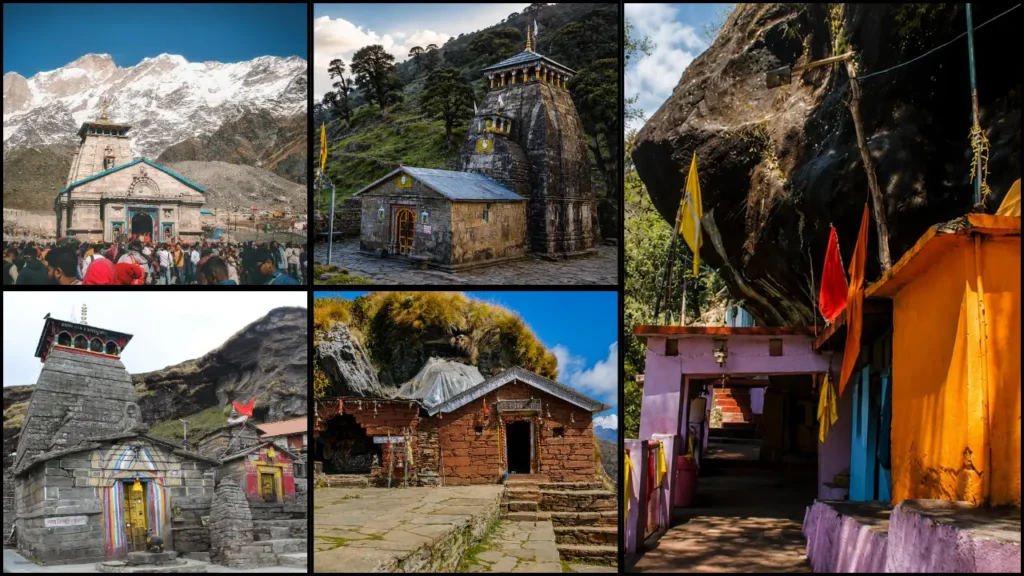
Kedarnath—Kedarnath needs almost no introduction. It is one of the 12 Jyotirlingas and is also a part of the Char Dham pilgrimage circuit. The temple stands at roughly 3,580 meters above sea level.
According to the Panch Kedar legend, the hump of Lord Shiva appeared here. The trek to the temple begins at Gaurikund and is around 16-18 km long.
Madhyamaheshwar—It is the second Kedar and is also known as Madmaheshwar. This temple is believed to be the place where the middle portion or navel of Lord Shiva appeared.
Situated at an altitude of around 3500 meters, this temple offers amazing views of Neelkanth, Chaukhamba, and Kedarnath peaks.
Tungnath—It is the highest Shiva temple in the world, sitting at an altitude of 3680 meters. Tungnath is the third Kedar where Shiva’s arms are believed to have appeared.
The 3-4 km trek to the temple is easy to moderate and takes 2 to 3 hours to complete one way.
Rudranath—Rudranath is believed to be the place where the face of Lord Shiva appeared. The trek to the temple is considered to be the most difficult in the Panch Kedar circuit.
Sagar Village near Gopeshwar is the most common starting point and involves a multi-day walk through the remote areas.
Kalpeshwar—The final temple of Panch Kedar is located in the Urgam Valley. Here, Lord Shiva is worshipped in the form of his matted hair, or jata.
It is also the only Panch Kedar temple that remains open throughout the year.
| Temple Name | Altitude (Approx.) | Base Camp / Starting Point | Trek Distance | Difficulty |
|---|---|---|---|---|
| Kedarnath | 3,583 m | Gaurikund | ~18 km | Moderate to Difficult |
| Madhyamaheshwar | 3,497 m | Ransi | ~16–18 km | Moderate to Difficult |
| Tungnath | 3,680 m | Chopta | ~3.5–4 km | Easy to Moderate |
| Rudranath | 3,600 m | Sagar Village | ~20–22 km | Difficult |
| Kalpeshwar | 2,200 m | Devgram/Urgam | ~2 km | Easy |
Best Time to Visit Panch Kedar
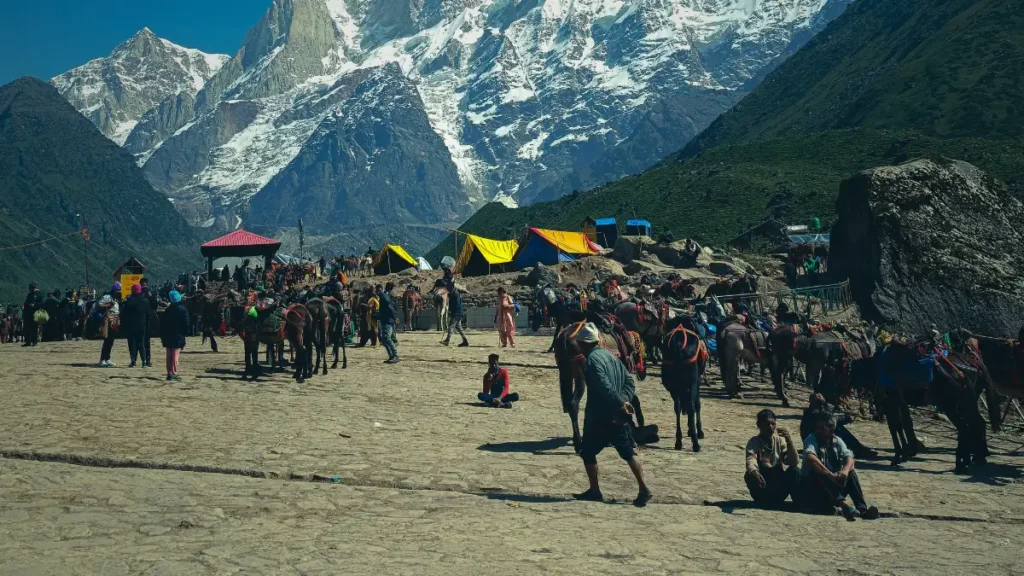
The best time depends on the temple and the conditions of the mountain routes.
For temples at high altitudes, the pilgrimage season usually falls in the warmer months when the paths become accessible after winter. The weather in the Himalayas can change quickly, so make sure to check the updated temple opening dates, road conditions, and local advice before starting your trip.
Kalpeshwar is an exception because it remains open throughout the year.
Things to Keep in Mind Before the Yatra
- Start preparing physically well before the journey.
- Carry good trekking shoes (no compromises on this one)
- Pack warm layers because temperatures can drop quickly.
- Keep rain protection with you.
- Expect poor network performance.
- Carry basic medicines and personal essentials.
- Keep enough water and snacks during long trekking sections.
Most importantly, don’t rush your journey. Mountain travel is very different from a normal road trip.
What Makes Panch Kedar So Special?
The beauty of Panch Kedar lies in the fact that the journey is as important as the destination.
You will pass through quiet forests, lush grasslands, and remote villages in the Himalayas. You will climb steep slopes, watch clouds drift by the high peaks, and finally reach the ancient Shiva temples that have been a part of the local faith for generations.
And somewhere along the way, the journey starts feeling less like a checklist of five temples and more like a personal experience.
Five temples. Five forms of Shiva. One incredible journey through the Himalayas.