Mandawa – Havelis, Tourist Places & Top Things to Do
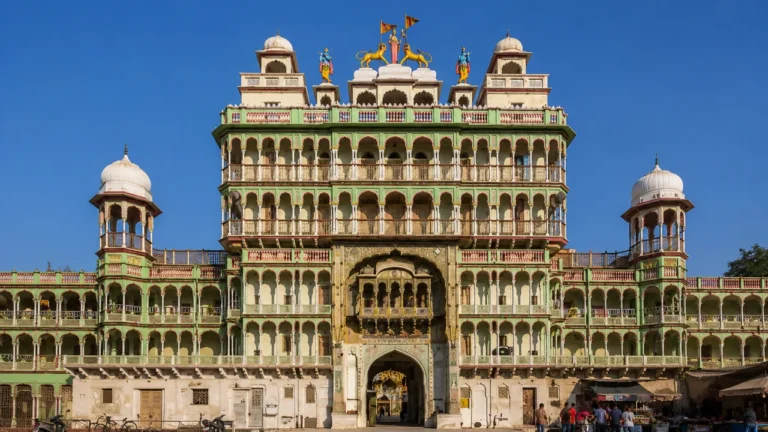
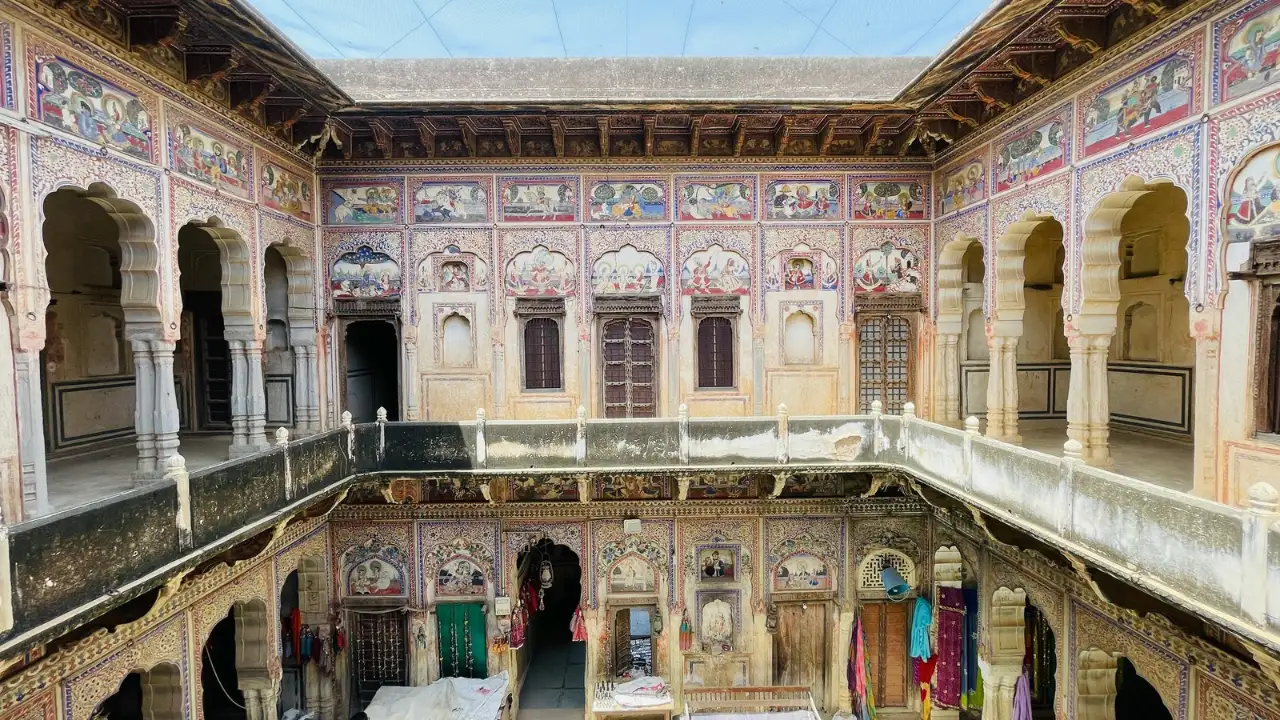
Mandawa is famous for its beautifully painted havelis, historic architecture, and colorful frescoes. Some walls tell stories from Hindu mythology, while others depict animals, people, royal processions, and scenes inspired by the outside world.
Its real charm lies in wandering through its old lanes and discovering the art, history and stories hidden around you.
Table of Contents
Where is Mandawa?
Mandawa is a historic town in the Jhunjhunu district of Rajasthan. It’s one of the most beautiful towns in the Shekhawati region, famous for its frescoes. It’s approximately 190 km from Jaipur and 240 km from Delhi, making it an easy stop if planning a road trip.
Why Is Mandawa Famous?
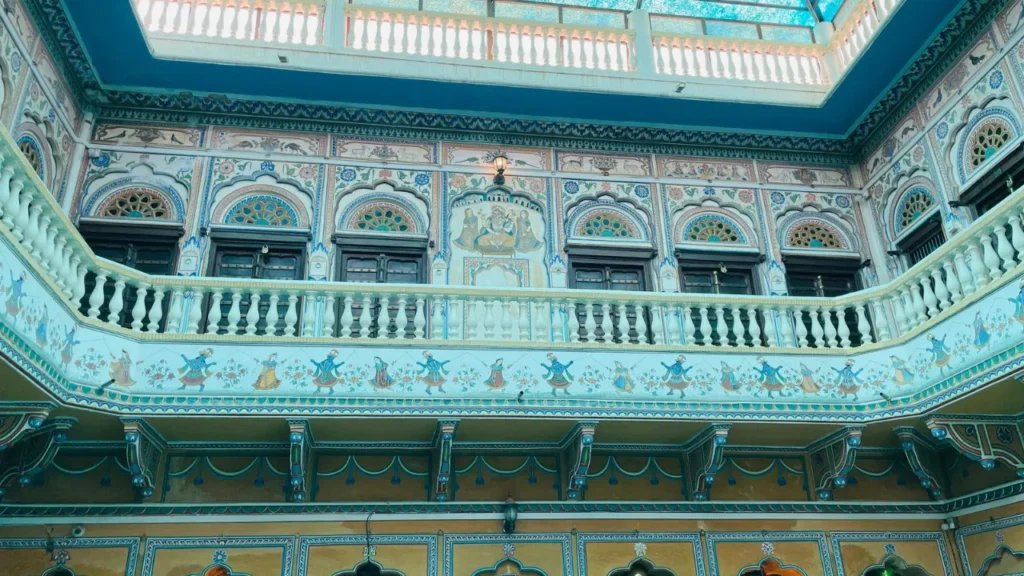
Mandawa is primarily famous for its painted havelis and frescoes. These havelis were built by wealthy merchant families, especially during the period when the towns of Shekhawati were flourishing. You may see scenes from the Ramayana and stories of Lord Krishna alongside pictures of everyday life.
A few paintings feature elements that are surprisingly modern. Over the years, European-inspired designs, trains, automobiles, and further influences have been present in artworks. It is the combination of traditional Indian stories and evolving foreign influences that makes the wall art of Shekhawati so fascinating.
Best Places to See in Mandawa
Mandawa Fort
This 18th-century fort was built by Thakur Nawal Singh to protect the trading settlement and later became the center around which the town grew. It is known for its painted gateway, frescoes, mirror work, carvings and paintings.
It features a fusion of Rajput and Mughal architecture, with massive walls, arched turrets, and open courtyards. The entrance is decorated with beautiful paintings of Lord Krishna. Its interior includes mirror work, wood carvings, and ornate balconies.
Today, the fort serves as a heritage hotel, so you can stay here and experience the historical vibe.
Havelis of Mandawa
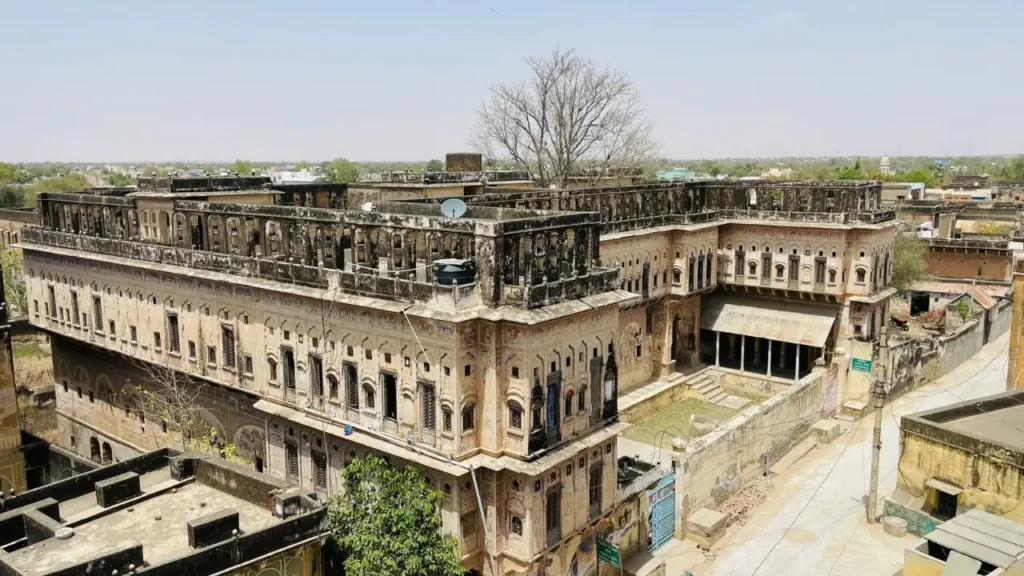
Gulab Rai Ladia Haveli– Renowned for its detailed frescoes and unique artwork, the Gulab Rai Ladia Haveli was built by a wealthy merchant named Gulab Rai Ladia. It features European and Rajput-style paintings depicting various themes. It houses a rare original gold-painted room decorated with thousands of tiny convex mirrors and mythological paintings.
Murmuria Haveli– It is one of the city’s unique havelis, famous for its unique fusion frescoes that blend traditional Rajasthani culture with global and political imagery of the early 20th century. Trade brought new ideas, products and influences to Shekhawati, and some of them eventually appeared on the walls.
Jhunjhunwala Haveli– Jhunjhunwala Haveli is another beautiful example of Mandawa’s traditional architecture and fresco work. The mansion is most famous for its private reception chamber, known as the Golden Room. Its walls and ceilings are intricately painted with real gold leaf and melted gold dust.
Mohanlal Saraf Haveli– Built in the 19th century, this haveli belonged to Saraf traders who operated along the historic trade route. It showcases fine Rajputana architecture with glass and mosaic detailing around the courtyards.
Chokhani Haveli– This historic building was divided into two mirror-like wings for two brothers from the Marwari Chokhani family. Both sides are connected by an interior corridor while having separate courtyards and entrances. Its decorative paintings and architecture add to the long list of beautifully painted houses scattered across the town.
Mandawa Market
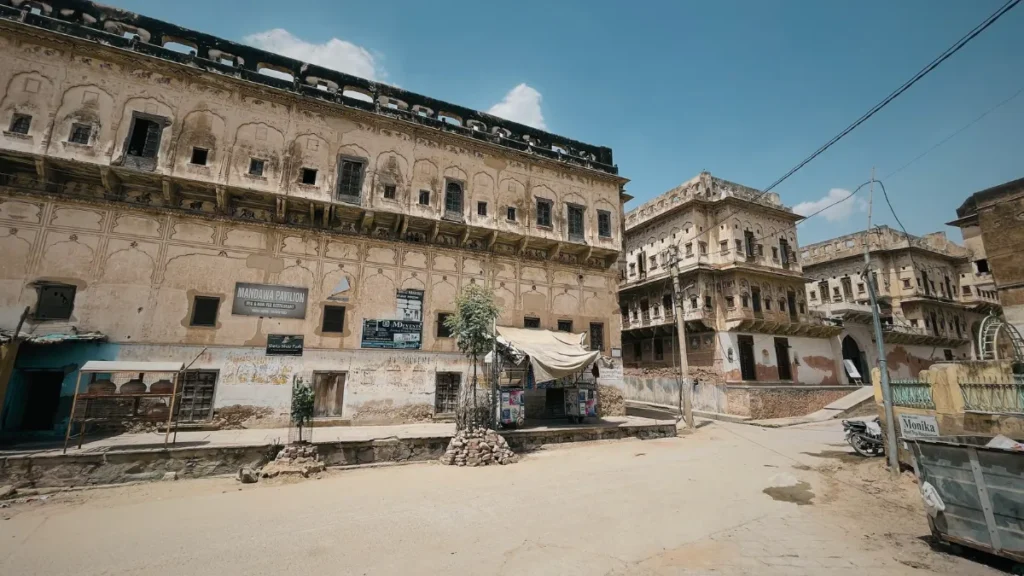
The main bazaar around the Subhash Chowk and the old havelis offers the best of Sekhawati art and craft.
The local shops and the artisan stalls are specialized in hand-painted canvas, miniature paintings, and traditional wall-fresco motifs that show Rajput folklore, royalty, and historical themes. Wooden carvings, colorful Rajasthani bandhej fabrics, and block-printed bedsheets are some of the city’s most popular specialties.
Some shops in the market also sell antique-style metal jewelry, brassware, traditional bangles, and old-fashioned metal utensils. Don’t miss the local cuisine and sweets like ghevar, onion kachori, and the iconic Rajasthani thali.
Best Time to Visit
The best time to visit the town is generally the cooler months from October to March.
In summers, Rajasthan can get extremely hot, and walking around during this period is not that comfortable. Winter is a great time to explore the havelis on foot. Early mornings and late afternoons are especially good for photography and walking. The monsoon also offers pleasant surroundings to wander around the town.
How to Reach
Mandawa is located in the Shekhawati region of Rajasthan and is well connected by road to other parts of the state.
- By air– Jaipur is the nearest airport to the Shekhawati region. From there you can continue through the bus or cab. Book you flights at the best price.
- By train– There’s no railway station in town, but you can opt for the Jhunjhunu Railway Station, which is roughly 30 km from the town.
- By road– Road travel is one of the easiest ways to reach Mandawa, especially if you are planning to explore other Shekhawati towns
Where to Stay
Staying in Mandawa is actually a good part of the experience. You can find heritage stays that offer a true Rajasthani feel. If you want to stay close to the main havelis and old streets, stay near Mandawa Fort and the main market area. This makes it easy to explore the city on foot, especially in the mornings or evenings when the weather is nice.
Places to Visit Near Mandawa
If you have some extra time, you should consider visiting other historic towns in the Shekhawati region that are full of beautiful and heritage sites.
These places together can turn a simple Mandawa visit into a perfect Shekhawati heritage trip.
How Long Do You Need in Mandawa?
You can see the main sights of the town in one day, especially if your main goal is to explore the havelis and the fort only. But if you enjoy photography, architecture or history, staying for one night can make the experience much better.
So in 1-2 days you can completely enjoy the town.
Mandawa shows you a side of Rajasthan that you can easily overlook if you are only visiting the big cities and famous forts. The beauty here isn’t always in a large monument. It’s in the painted walls you see as you walk, the old doors you pass, the quiet courtyards, and the stories hidden in the wall paintings.
So the next time you plan a trip to Rajasthan, consider adding Mandawa to your route.