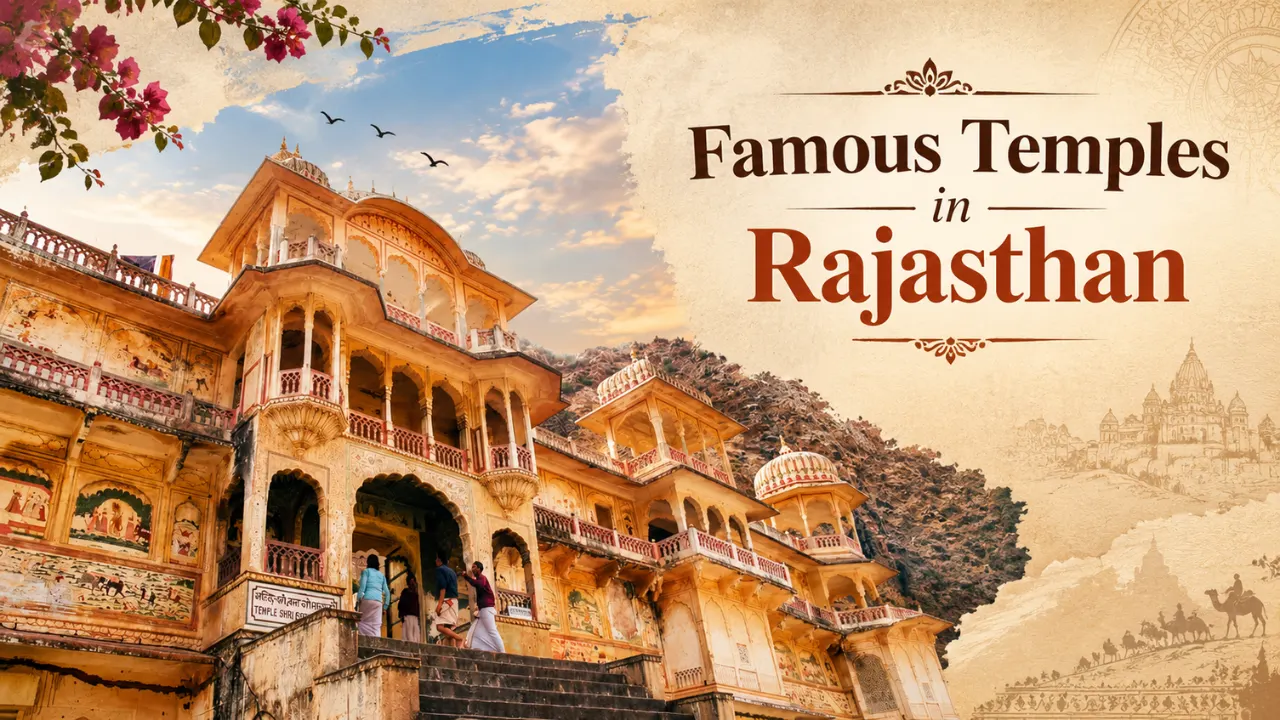
Whenever Rajasthan comes to mind, forts, palaces, and vibrant lanes are the first things we picture. Yet, this state holds another side that is equally captivating: its historic temples.
Some temples are famous for their stories, some for their beautiful architecture, and some for traditions you might not find anywhere else. From the spiritual town of Pushkar to the marble temples of Ranakpur, Rajasthan is home to many places where history and faith come together.
Table of Contents
Karni Mata Temple
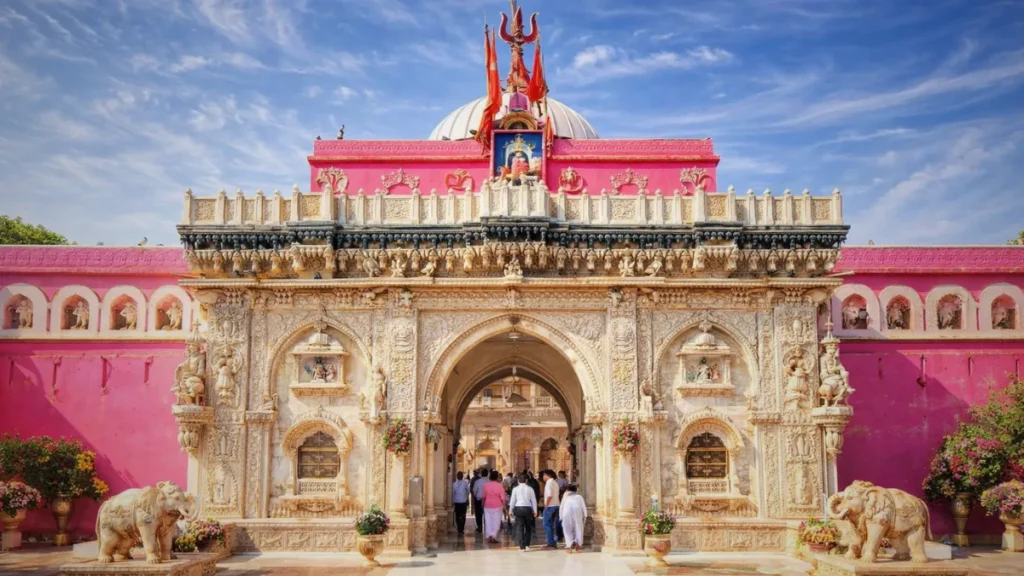
This is probably one of the most unique temples you will find in Rajasthan.
The Karni Mata Temple in Deshnok, near Bikaner, is famous for the thousands of rats that live inside the temple complex. They are considered sacred and are lovingly called Kaba by devotees.
This historic temple is famous for its unique traditions. Karni Mata is revered as the incarnation of Goddess Durga, and she is the Kuldevi (family deity) of the Charan community and the former princely states of Bikaner and Jodhpur.
Devotees have strong devotion towards her, and they believe that seeing a white rat here is especially auspicious.
Brahma Temple
Pushkar is one of the most important pilgrimage towns in Rajasthan, and it is home to one of the few famous temples dedicated to Lord Brahma.
The temple is believed to be connected with the story of how Pushkar came into existence. According to Hindu belief, Lord Brahma dropped a lotus flower here, and the places where its petals fell became sacred lakes.
In Hinduism the city is considered the tirtha-raj (king of the pilgrimage sites) and is also popular for the Shardh and Pind Daan rituals.
Eklingji Temple
Eklingji Temple is a historic and sacred temple dedicated to Lord Shiva, located in Kailashpuri, which is around 22 km from Udaipur. Here Shiva is worshipped in the form of a four-faced black marble lingam.
The temple was built by Bappa Rawal, who was the founder of the Merwar dynasty, and Eklingji is revered as the Kuldevta (family deity) of the royal Mewar families. Historically it is believed that Maharanas considered themselves as the ministers (or dewans) ruling on behalf of Ekligji (the true kind of Mewar).
The four faces represent different divine aspects: Surya (east), Brahma (west), Vishnu (north), and Rudra (south).
Salasar Balaji Temple
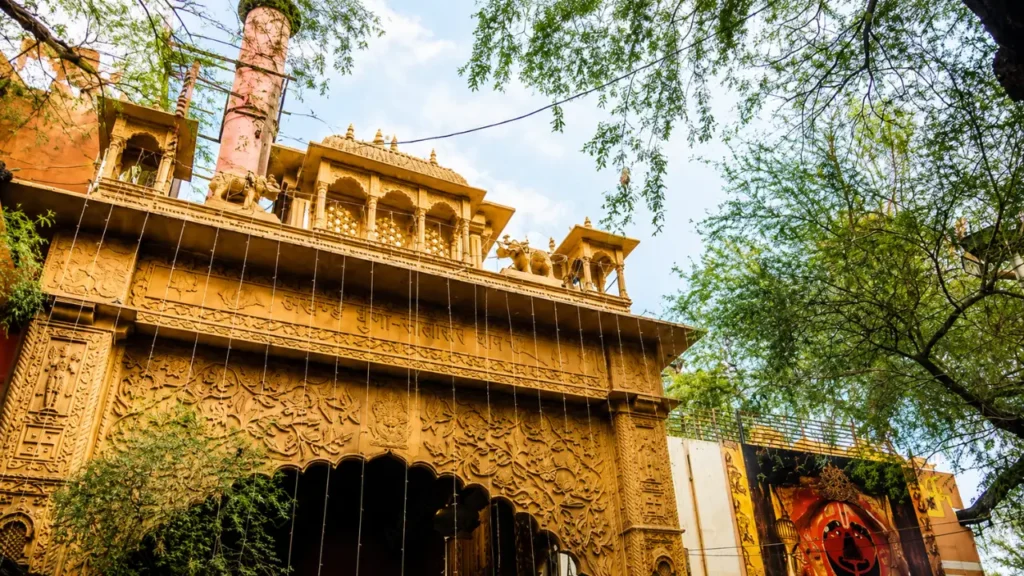
Salasar Balaji Temple is one of the important temples of Lord Hanuman; here he is worshipped in a very unique form with a moustache and beard.
The temple is located in Salasar town in the Churu district and attracts devotees from different parts of India throughout the year. According to the tradition, the idol of Lord Hanuman is believed to have appeared miraculously.
Rani Sati Temple
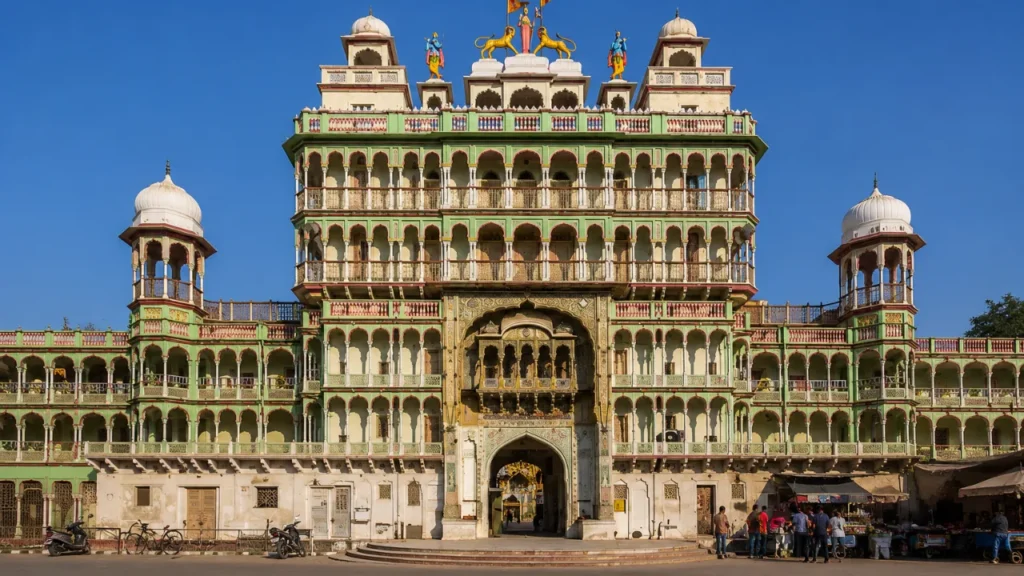
Located in the Shekhawati region of Rajasthan, the Rani Sati Temple is one of the best-known temples in Jhunjhunu.
The temple is dedicated to Rani Sati and is known for its large and beautifully decorated complex. It features colorful paintings, decorative walls, and detailed artwork that reflect the artistic style of the Shekhawati region.
There is no idol of the deity; instead, a sacred trident (trishul) is worshipped here that symbolizes power, strength and divine energy.
Khatu Shyam Temple
Khatu Shyam is one of the famous temples in Rajasthan. Located in the Sikar district, the temple is dedicated to Barbarik (grandson of the Pandav prince Bhima), who is worshipped here as Shyam Baba.
The story takes us back to the times of the Mahabharata, when Lord Krishna asked him for his head, and he offered it as a gift.
Devotees call him ‘Haare Ka Sahara’; they believe that he becomes the support of the helpless.
Ranakpur Jain Temple
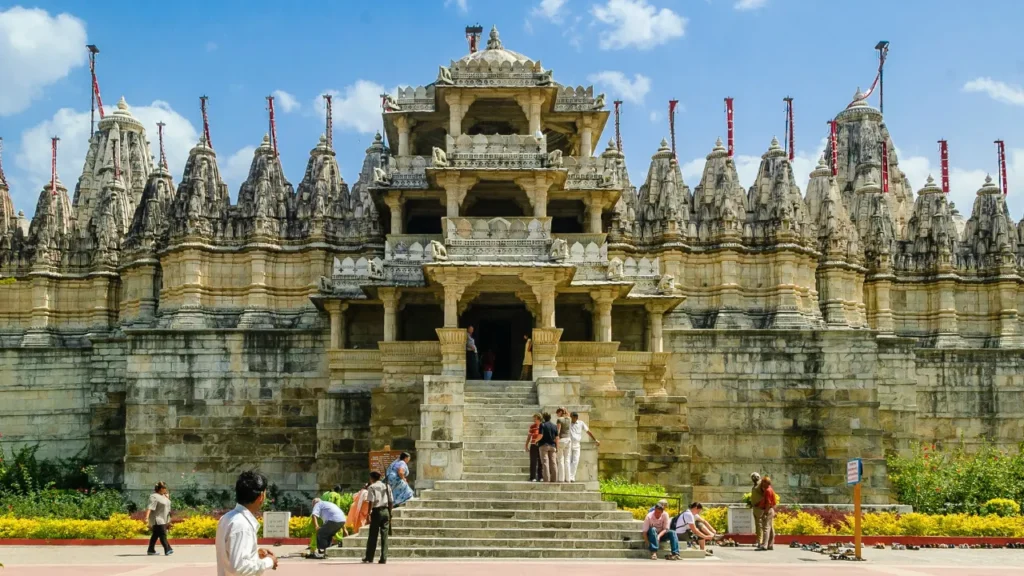
Ranakpur Jain Temple is one of the most beautiful temples in Rajasthan and is dedicated to Lord Adinath, the first Tirthankara of Jainism.
The temple is especially famous for its incredible marble architecture, which features the Chaumukha Design (four-faced architectural layout). It was commissioned by a rich Jain businessman by Seth Dharna Shah with the support of Rana Kumbha (the founder of Kumbhalgarh).
It took approximately 50 years to construct this 15th-century historic temple.
Galtaji Temple
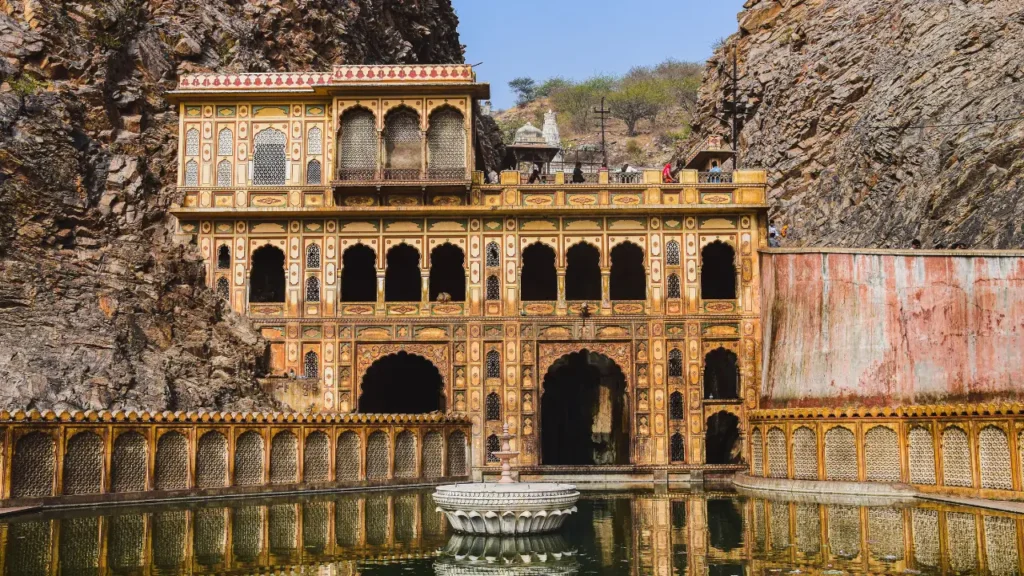
Galtaji is an ancient pilgrimage site situated just outside Jaipur. The complex consists of several temples, natural water ponds and small shrines nestled among the hills.
It is often called the Monkey Temple because a large number of monkeys can be seen around the temple complex. The structure resembles a grand palace or haveli built from the pink sandstone.
Shrinath Ji Temple
Near Udaipur, Nathdwara is famous for the Shrinathji Temple, dedicated to Lord Krishna. Shrinathji is worshipped here in the form of a seven-year-old Krishna (Bala swaroop) who is shown lifting Govardhan Hill.
This temple ranks among the significant Vaishnav pilgrimage destinations in Rajasthan and has deep connections with the Pushtimarg tradition.
Nathdwara is also famous for its traditional Pichwai paintings, frequently portraying tales and episodes connected to Lord Krishna.
Sanwariya Seth Temple
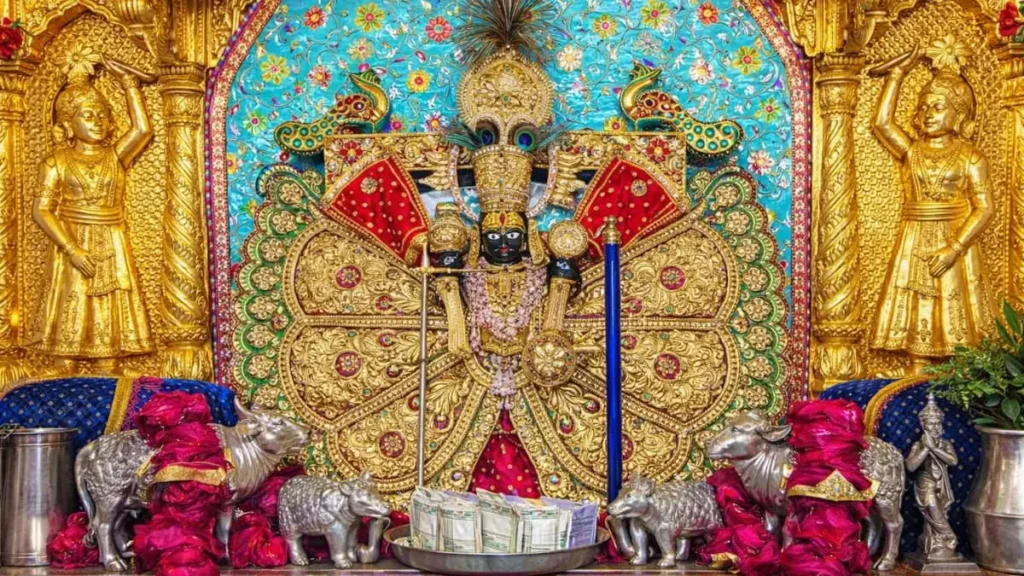
In Mandphia village near Chittorgarh, the Sanwariya Seth Temple is one of the famous temples dedicated to Lord Krishna. Here Krishna is worshipped as a Seth (businessman).
Devotees have immense faith in him, believing he helps them overcome business difficulties. They even share a portion of their profits with him. They consider the deity a partner in their business.
It is believed that the idol in the shrine is the same idol that Meerabai used to worship.
Kaila Devi Temple
In the Karnauli district, Kaila Devi Temple is dedicated to Goddess Kaila, who is worshipped as the divine manifestation of Yogmaya (sister of Lord Krishna).
The temple has two primary idols: Kaila Devi and Chamunda Devi. She is the kuldevi of the Jadaun (Yaduvanshi) Rajput dynasty and the local communities. The temple attracts a large number of devotees, especially during the annual Kaila Devi fair.
The next time you visit Rajasthan, don’t stop at the forts and palaces. Travel a little and visit one of its ancient temples. You might discover a beautiful story, a unique tradition, or simply a serene place that stays with you long after your trip.