Chhath Puja – History, Significance, Rituals & Celebrations
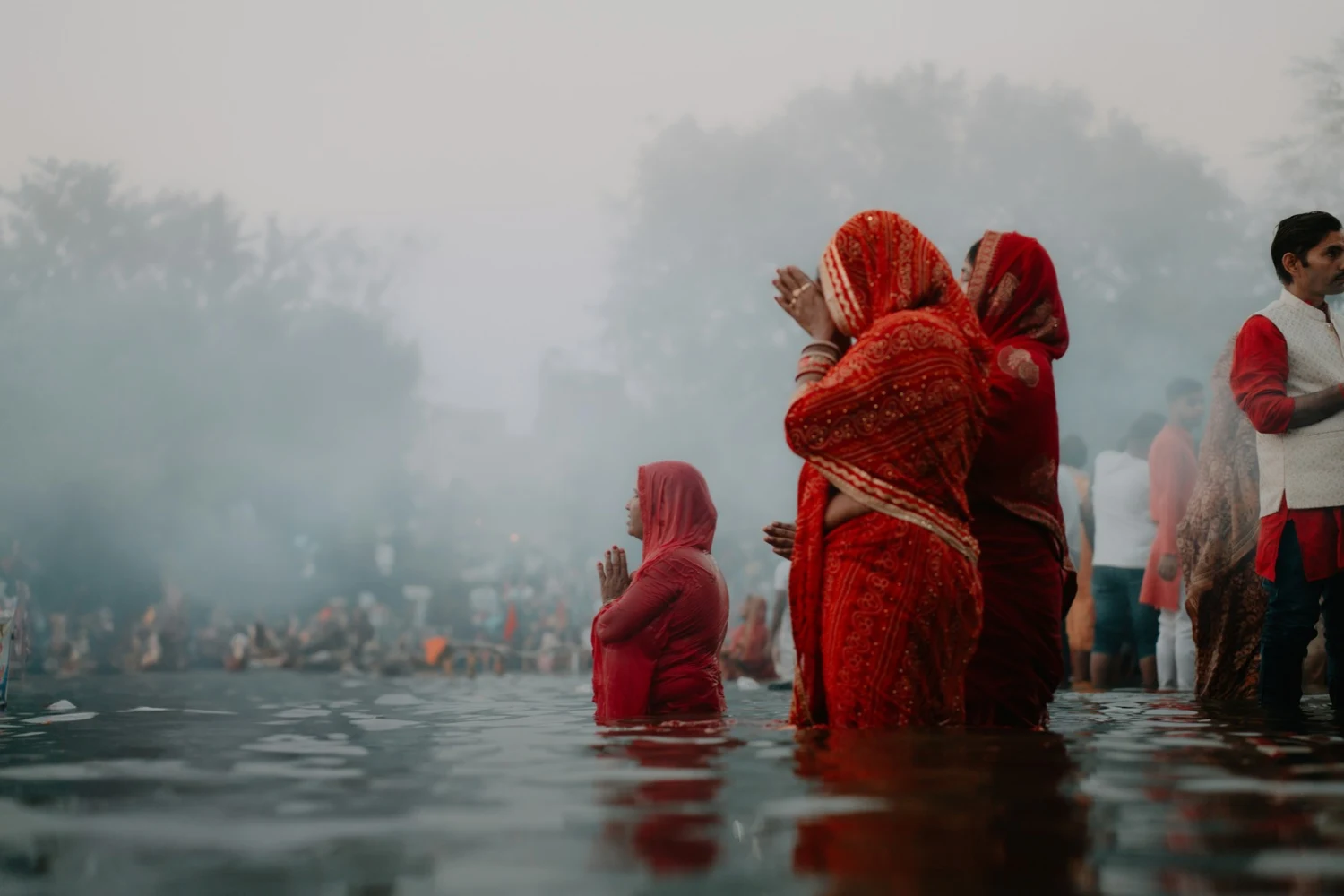
Chhath Puja is one of the most beautiful and meaningful festivals celebrated in India. It is widely celebrated in Bihar, Jharkhand, eastern Uttar Pradesh, and parts of Nepal. Devotees keep strict fasts, make traditional offerings at home, and stand in water for hours to offer prayers to the Sun. The festival beautifully reflects the connection between faith, family, and nature.
What is Chhath Puja?
Chhath Puja is an ancient Hindu festival dedicated to Surya Dev (the Sun God) and Chhathi Maiya (the sixth form of Prakriti and the sister of Surya). Chhathi Maiya is worshipped as a mother goddess associated with the well-being and protection of children. The main rituals are observed on the sixth day of the Shukla Paksha in the Hindu month of Kartik.
Why is it celebrated?
The sun is considered the source of life, energy, and light on Earth. Through Chhath Puja, devotees express their gratitude to Surya Deva for sustaining life and seek blessings for good health, happiness, prosperity, and the well-being of their families.
Devotees worship both the setting and the rising sun in this festival. It reminds us that every stage of life is important and even after the sun sets, it rises again the next morning.
Chhathi Maiya also holds a significant place in this festival. It is believed that she blesses families with children and shields them from difficulties. This is one reason why many devotees celebrate Chhath Puja with great devotion and dedication.
History and Stories Behind Chhath Puja
The history of Chhath Puja is very old, and its exact origin is not linked to any single story. The tradition of worshipping the Sun is found in ancient Hindu religious texts, including the Rigveda. Over time, various stories and local traditions have become associated with the festival.
Lord Rama and Goddess Sita
According to popular belief, when Lord Rama and Sita returned to Ayodhya after their victory over Ravana, they observed a fast and worshipped Surya Deva to purify themselves and seek blessings for the rule of their kingdom. It is believed that they performed these rituals on Kartik Shukla Shashthi, which have been passed down for generations.
Draupadi and the Pandavas
During their exile, the Pandavas faced many difficulties. On the advice of sage Dhaumya, Draupadi and the Pandavas performed Chhath Puja, which helped them regain their strength and ultimately win the Kurukshetra War.
Karna
Karna, one of the most respected warriors in the Mahabharata, was the son of Surya Dev and Kunti. He was known for his generosity, courage, and devotion to his father. It is believed that he worshipped Surya Deva by standing knee-deep in water every day. His devotion is often associated with the rituals of this festival.
King Priyavrat and Queen Malini
King Priyavrata and Queen Malini were unable to conceive. After performing a religious ritual, the queen gave birth to a stillborn child. Filled with grief, the king decided to end his life. At that moment, Chhathi Maiya appeared and advised them to worship her with full devotion. The couple followed her instructions and were eventually blessed with a child. Since then, she is worshipped as the protector of children and families.
For more details, visit the reference site.
Four Days of Chhath Puja and Rituals
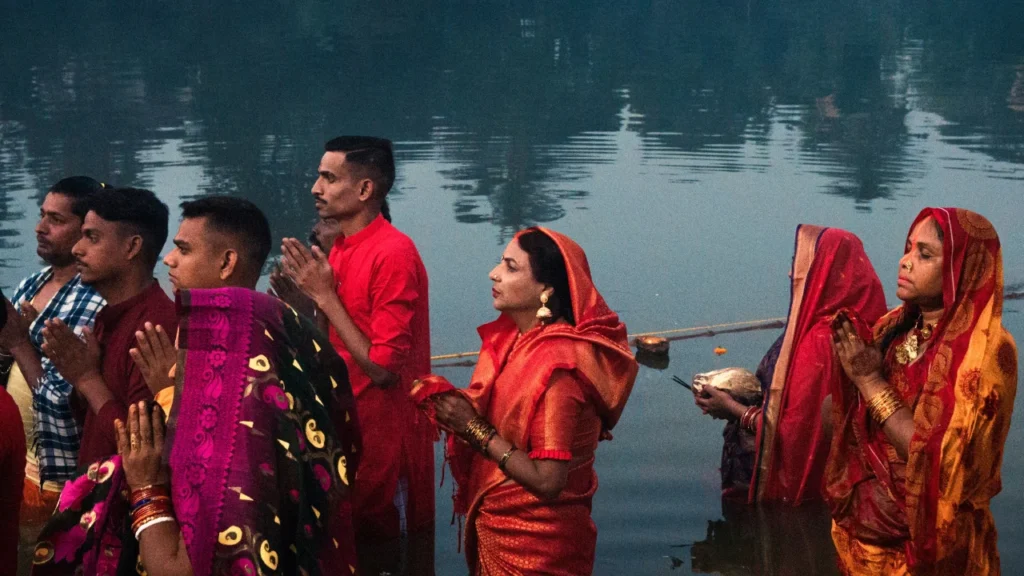
Chhath Puja is celebrated over four days, each day having its own rituals and significance. The person observing the fast is traditionally called a Vratin. Although women are often seen observing the main fast, men can also perform the rituals.
Day 1: Nahay Khay
On the first day, devotees take holy baths in rivers or ponds and clean their homes and surroundings. The person observing fast prepares a simple, purely vegetarian meal (satvik). Traditionally, the meal consists of rice, chana dal, and lauki (bottle gourd) sabzi.
Day 2: Kharna or Lohanda
On this day, devotees observe a strict day-long fast without drinking water, which completes after offering prayers to the Sun and Chhathi Maiya at sunset. In the evening, after bathing and performing puja, they prepare special prasad, which usually consists of jaggery kheer (rice pudding) and chapati or roti.
After this devotees begin a much stricter fast that traditionally continues for around 36 hours without food or water.
Day 3: Sandhya Arghya
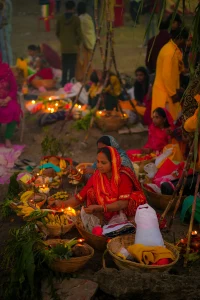
Family members prepare various offerings and arrange them in traditional bamboo baskets called soup or daura. These baskets typically contain fruits, sugarcane, thekua, coconut, sweets, and other traditional items. In the evening, they gather at riverbanks, ponds, or other water bodies. Devotees stand waist-deep in water and offer prayers to the setting sun.
In many places, a special ritual called Kosi is also performed at night. Sugarcane stalks are decorated like a small umbrella, and earthen lamps and offerings are placed beneath it.
Day 4: Usha Arghya
Devotees gather again at the riverbanks before sunrise with their baskets and wait for the first rays of the sun. As the sun rises, they offer Arghya to Surya Dev. After the morning rituals are completed, the fast is broken. This is called Parana. The prasad is then distributed among family members, friends, and neighbors.
With this, the four-day Chhath Puja comes to an end.
Where Chhath Puja is celebrated?
Chhath Puja is primarily celebrated in Bihar, Jharkhand, eastern Uttar Pradesh, and parts of Nepal. It is one of the most significant festivals in these regions, where people celebrate it with great devotion and enthusiasm.
Over the past few years, the festival has spread to other parts of India, including Delhi, Mumbai, and Kolkata. People living away from their hometowns also follow their family traditions and gather near rivers, lakes, and other bodies of water to offer prayers to the setting and rising sun.
Chhath Puja isn’t just about fasting or observing rituals for four days. It’s about the faith that gives people strength even in difficult times and the devotion with which they follow the traditions handed down from their families.
Standing in cold water for hours, carefully preparing the prasad, and waiting for the first rays of the sun all require immense patience and dedication. Yet, devotees perform these rituals every year with smiles and complete faith.
The festival also carries a beautiful message of gratitude towards nature. This combination of devotion, discipline, and simplicity is what makes Chhath Puja such a special part of Indian culture.