Shakti is often referred to as Goddess Durga, Parvati or Kali, but the Divine Mother in Hindu traditions is described in many different forms. Among them are the 10 Mahavidyas, also known as the Ten Great Wisdom Goddesses.
Each Mahavidya has its own unique form, story, and meaning. Some are serene and graceful, while others are fierce and mysterious. Collectively, they show the many sides of Shakti—from strength and protection to wisdom, transformation, and prosperity.
Table of Contents
Who are the 10 Mahavidya?
In Hindu Tantric traditions, Shakti is worshipped as the Mahavidya, a group of goddesses who represent different aspects of the Supreme Divine Mother—Adi Parashakti. These goddesses are known as Dasa Mahavidya or Dasha Mahavidya.
- Kali
- Tara
- Tripura Sundari or Shodashi
- Bhuvaneshwari
- Bhairavi
- Chhinnamasta
- Dhumavati
- Bagalamukhi
- Matangi
- Kamala
The order and some details can vary between traditions and texts, but this is the commonly used contemporary sequence.
The most famous and main complex, which houses all the ten Mahavidya temples, is the Kamakhya Devi Complex in Guwahati, Assam.
Story of Mahavidyas
According to the text Shakta Maha-Bhagavata Purana, when the Prajapati Daksha organized a grand yajna, he didn’t invite his daughter Sati and Shiva because he wasn’t happy with their marriage.
When Sati learned about the yajna, she was eager to go to her father’s place. She insisted on Shiva, but he refused, stating that going uninvited to an event would only bring dishonor.
Out of anger Sati took her cosmic, terrifying form. Shiva feared and tried to escape the place, but she blocked all ten directions by taking 10 different forms around him. These ten forms are the Mahavidyas, the fierce and powerful forms of Shakti.
Kali
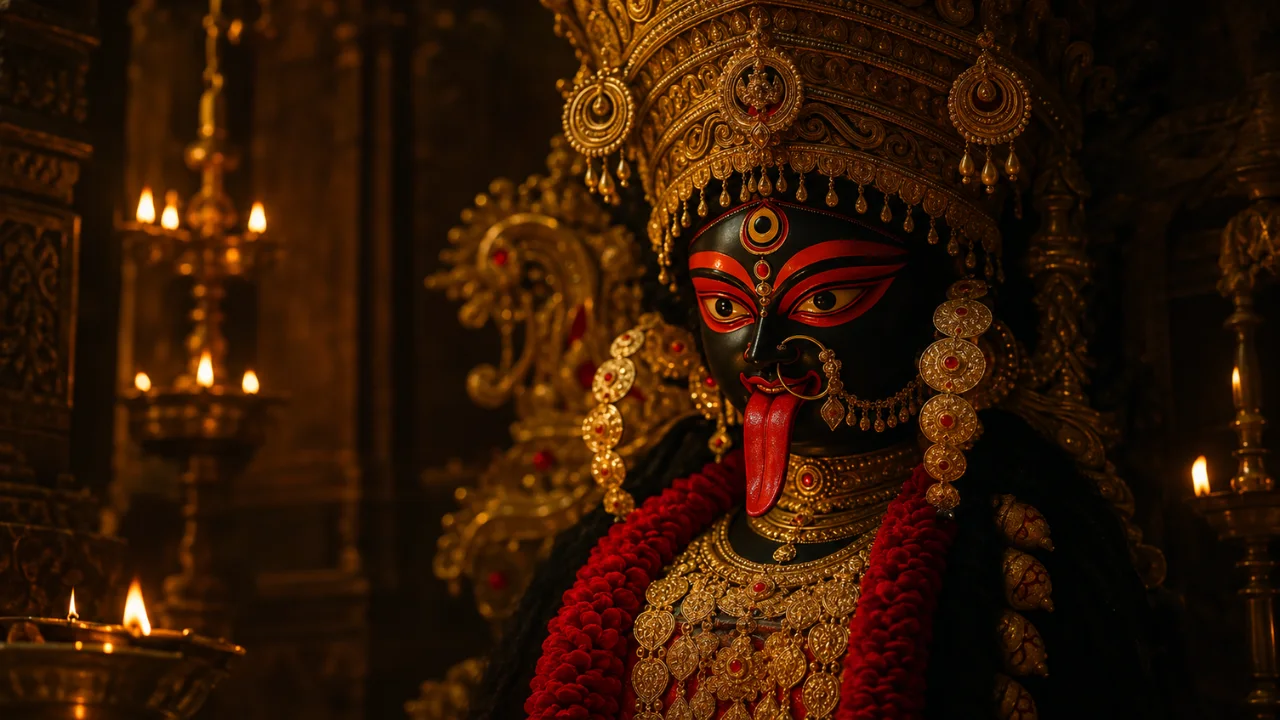
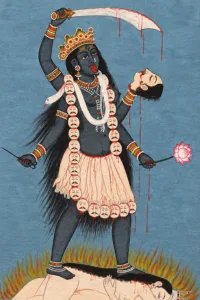
Maa Kali is first among the Mahavidya. She is shown with a dark or black complexion, loose hair, a fierce expression and a garland of heads. In many traditional depictions, she stands over Shiva.
Her name is connected with Kala—time. And eventually time consumes everything; kings, kingdoms, wealth, beauty and even our physical bodies change with time. Kali represents this powerful truth. Her form reminds us that destruction is also a part of the natural cycle.
In simple terms it can be said that Kali represents time, transformation, destruction of ego and the reality that nothing in the material world lasts forever.
Tara
Devi Tara is the second Mahavidya, a powerful form of Shakti who helps devotees cross over the ocean of danger, fear or difficulty. Her name means ‘star’ or ‘the one who saves and protects’.
She is often depicted with a blue or dark complexion, holding a skull cup and a sword, which symbolize the destruction of ignorance.
She represents protection, guidance, compassion and the wisdom that helps us cross difficult situations.
If you want to experience the spiritual energy of Shakti, then you can visit these 9 famous Devi temples.
Tripura Sundari
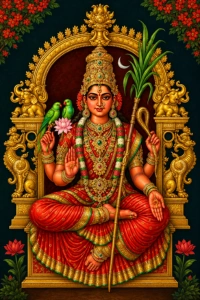
Tripura Sundari, also known as Shodashi, is one of the most beautiful and gentle-looking forms among the Mahavidyas. Her name can be understood as the beauty of the Tri-lokas (the three worlds).
She is the central deity of the Sri Vidya Tantra, which is one of the important traditions within Shaktism.
She is usually depicted as a radiant 16-year-old girl (Shodashi), holding a sugarcane bow, flower arrows, a noose and a goad, and seated on a throne symbolizing her complete control over the universe.
Bhuvaneshwari
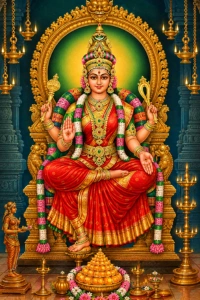
The fourth Mahavidya is Bhuvaneshwari. Her name comes from Bhuvana, meaning world or universe, and Ishwari, meaning goddess or ruler. She is revered as the Goddess of the Universe.
She symbolizes the boundless cosmic space where all creation unfolds and exists. She reminds us that the Divine Mother is not limited to a single place.
Bhuvaneshwari represents the universe, space, creation and the vast nature of Shakti.
Bhairavi
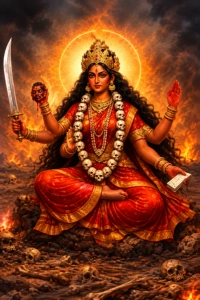
Bhairavi is one of the fierce forms of the Mahavidyas. She is the female counterpart or consort of Bhairava, the fierce form of Lord Shiva.
She is often depicted with a red or dark complexion, three eyes, and four hands. In some depiction, she wears a garland of human skulls or severed heads and sits atop a corpse.
She is deeply associated with the root chakra (Muladhara) and the awakening of inner spiritual energy (Kundalini). Devotees worship her in Tantric and Shakta traditions for courage, protection, inner strength and to remove inner evils or obstacles.
Chhinnamasta
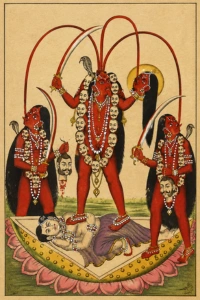
Chinnamasta is known for her extremely striking appearance.
She is traditionally depicted holding her own severed head, with three streams of blood flowing from her neck; two feed her female attendants (Dakini and Varnini), while the third flows into her severed head. The flowing blood represents the continuous cycle of creation, preservation and destruction.
She typically stands or sits upon a copulating couple, Kama (the god of desire) and Rati, which signifies mastery over sexual desire and worldly illusions.
Chhinnamasta is associated with self-sacrifice, life energy, desire and the relationship between giving and sustaining life.
Dhumavati
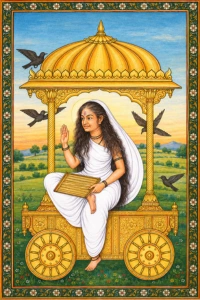
Maa Dhumavati is traditionally depicted as an old widow, often riding a chariot carrying a crow emblem.
She represents the smoke that remains after the burning of a pyre or the universe, representing the separation, emptiness, and greatest state of understanding that comes from deep grief or loss.
She holds a winnowing basket (used to separate grain from chaff) in her hands, which represents her ability to separate truth from illusion and ward off negativity.
Dhumavati symbolizes the parts of life that people usually don’t want to talk about: loss, loneliness, old age, hunger, disappointment and impermanence.
Bagalamukhi
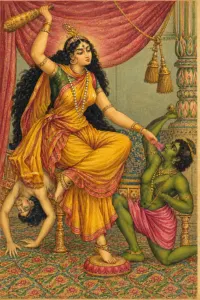
The eighth Mahavidya is Bagalamukhi, often associated with a striking yellow appearance, commonly known as Pitambari Devi (the goddess in yellow) and Shatrubuddhivinashini (the destroyer of the enemy’s intellect).
Traditional imagery shows her holding the tongue of a demon while raising a weapon. This symbolism is connected with the power to stop, silence or restrain harmful forces.
She governs Stambhana, which is the divine ability to paralyze, freeze, or silence negative energy, falsehoods, and adversaries. Devotees worship her for protection against black magic, success in legal disputes, and victory over tough obstacles.
Matangi
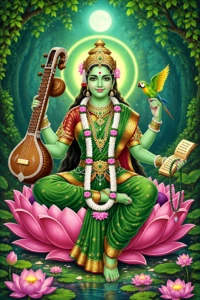
Matangi is the fierce and tantric form of Saraswati. She is strongly connected with speech, music, knowledge and artistic expression.
Her Tantric symbolism deliberately moves beyond conventional ideas of purity and social boundaries. Some traditional descriptions even associate her with offerings that are considered leftover or impure.
In this magnificent form, she is depicted seated on a royal throne, with an emerald-green or dark complexion, holding a veena and a parrot.
Kamala
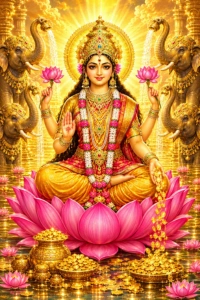
As the tenth and final Mahavidya in Hinduism, Goddess Kamala (or Kamalatmika) embodies the Tantric aspect of Goddess Lakshmi, the deity of wealth, prosperity, and abundance.
She is depicted sitting on a fully bloomed lotus flower, which symbolizes purity and spiritual awakening. She has four arms, two holding the lotus flower, one showing the varada mudra (the boon-granting gesture), and the other showing the abhaya mudra (the gesture of fearlessness).
She teaches that material comforts and riches are not barriers to spiritual growth but sacred tools for survival and service, linking worldly prosperity with spiritual wisdom.
The Dasa Mahavidya are not only the ten different goddesses with ten different stories, but they are the ten powerful ways of looking at Shakti—the Divine Feminine power. People often think women only have a soft side, but the Mahavidyas remind us that they can also be Kali or Bhairavi. There’s a lot we can learn about Hinduism and its traditions, and we help you learn about our culture in simple terms on this platform.