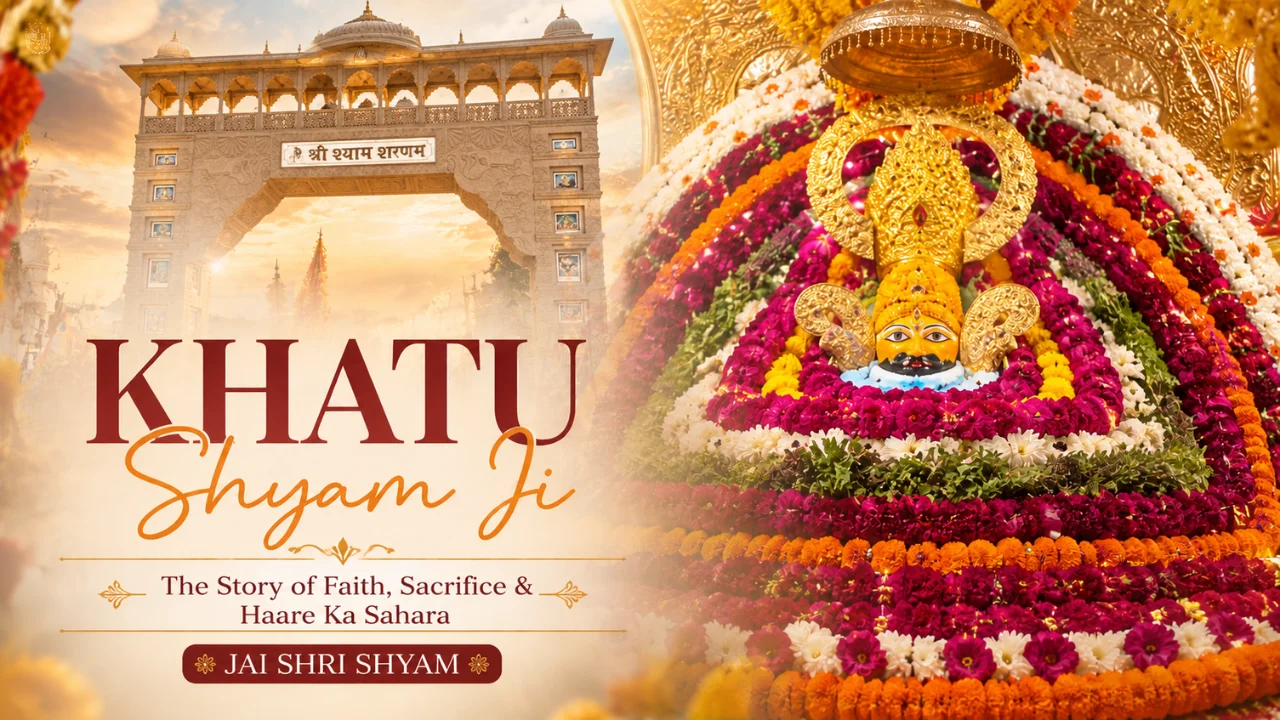
If you ever travel through the spiritual side of Rajasthan, there is one name you will hear again and again: Khatu Shyam Ji.
Every year, thousands of devotees visit here with prayers, hopes, and sorrows, trusting that Shyam Baba will take away all their troubles. According to tradition, the deity in the temple is Barbarika, a brave warrior from the Mahabharata.
So, let’s find out how Barbarika became Baba Shyam.
Table of Contents
Where Is Khatu Shyam Temple?
The temple is located in the Khatu town in the Sikar district of Rajasthan. The temple is located at a distance of about 17 km from Ringas Junction and 80 km from Jaipur, which makes traveling here from different parts of Rajasthan quite easy.
During the festive season, especially during the Phagun Mela, this small town gets filled with a large crowd of devotees carrying saffron flags and singing bhajans.
Who Is Khatu Shyam Ji?
According to the mythology, Khatu Shyam is Barbarik, the son of Ghatotkacha and grandson of Bhima.
Barbarik wasn’t an ordinary warrior. It is said that he possessed extremely powerful arrows, known as his Teen Baan. Using these arrows, he could change the course of a battle almost immediately.
Promise of Barbarik
During the war of Mahabharta, Barbarik decided to join the battle. But he made a promise to his mother Morvi to support the weaker side in the battle.
If Barbarika entered the war, the weaker side would become stronger. Then the other side would become weaker, causing Barbarika to switch sides again. The cycle would continue until almost nobody was left.
Krishna understood this and decided to test him.
Krishna took the form of a Brahmin and instructed Barbarika to mark every leaf on the peepal tree using his arrows. Barbarika agreed, and the arrows successfully marked each leaf. Krishna then slipped one leaf under his foot. The arrow stopped and hovered over Krishna’s foot, exposing the hidden leaf. Krishna understood that Barbarika possessed immense power.
Why Did Krishna Ask for Barbarika’s Head?
Krishna then asked Barbarika for the greatest sacrifice—his head.
Barbarik agreed, but he requested to see the entire Mahabharata war. Krishna granted his wish and placed his head at a point where he could witness the entire war.
And according to the tradition, after seeing the entire war, Barbarika recognized Krishna as the true force behind the victory.
From Barbarika to Khatu Shyam
According to the story, pleased by his devotion and sacrifice, Krishna gave Barbarik a blessing that in Kaliyuga he would be worshipped by his name, ‘Shyam.’
This is why devotees today worship Barbarika as Khatu Shyam Ji.
Mystery of the Sacred Head
The story of Khatu Shyam does not end with the Mahabharata. According to local tradition, the sacred head of Barbarika eventually appeared in the area now known as Khatu.
The story says that a cow would regularly release milk at a particular spot. Curious about this unusual event, people dug into the ground and discovered the sacred head.
The place where the head was discovered is now believed to be known as Shyam Kund.
If you’re exploring sacred destinations like Khatu Shyam Ji, you can also read about Salasar Balaji, another powerful temple in Rajasthan that holds deep spiritual significance for devotees.
Why Is Khatu Shyam Called “Haare Ka Sahara”?
This is probably the most beautiful part of the story of Khatu Shyam. “Haare Ka Sahara” translates to the support of those who have given up or feel defeated.
People come to Khatu for various reasons: some due to business losses, some because of family troubles, and others because life didn’t turn out the way they hoped.
Devotees genuinely believe Baba Shyam stands beside them during difficult times. That emotional connection is one of the biggest reasons Khatu Shyam has become so popular across India.
Famous Khatu Shyam Temple
The main temple is traditionally associated with the sacred head of Barbarika.
The current temple features beautiful white marble construction, with detailed designs and traditional elements that give the place a grand yet serene look.
Inside the sanctum, devotees can seek the blessings of Baba Shyam, beautifully dressed and decorated with flowers and ornaments.
Shyam Kund
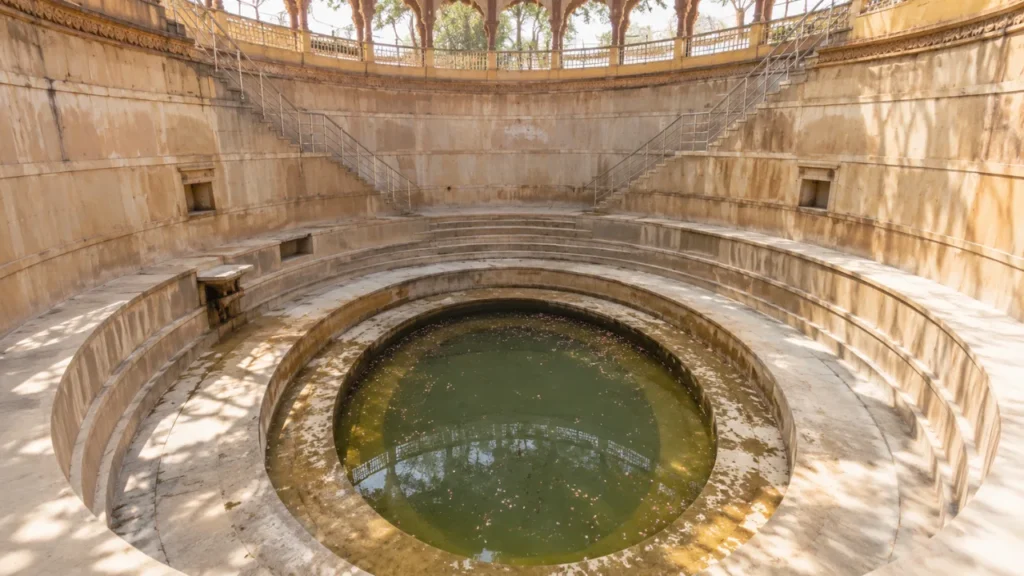
Shyam Kund is a sacred pond close to the main temple that is connected with the discovery of Baba Shyam’s head.
For devotees this kund is deeply sacred. It is believed that taking a holy bath in the kund removes sins and brings blessings.
Why Do Devotees Carry a Nishan?
Every year, thousands of devotees carry colorful flags called Nishan as offerings to Shayam Baba.
The entire environment becomes highly energetic, with groups of devotees seen marching towards Khatu while carrying the Nishan, singing devotional songs, and chanting Baba’s name.
Phalguna Mela
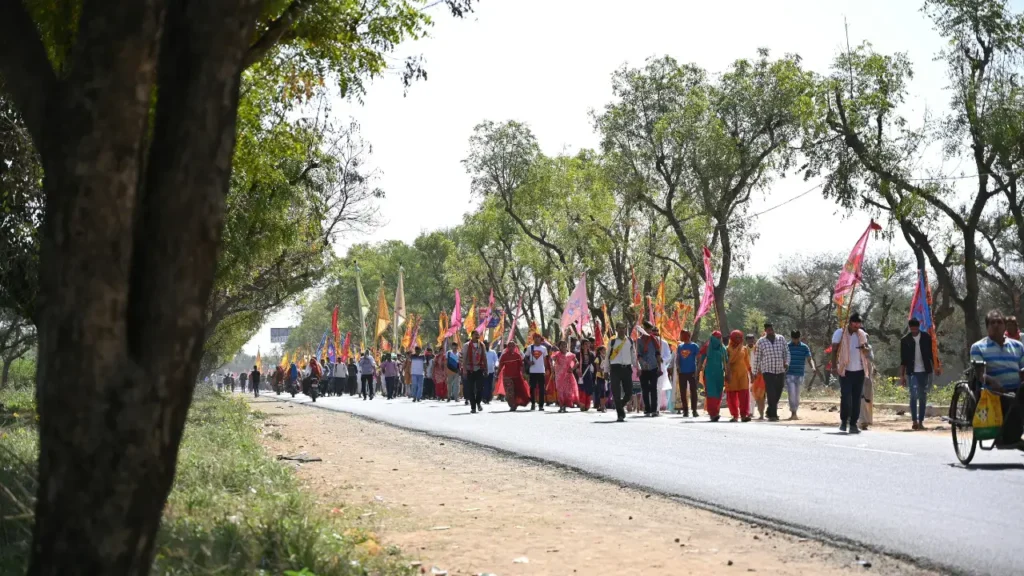
During the Phalguna Mela, Khatu Shyam hosts one of the largest religious gatherings in Rajasthan. The festival takes place around Phalguna Shukla Ekadashi and Dwadashi, which generally fall in February or March.
Devotees from different parts of India take part in this celebration. And many devotees walk long distances as an act of devotion.
When Should You Visit Khatu Shyam?
Khatu Shyam can be visited year-round.
If you want to experience the biggest celebration, the Phalguna Mela is the best time to visit. But expect a heavy crowd during this time. So please consider the advance booking for stays. Get the best deals on hotel bookings.
If you prefer peace and quiet, it is better to travel outside of major festival times. The winter months are generally the best time to visit Rajasthan.
How to Reach Khatu Shyam?
Khatu is well connected with rail and road.
The major railway used by pilgrims is Ringas Railway Station; from there you can easily reach the town through local buses and taxis. So if you’re planning a Rajasthan spiritual trip, Khatu Shyam can easily be combined with other destinations like the Salasar Balaji Temple and Jeen Mata Temple.
Final thoughts
The story of Khatu Shyam Ji is about sacrifice, faith, and hope. From Barbarika’s promise to support the weaker side to the blessing he received from Lord Krishna, every part of the story has a reason why devotees feel so connected to Baba Shyam.
And that is why they say with complete faith, “Hare ka Sahara, Baba Shyam Humara.”