

Have you ever wondered why our grandparents asked us to remove our shoes before entering the temple? Or why do we touch elders’ feet?
Growing up in India, many of us followed these traditions without questioning. We were simply told, “This is how it has been done for generations.”
But the interesting part is—many Indian traditions are not just based on faith. They also have practical, scientific, and psychological benefits. Our ancestors observed nature, understood the human body, and created customs that helped people live healthier and happier lives.
Let’s explore the science behind some of India’s most popular traditions.
Table of Contents
Why Do We Join Hands and Say “Namaste”?
Today, people around the world know the greeting “Namaste.”
Bringing your palms together activates many nerve endings in your fingers. According to some researchers, this simple gesture can boost focus and mindfulness by making you more aware of the present moment.
Unlike a handshake, Namaste doesn’t involve physical contact, which reduces the spread of germs.
Most importantly, it promotes respect. The word “Namaste” means, “I bow to the God within you.” It combines kindness, humility, and mindfulness.
Why Do We Ring Temple Bells?

Have you noticed that temples usually have large bells at the entrance?
The sound of a bell instantly captures our attention and helps us forget external distractions. Some experts say that the vibrations produced by the bell can improve focus by capturing the brain’s attention.
From both a spiritual and scientific perspective, ringing the bell prepares the mind for prayer and meditation.
Why Do We Touch the Feet of Elders?
Touching the feet of parents, grandparents, teachers, and elders is a beautiful Indian tradition. From a social perspective, it teaches humility, gratitude, and respect.
Some people also think that when elders bless you by placing their hand on your head, it builds a positive emotional connection that increases confidence and happiness.
Why Do We Remove Shoes Before Entering a Temple or Home?
One of the important things we learn is to leave our shoes outside before entering a temple or someone’s home.
The most obvious reason is hygiene. Shoes collect dust, dirt, bacteria, chemicals, and germs from the roads. Keeping them out helps keep the interiors clean.
Temples were traditionally built on stone floors that were naturally cool. Walking barefoot on these surfaces can gently stimulate pressure points in the feet, just like acupressure. It also helps people feel grounded and relaxed. It is also seen as a sign of humility and respect.
Why Do We Use Turmeric in Rituals?
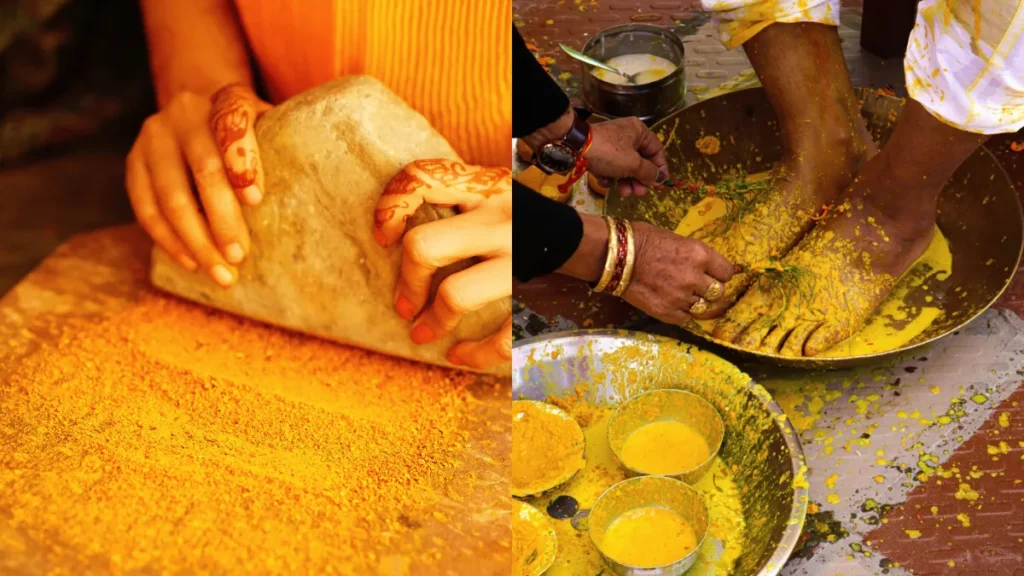
In India, turmeric is not only a kitchen spice. It contains curcumin, which is a natural compound possessing anti-inflammatory and antioxidant properties.
Traditionally, turmeric is applied before weddings, used in religious ceremonies, and included in daily cooking.
Its bright yellow color also symbolizes purity, positivity, and prosperity.
Why Do We Light a Diya Every Evening?
Lighting a diya is one of the most peaceful Indian traditions. Back in the day, before electricity, lamps were used for light after sunset.
Nowadays, this practice helps create a tranquil atmosphere. Watching a soft flame can reduce stress and improve concentration, just as candle meditation does. Using natural ghee or sesame oil adds a subtle fragrance and warm light, making the environment serene and inviting.
It also symbolizes the victory of light over darkness and knowledge over ignorance.
Why Do We Burn Camphor and Incense?
Camphor and incense have been used in temples and homes for centuries.
The pleasant aroma of natural camphor is calming for many individuals. Similarly, traditional herbs in incense can refresh the environment, depending on the quality of ingredients.
This can improve mood, reduce stress, and create a peaceful atmosphere for meditation or prayer.
Why Is Tilak Applied on the Forehead?
The area between our eyebrows is frequently referred to as the “third eye” or Ajna Chakra in yoga.
This spot has many nerve endings. Applying sandalwood paste, turmeric, or kumkum can provide a cooling sensation and help people feel calm and focused. Previously, sandalwood paste was particularly popular during the summer because it naturally cools the skin.
The tilak also reminds us to stay aware, peaceful, and spiritually connected.
Why Is Tulsi Worshipped?
Tulsi, also called holy basil, is found in many Indian households. It is respected for both its spiritual and medicinal properties.
Modern research indicates that tulsi contains natural compounds that can boost immunity, help the body manage stress, and possess antioxidant properties. Having tulsi around the house also enhances greenery and improves the environment.
Why Do We Sit on the Floor While Eating?
The earlier generation preferred to eat while sitting cross-legged on the floor. This stretches the back and improves flexibility.
By sitting this way, people eat slowly, which gives the brain enough time to process the feeling of fullness, which can help prevent overeating and improve digestion.
Today, many yoga experts still recommend this sitting position during meals.
Why Is Fasting So Common in India?
Many people keep fasts on Ekadashi, Navratri, Mahashivratri, and various other festivals.
Scientifically speaking, giving the digestive system a break can offer health benefits to some. Modern research on intermittent fasting indicates it can support metabolism and help regulate blood sugar in healthy people.
Spiritually, fasting is also seen as a way to develop discipline and self-control.
Final Thoughts
Indian traditions are like old books, filled with hidden knowledge. Some customs help keep us healthy, some teach discipline and kindness, while others bring families and communities together.
Even after thousands of years, many of these customs continue to fit into modern life. Sometimes, the oldest traditions still have something valuable to teach us.