
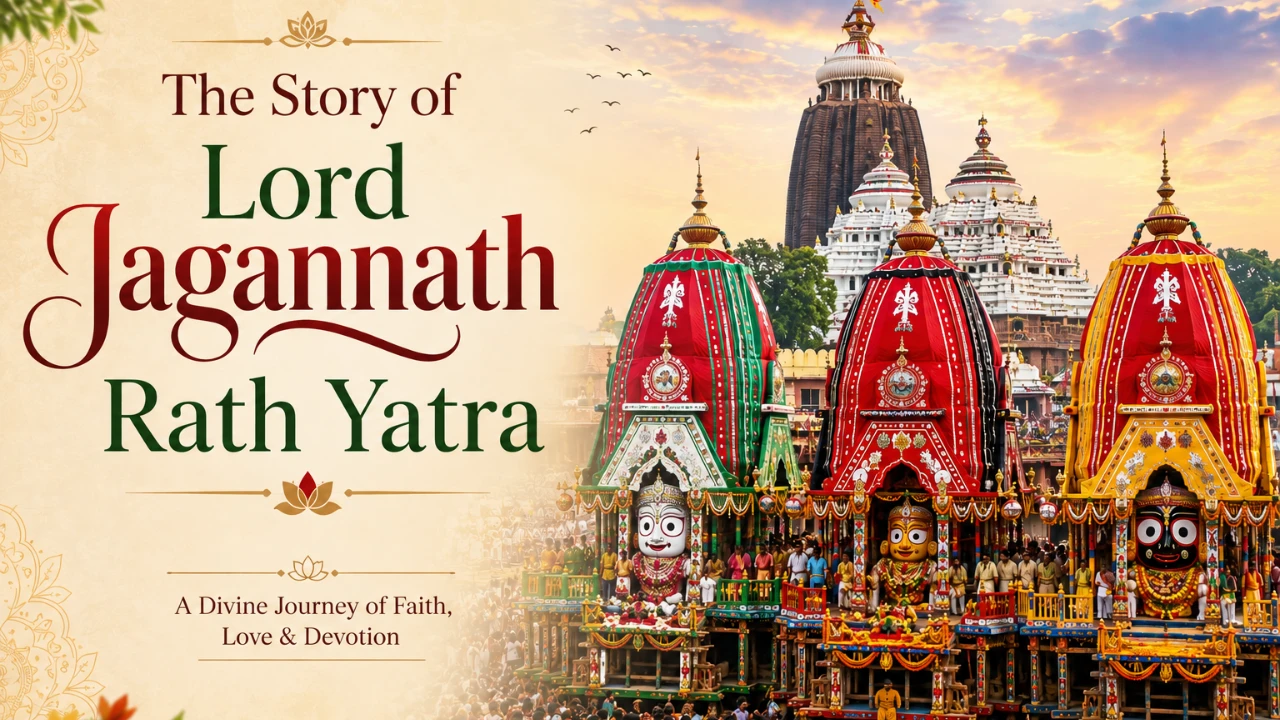
The Rath Yatra of Lord Jagannath is not a festival; it’s a collection of beautiful stories. These stories are both mystical and emotional. They have been passed down through generations. Every ritual, every chariot, and every stop in the journey has a story.
Let’s walk through these stories.
Content
What is Lord Jagannath Rath Yatra?
Rath Yatra is an annual chariot festival celebrated in Puri, Odisha.
During this festival, Lord Jagannath, with his elder brother Lord Balabhadra and sister Goddess Subhadra, comes out of the Jagannath Temple and goes to the Gundicha Temple.
This procession is approximately 3 kilometers long and is considered one of the most sacred events in Hinduism.
The word “Ratha” means chariot, and “Yatra” means journey.
Story Behind Lord Jagannath Rath Yatra
There are many beautiful stories associated with the Rath Yatra. The most popular one is about Lord Krishna visiting his aunt’s house.
Lord Jagannath’s Journey to Gundicha Temple
According to mythology, Lord Jagannath is Lord Krishna himself.
Every year he wishes to visit the Gundicha Temple, which is the home of his aunt, Queen Gundicha. So, Lord Jagannath, Lord Balabhadra, and Goddess Subhadra leave the temple and travel together in grand wooden chariots.
For about seven days, they remain at their aunt’s home before returning to the main temple. Just like we go on the family visit during festivals, Lord Jagannath also goes on a family visit.
Have you heard about the mysteries of the Lord Jagannath Temple?
Beautiful Story from Krishna’s Life
One day the queens of Dwarka requested Mother Rohini to narrate Krishna’s playful days with Radha and the gopis. Rohini placed Subhadra at the door to prevent Krishna and Balaram from entering the room.
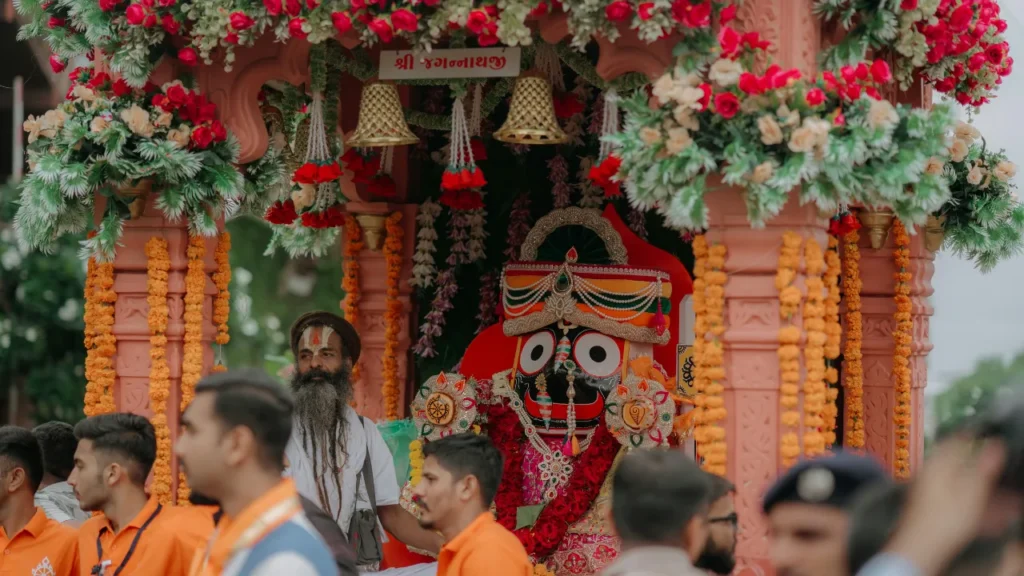
But Subhadra was so absorbed in the wonderful stories that she stood still as a statue. Lord Krishna and Balaram arrived and stood beside her. All three became deeply emotional with love and devotion.
Their eyes became large, their hands seemed to disappear into their bodies, and their expressions became unique. At that moment, the sage Narada saw this divine form and requested the Lord to bless the world with it forever.
Lord Krishna agreed, and it is believed that this is why Lord Jagannath, Balabhadra, and Subhadra have their unique wooden forms with large round eyes.
Bring this beautiful Jagannath Ji idol to your home.
Why Does Lord Jagannath Come Out of the Temple?
In ancient times, not everyone was allowed inside the Jagannath temple.
During Rath Yatra, the Lord himself comes out from the temple to meet his devotees. People from every religion, caste, country, and background can see him and seek his blessings. The message of Rath Yatra is simple: God belongs to everyone.
The Story of King Indradyumna
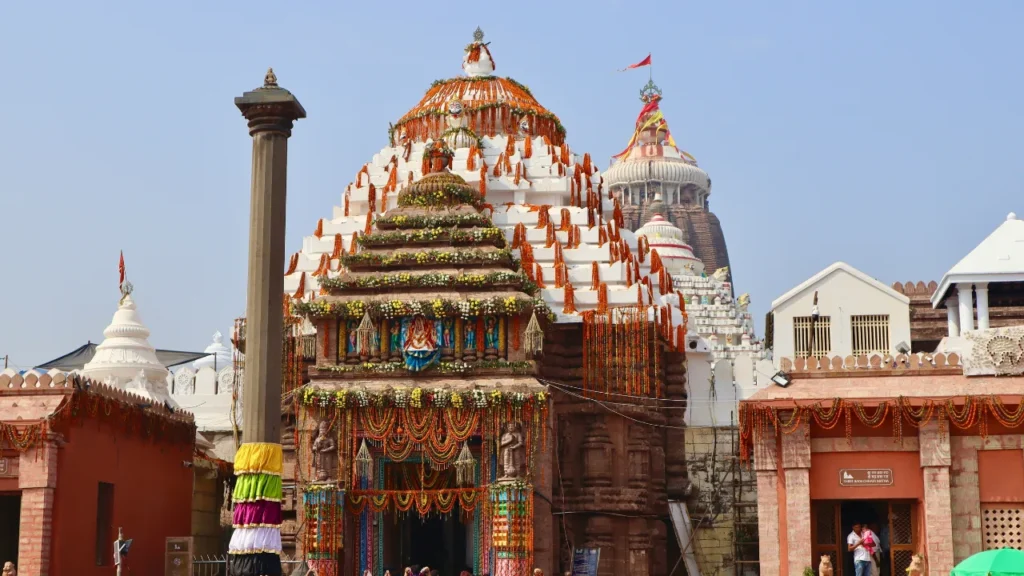
King Indradyumna was a devotee of Lord Vishnu and wanted to make his great temple.
After many years, he received the divine guidance to create wooden idols of Lord Jagannath, Balabhadra, and Subhadra. It is believed that Lord Vishwakarma disguised himself as a carpenter and agreed to make the idols on one condition—no one would disturb him.
After several days, the queen became worried because there was no sound from inside the room. She opened the door before the work was complete. Lord Vishwakarma disappeared immediately.
The idols were left unfinished, their arms or legs not fully shaped. Lord Jagannath stated he wished to stay in this form forever, reminding people that divine beauty is beyond physical perfection.
Three Grand Chariots
Every year, skilled craftsmen make three new wooden chariots in the traditional way without any metal nail. Each deity has a separate chariot.
| Deity | Chariot Name | Color |
|---|---|---|
| Lord Jagannath | Nandighosha | Red and Yellow |
| Lord Balabhadra | Taladhwaja | Red and Green |
| Goddess Subhadra | Darpadalana | Red and Black |
These chariots are rebuilt every year, instead of being reused.
Why Do People Pull the Chariots?
Pulling the ropes of Lord Jagannath’s chariot is considered the greatest act of devotion. Many devotees even believe it brings blessings, removes negativity, and helps them move closer to God.
It also symbolizes the devotion of Gopis and Gopas, who pulled the chariot of Krishna in Kurukshetra to bring him back to Vrindavan.
Before the chariot pulling, the king of Puri sweeps the path with a golden broom to show that all people are equal before God.
The Return Journey: Bahuda Yatra
After spending a few days at Gundicha Dham, the deities return to their home, and the journey is called Bahuda Yatra.
This return journey is equally grand and emotional. Once again, the chariots are pulled by devotees back to Jagannath Temple.
Why Rath Yatra is So Special
Rath Yatra is not just a religious procession. It carries deep meaning:
- Anyone, rich or poor, can pull the chariot or see the deities; there are no barriers.
- Gods come out of the temple to meet their devotees.
- Millions gather, showing unity beyond caste, class, or background.
Rath Yatra Around the World
Today, Rath Yatra is not limited to Puri only. It is celebrated in many countries, such as the United States, the United Kingdom, Canada, and Australia.
ISKCON temples, in particular, organize Rath Yatra processions in many cities, spreading the message of Lord Jagannath across the world.
Final Thoughts
Rath Yatra is not only a festival but also a collection of stories of love, mystery, devotion, and human emotions expressed through divine characters.
King Indradyumna’s devotion to the incomplete form of Jagannath and the emotional journey to the Gundicha Temple—each story weaves a deeper meaning into this grand festival.
It brings us back to one simple truth: God is not far away. God is with us, like our family.