There are treks you do for adventure, and then there is the Kedarnath trek, which you do because something inside you calls for it. This is not just a journey through snow, stones, and steep paths. It’s a walk through devotion, endurance, tears, and unspoken prayers.
Every step toward Kedarnath feels like a step closer to yourself.
Kedarnath isn’t only a location on your bucket list. It’s all about surrender. People from all walks of life—young, old, strong, and fragile—travel the same route with one common emotion: faith.
Table of Contents
The Sacred Significance of Kedarnath
Kedarnath is located in Uttarakhand’s Rudraprayag district and has an elevation of around 3,583 meters (11,755 ft). It feels safe, nearly hidden from the outside world, surrounded by snow-capped peaks.
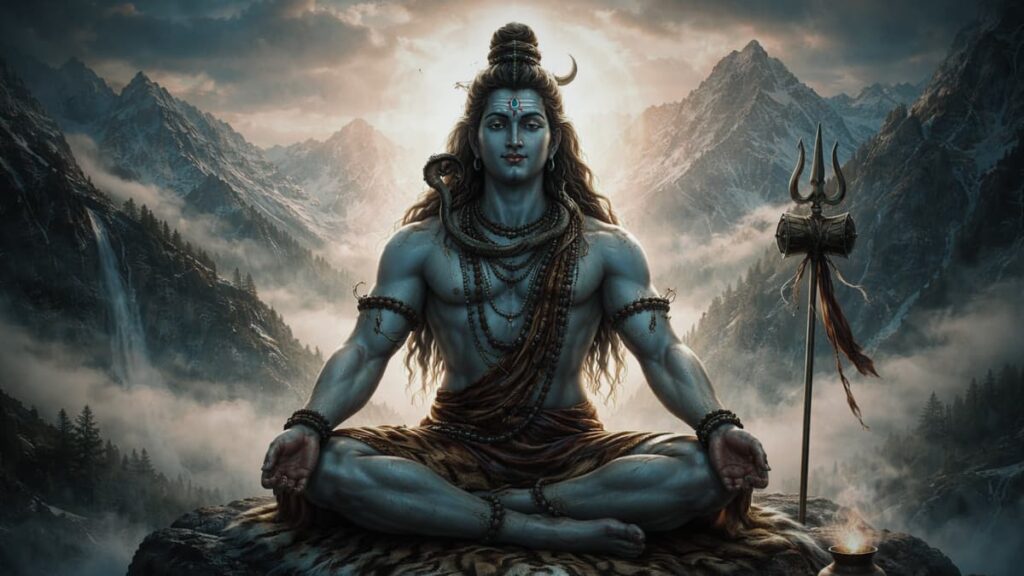
Kedarnath is one of Lord Shiva’s holiest shrines, a Jyotirlinga believed to be the home of Shiva himself. Reaching this shrine is thought to wipe away lifetimes of karma.
Starting Point: Gaurikund
Gaurikund is not just the base of the trek; it is where the mind begins to shift. Surrounded by steep green slopes and the restless sound of the Mandakini River, this small village hums with nervous excitement. Pilgrims tightening shoelaces with trembling hands, elderly devotees whispering prayers, and porters stretching their shoulders as if they were about to perform a sacred duty, not a job.
The air here feels heavier, cooler, and strangely alert. Hot water springs softly steam nearby, reminding you of Goddess Parvati’s tapasya, and this is the last site where many pilgrims might find comfort.
When you reach the starting gate, something inside changes—you are no longer a tourist. You are a seeker who is taking small steps toward faith.
The Trek Route
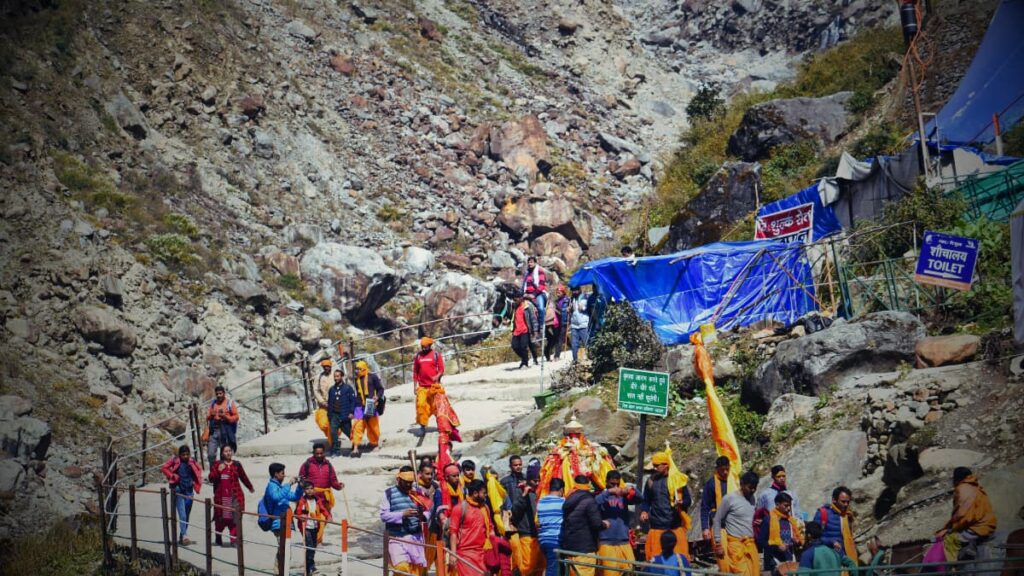
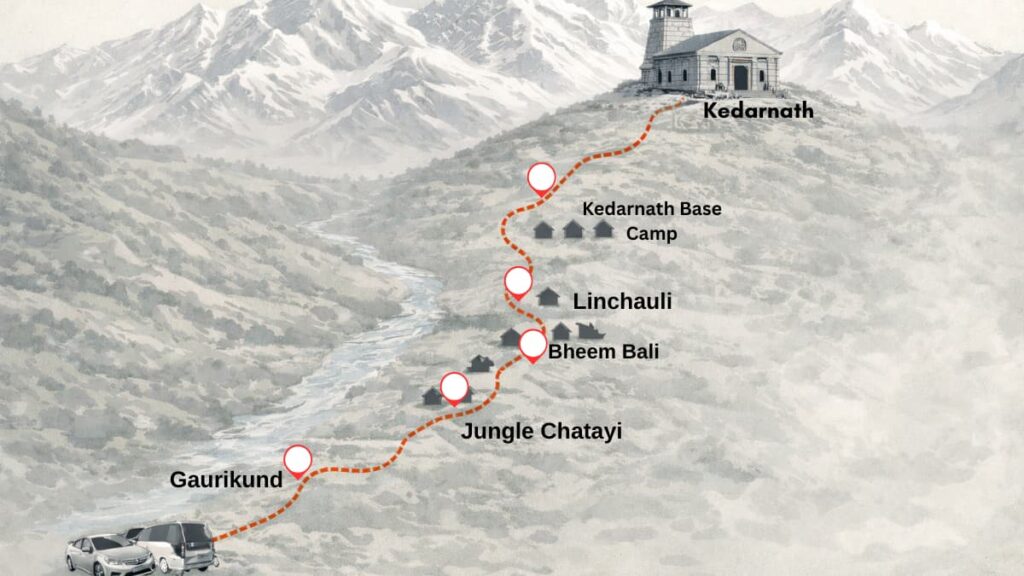
The trek to Kedarnath is approximately 16 kilometers long; yet, distance cannot be measured in numbers. The track runs alongside the Mandakini River, sometimes close enough to feel its chilly breath and sometimes high above it, when the water becomes a silver whisper far below. The walk alternates between large stone-paved trails and short sections where mountains loom close, as if testing your resolve.
As you drive, the landscape changes—dense forests give way to open valleys, waterfalls appear suddenly, and clouds fall so low that they brush your face.
You pass through Rambara, Jungle Chatti, and Linchauli—names that gradually lose meaning as your reality is reduced to breath, heartbeat, and movement. Every curve feels cinematic, as if the mountains are unveiling themselves gradually, saving the most powerful moment until the final stretch.
Physical Challenge
The Kedarnath hike is not overly difficult, but it is very hard. The altitude gradually crept up on you, thinning the air and thickening each breath. Your legs ache in ways you didn’t realize existed. Even the most basic step begins to feel deliberate, conscious, and earned.
What amazes most people is not the pain, but how the body adjusts after the mind quits resisting. At first, you resist the discomfort. Later, you accept it. You eventually move with it.
The journey humbles without humiliation. It serves as a reminder that true strength is not speed but rather tenacity, patience, and the willingness to keep going even when no one is watching.
Weather on the Trek
The weather during the Kedarnath trek is unexpected and almost emotional. The sun warms your back, and the mountains sparkle in unfathomable shades of green and grey. The next moment, clouds roll in, rain falls sideways, and the route becomes slick beneath your feet. The wind whistles through valleys, like a warning bell.
Rain does not feel like an inconvenience; it feels like a test of submission. Cold bites worsen as altitude rises, particularly at Kedarnath, where snow patches persist even in the summer. Proper clothing serves as both preparation and protection.
Yet, when the clouds unexpectedly lift to reveal the temple in the distance, framed by peaks and solitude, every moment of suffering is swiftly forgotten.
The First Sight of Kedarnath Temple
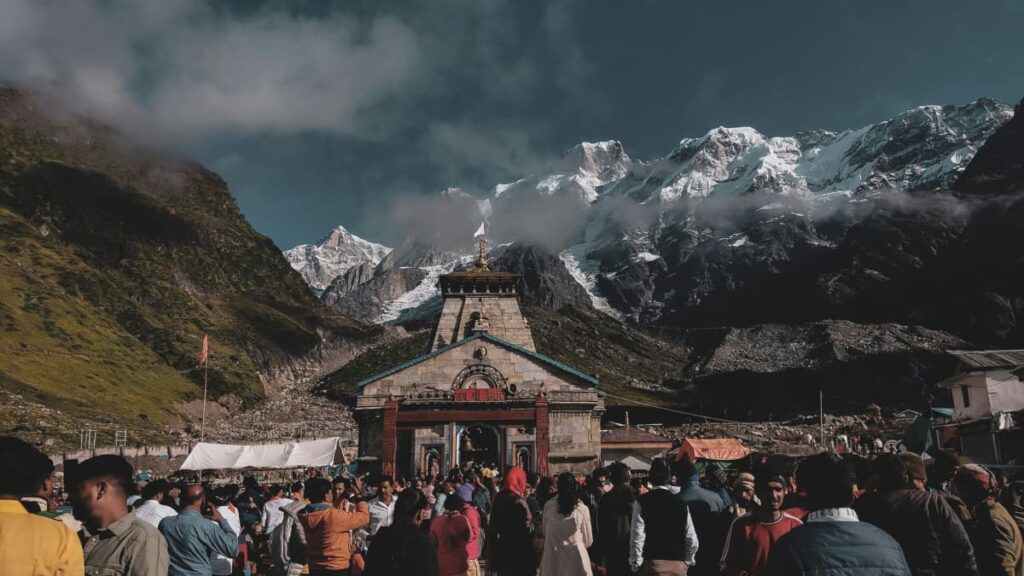
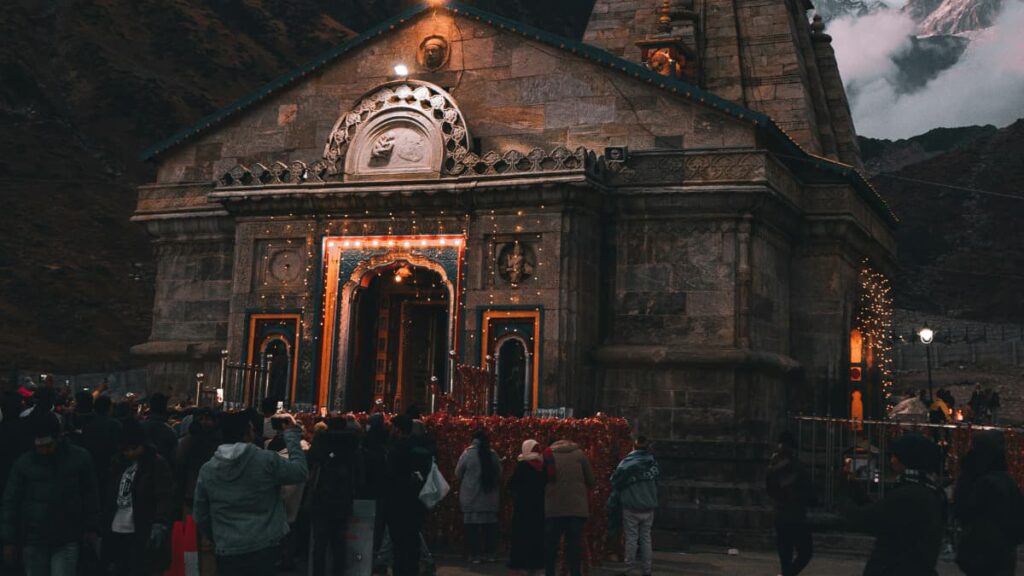
Nothing prepares you for your first glance of the Kedarnath Temple. After hours—or days—of walking, the valley suddenly opens, and there it stands: stone, solid, still against a backdrop of towering snow-covered peaks. The temple does not make a loud announcement. It simply exists, powerful and peaceful.
Many individuals stop walking at this point. Some people fold their hands. Some people cry openly. Others stand transfixed, unable to express their emotions. Exhaustion fades, and awe takes its place. The lengthy journey suddenly makes sense—not as a challenge, but as preparation. You did not merely get to Kedarnath. You were gradually sculpted so that you could stand before it.
Facilities on the Trek
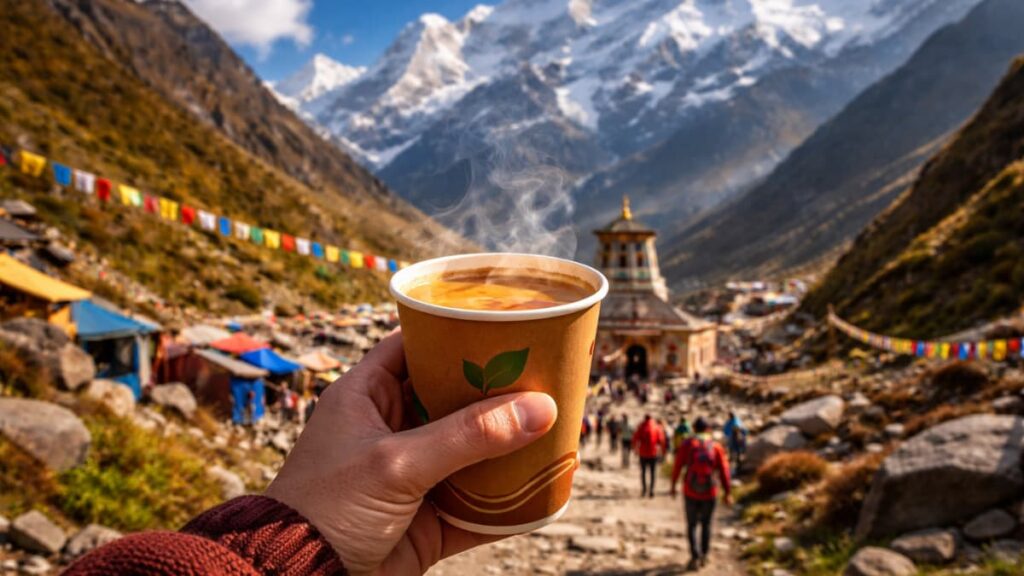
Facilities for the Kedarnath trip are modest yet extremely human. When tiredness sets in, small tea booths appear like miracles, serving hot chai, Maggi, and a place to sit. Simple shelters provide respite, while medical camps are silently waiting to assist those in need.
There is no luxury here, but there is kindness. Strangers provide water, porters encourage tired trekkers, and chants of “Har Har Mahadev” fill the air, bringing everyone together. Toilets are limited, connectivity weakens quickly, and evenings are cold—but in this stripped-down setting, you realize how little you truly require. The path teaches gratitude not through comfort, but by its absence.
Best Time for the Kedarnath Trek
The Kedarnath trek is generally open from late April or early May to November, depending on weather conditions. Each season offers its own emotional texture. Early summer brings snow, crisp air, and fewer crowds. The monsoon season brings lush greenery but requires caution and patience. Post-monsoon autumn is quieter, brighter, and more spiritual, with golden light and chilly nights.
Choosing the right time is about both safety and readiness. Kedarnath does not rush you. It waits. The optimum time to go is when your body is ready, your mind is open, and your heart is willing to move cautiously toward something it can’t fully understand.
The Trek That Walks With You Long After You Return
The Kedarnath trek doesn’t finish when you return to Gaurikund. It follows you home—in quieter thoughts, softer behaviors, and an unusual need for silence. It teaches you that faith is not always audible, and strength is not always obvious. Sometimes it’s simply deciding to take one more step, even if the path disappears into the clouds and cold.
If you ever walk this trail, know that you will not be the same person when you return. The mountains will take something from you—and return something that words cannot express.
May have interest in 7 Hidden Himalayan Villages