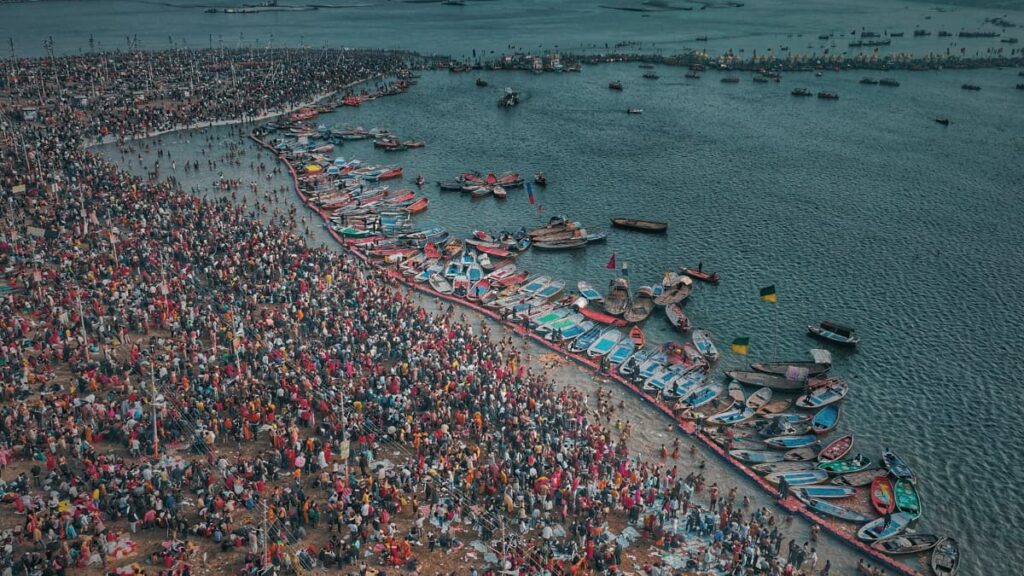
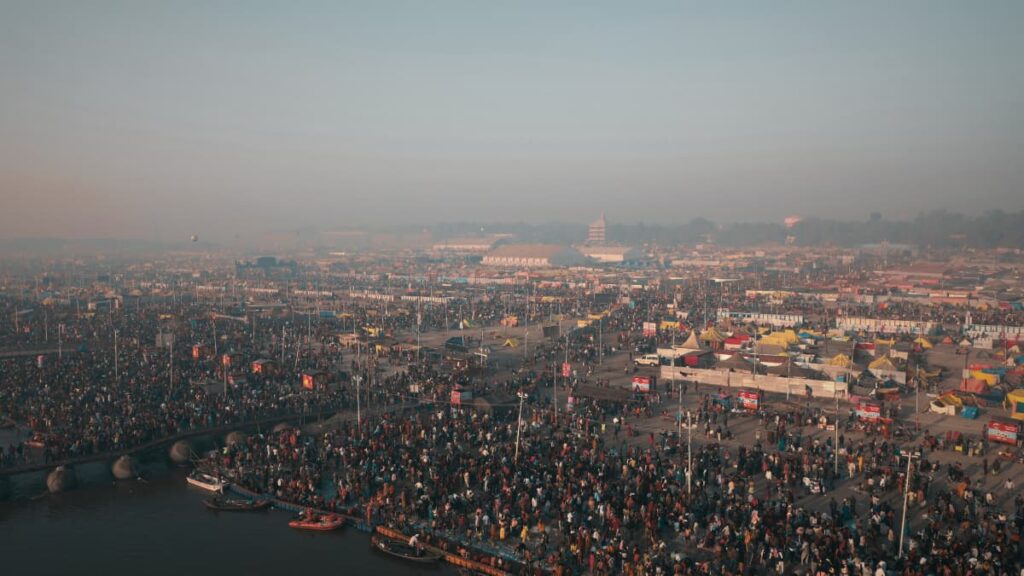
Every year, as the winter sun rises gently over North India, Prayagraj transforms into a divine landscape where faith becomes visible, audible, and deeply felt. The vast sandy banks of the Triveni Sangam turn into a temporary spiritual city during the sacred Magh Mela.
Imagine waking up to the sound of temple bells and chants echoing in the cold morning air and thousands of oil lamps flickering along the river—this is Magh Mela for you. Celebrated during the Hindu month of Magh, this fair draws saints, sages, pilgrims, and spiritual seekers from across India.
Unlike grand celebrations, the Magh Mela is based on simplicity, discipline, and dedication. It’s not just a festival; it’s a month-long spiritual journey where comfort gives way to commitment, and discipline becomes worship.
Table of Contents
What Does ‘Magh’ Mean?
The word “Magha” refers to the eleventh month of the Hindu lunar calendar, which often falls between January and February. This is based on the belief that during this month, the Triveni Sangam becomes the holiest place on earth.
According to scriptures, Magha is the month when divine forces descend upon the confluence, making all spiritual activities—bathing, charity, fasting, and prayer—a thousandfold more beneficial. The Magha Mela, also known as the spiritual soul of the Kumbha tradition, is quieter, deeper, and more disciplined than the larger Kumbh Mela.
Historical Roots and Mythological Background
The Magh Mela has deep roots in Hindu mythology and ancient literature such as the Puranas. According to legend, during the Samudra Manthan (churning of the ocean), drops of Amrit (nectar of immortality) fell at Prayagraj, forever sanctifying the confluence. Ancient texts such as the Padma Purana and Skanda Purana praise the Magh Snan at Prayagraj as superior to all pilgrimages.
For centuries, pilgrims and saints have mentioned the Magh Mela, making it one of the oldest continuously celebrated spiritual festivals in the world.
The Sacred Triveni Sangam
The Triveni Sangam, the confluence of the visible rivers Ganga and Yamuna and the invisible Saraswati, is at the core of the Magh Mela celebration. Devotees believe Saraswati flows underground, representing hidden knowledge and wisdom. Standing at the Sangam, one can see the greener waters of the Yamuna mixing with the milky Ganga.
The Sangam is more than just a geographical meeting point; it represents the unification of body, mind, and soul, making it the most effective location for spiritual purification.
Magh Snan
The Magh Snan (holy bath) is a key ritual of the Magh Mela. Every morning, before sunrise, devotees silently walk to the river, carrying brass vessels, flowers, and faith. The freezing water numbs the body, yet some believe it awakens the soul. This daily bath is believed to wash away a lifetime of accumulated sins. Bathing during Magh is said to bestow as much merit as donating gold, land, and cows combined. Stepping into the river is tantamount to surrender—it’s like entering heaven.
Most Auspicious Bathing Dates of Magh Mela
While bathing is sacred every day, certain dates hold extraordinary significance.
- Paush Purnima signals the start of Magh Mela.
- Mauni Amavasya is regarded as the most potent bathing day, and it is observed silently.
- Basant Panchami represents regeneration and knowledge.
- Magha Purnima symbolizes spiritual satisfaction.
These days lakhs of devotees come to Sangam, which creates a wonderful ocean of faith.
Kalpavas
One of the most prominent features of the Magh Mela is Kalpavas, a sacred vow in which devotees dwell near the Sangam for the whole month of Magh. Kalpvasis live in humble tents, eat minimal Satvik cuisine, sleep on the ground, and spend their days praying, meditating, and serving. Kalpavas is about mastering desires rather than escaping from reality. The discipline practiced during this time is thought to purify mental impurities and provide inner clarity.
Daily Life of a Kalpvasi
A Kalpvasi’s day begins before dawn with a holy bath, followed by Surya Arghya (sun offering). The day’s activities include reciting scripture, listening to spiritual teachings, chanting mantras, and serving fellow pilgrims.
Their lifestyle is characterized by peace, simplicity, and self-control. Even during the harsh winter season, the Kalpvasis remain steadfast, demonstrating that faith is more important than physical hardship.
Saints, Akharas, and Spiritual Discourses
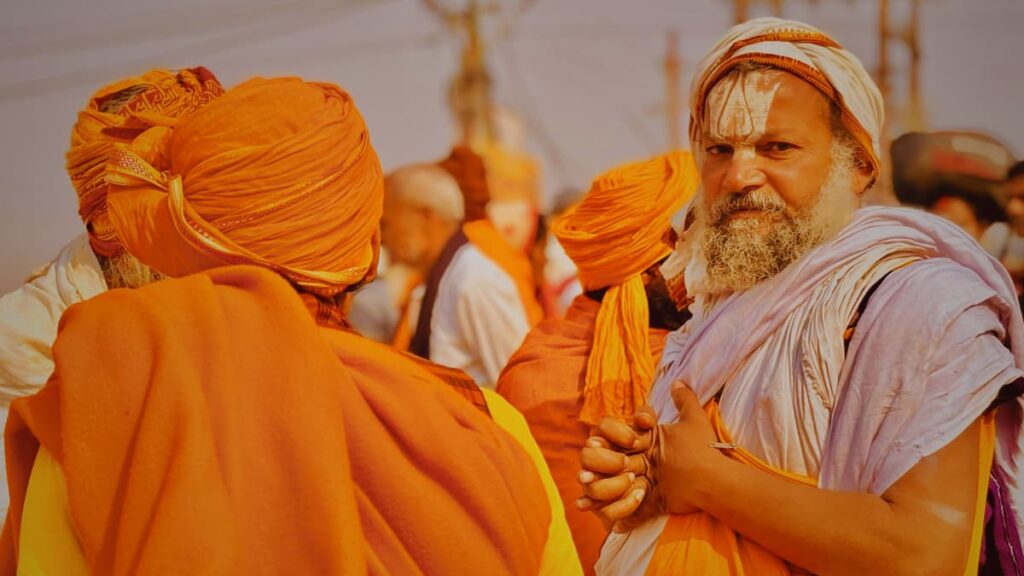
Sadhus, saints, and Akharas from across India camp at the Magh Mela, turning it into a living spiritual university. The festival grounds resonate with discourses on the Bhagavad Gita, Ramayana, Upanishads, and Puranas. Yogis demonstrate meditation techniques, while academics discuss philosophy. For seekers, the Magh Mela offers unique access to ancient wisdom, directly from spiritual teachers.
Charity, Daan, and Seva
Charity holds great importance during the Magh Mela. According to scriptures, donations made during Magh are never wasted. Annadan (food giving) and the distribution of clothing, blankets, and money to saints and the needy are examples of common deeds.
Serving pilgrims, feeding cows, and lighting candles at the Sangam are considered sacred rituals. During Magh, charity is viewed as a spiritual responsibility rather than a generous act.
Magh Mela vs Kumbh Mela
The Magh Mela is essentially a month-long spiritual discipline that emphasizes self-purification, simplicity, and devotion. It is closely linked to the tradition of Kalpavas, in which devotees live a life of simplicity and austerity at the Sangam during the entire month of Magh. The focus here is on inner development, daily rituals, meditation, generosity, and listening to scriptures.
In contrast, the Kumbh Mela symbolizes a cosmic spiritual union. Its ideology is based on the mythological incident of Samudra Manthan, in which droplets of Amrit (nectar of immortality) fell on four sacred sites. Kumbh Mela is about communal spiritual energy, mass awakening, and a rare alignment of planets said to increase spiritual merit.
Key Differences Explained Simply
- Magh Mela is held annually; Kumbh Mela happens every 12 years.
- Magh Mela is more quiet. The Kumbh is a large and massive event
- Both share the same spiritual essence
Why Magh Mela Still Matters in the Modern World
Today’s life often forces people into a never-ending routine filled with deadlines, noise, and digital overload. The Magh Mela offers a rare opportunity to calm down and reconnect. The serene daily routine of bathing early in the morning, praying, sitting quietly, and reflecting is a stark contrast to the fast-paced city life.
People come to the regular atmosphere of the fair and rediscover qualities like patience, meditation, and peace—qualities that are becoming increasingly rare in today’s life.
The Magh Mela in Prayagraj is more than just a religious gathering; it is a living river of religion that flows through history, culture, and the human soul. Those who have experienced it take home not just memories but also inner clarity, humility, and a renewed sense of purpose.
Long after the tents have been dismantled and the rivers have receded, the spiritual essence of the Magh Mela continues to flow in the hearts of its devotees.