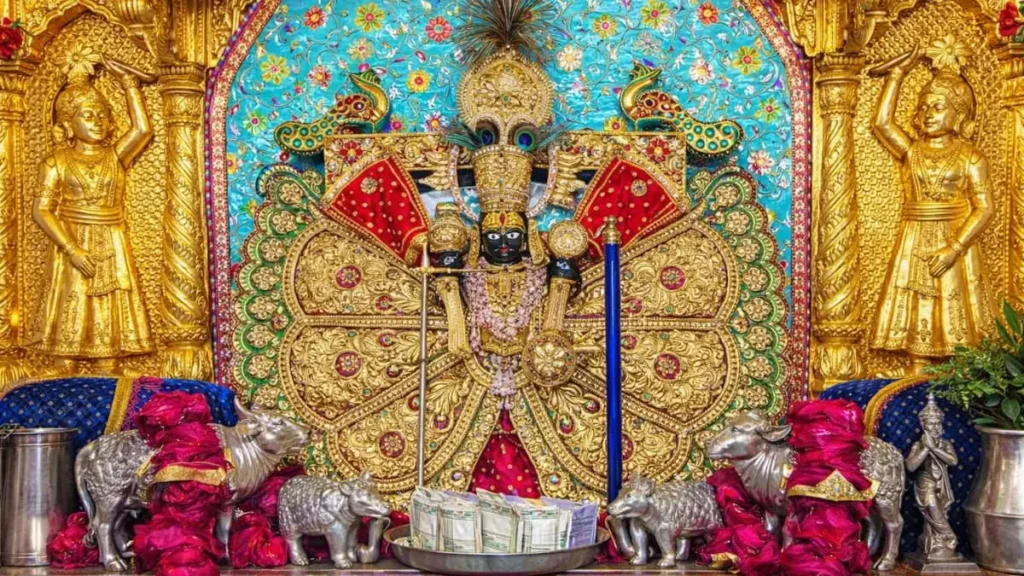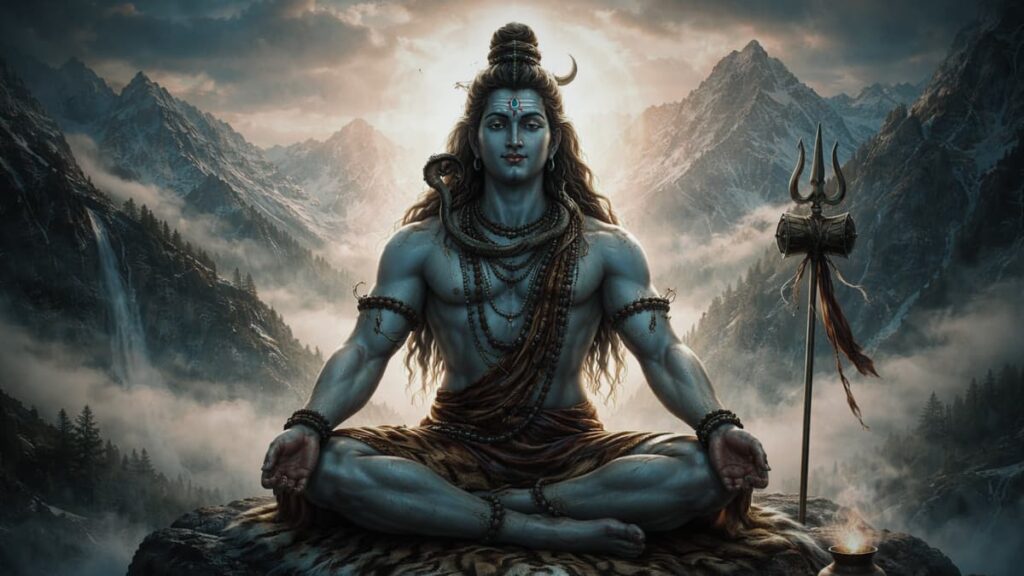
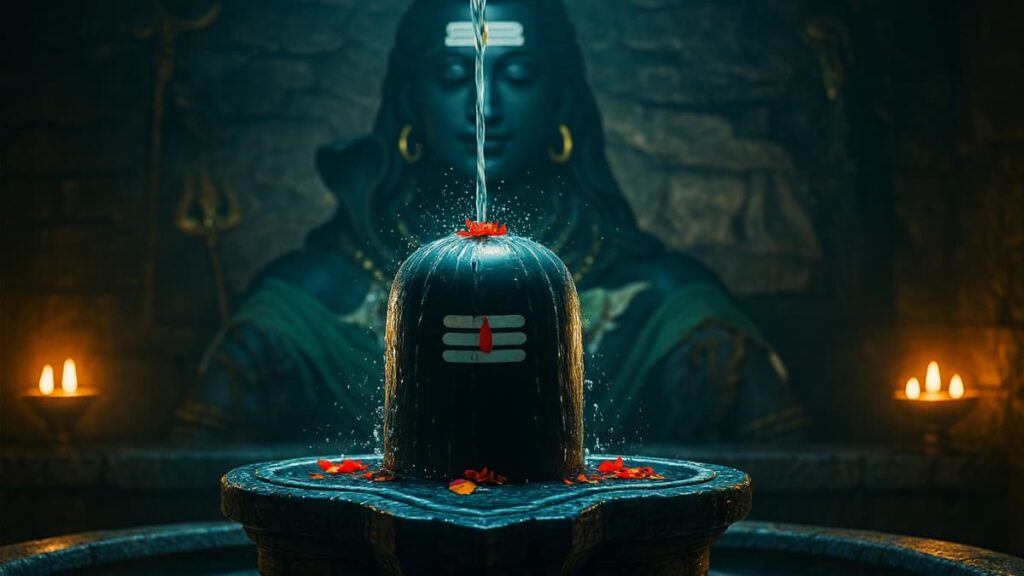
The Mahamrityunjaya Mantra is one of the most powerful and sacred mantras in Hinduism, also known as a life-giving prayer and the Death-Conquering Mantra dedicated to Lord Shiva (Mahadev).
This mantra is believed to possess spiritual vibrations that protect, heal, and transform the mind and soul. It has the power to awaken the inner strength and remove negativity, and it is often chanted during times of fear, illness, uncertainty, and emotional turmoil. The Mahamrityunjaya Mantra, rooted in the Rig Veda, protects the chanter from premature death and teaches that true liberation comes from surrender, devotion, and inner awakening.
Table of Contents
The Mahamrityunjaya Mantra (Original Sanskrit)
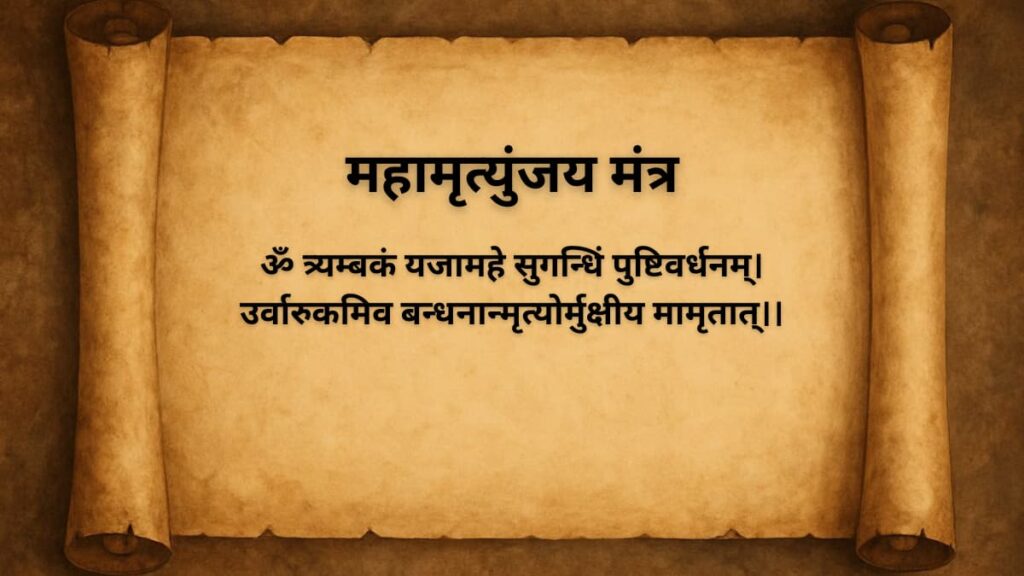
ॐ त्र्यम्बकं यजामहे सुगन्धिं पुष्टिवर्धनम्। उर्वारुकमिव बन्धनान्मृत्योर्मुक्षीय मामृतात्।।
oṃ tryàmbakaṃ yajāmahe sugándhiṃ puṣṭi-várdhanam । urvārukám iva bándhanān mṛtyór mukṣīya mā́ ‘mṛ́tāt ।।
Simple English Translation
“We worship the three-eyed Lord Shiva, the nurturer of all beings. May he free us from the bondage of suffering and death, like a ripe cucumber that naturally separates itself from its stem, and lead us to immortality and eternal peace.”
Meaning of the Mahamrityunjaya Mantra
Word-by-Word Meaning
- Om—The universal sound, the cosmic vibration.
- Tryambakam—The three-eyed one (Shiva).
- Yajamahe – We worship or adore.
- Sugandhim—The one who spreads fragrance or goodness.
- Pushtivardhanam—The one who nourishes and strengthens all beings.
- Urvarukamiva—like a ripe cucumber.
- Bandhanat—from bondage.
- Mrityor—from death.
- Mukshiya—Free us, liberate us.
- Ma Amritat—And grant us immortality.
The Story of Rishi Markandeya—The Boy Who Defied Death
Long ago, there was a couple named Rishi Mrikandu and his wife, Marudvati. They desperately wanted a child. They prayed to Lord Shiva with sincere prayers, and finally, Shiva presented them with a choice.
“Do you want an average son who will live long,
Or a very special son who will live only sixteen years?”
They chose the special child; even though his life would be short, this child was Markandeya. The boy was kind, intelligent, and a devotee of Lord Shiva. As he grew, his love for Lord Shiva became the centre of his life.
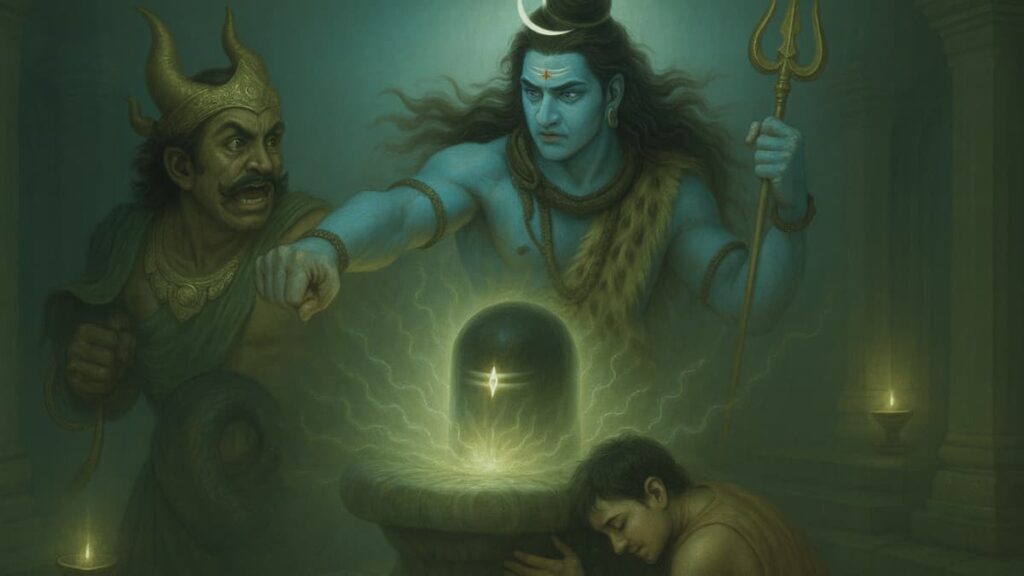
On the day of his 16th birthday, his parents broke down and revealed the truth that his life was supposed to end that day. Markandeya listened quietly. He didn’t cry. He didn’t panic. He calmly went to the temple and sat in front of the Shiva Lingam. He began chanting the Mahamrityunjaya Mantra with full faith and devotion.
At that moment, Yama, the god of death, arrived to take him away. Yama threw his noose toward him, but the boy tightly hugged the Shiva Lingam. Yama’s rope accidentally fell around the Lingam—and that was enough to shake the universe.
Suddenly, a light exploded.
Lord Shiva emerged from the Lingam himself—angry, powerful, and unstoppable.
He thundered at Yama,
“How dare you touch my devotee!”
In an instant, Shiva struck Yama down, protecting the young sage.
Time stood still. Even death had been defeated.
With compassion, Shiva turned to Markandeya and blessed him:
“You will remain sixteen forever. You will live as long as the universe exists.”
Thus, Markandeya became Chiranjivi—the immortal rishi (sage)—and the Mahamrityunjaya Mantra became known as the mantra that conquers death.
It wasn’t just about surviving death. It was about rising above fear. It was about trusting the divine completely. And it was about the power of pure, unshakeable devotion.
Importance of the Mahamrityunjaya Mantra
The Mahamrityunjaya Mantra holds a special place in the Vedas and is considered one of the most powerful mantras for healing and protection. Its significance includes:
- Removes fear, anxiety, and negativity
- Protects against accidents and unexpected dangers
- Helps in times of illness or mental struggle
- Strengthens inner peace and emotional stability
- Deeply purifies the mind and soul
- Helps overcome challenges and obstacles
- Awakens spiritual energy and consciousness
Power and Benefits of Chanting the Mantra
- Physical & Emotional Benefits
- Promotes healing and faster recovery
- Reduces mental stress and anxiety
- Improves focus, clarity, and calmness
- Helps balance emotions and release trauma
- Spiritual Benefits
- Reduces anxiety and fear
- Brings calmness and stability
- Strengthens emotional resilience
- Protective Powers
- Shields against negative energies
- Enhances intuition
- Deepens connection with the divine
How to Chant the Mahamrityunjaya Mantra (Step-by-Step Guide)
- Best Time to Chant
- Early morning (Brahma Muhurta)
- During meditation
- Before sleeping
- Steps
- Sit comfortably facing east or north.
- Keep your spine straight and breathe deeply.
- Light a lamp or incense if possible.
- Use a Rudraksha mala for counting (optional).
- Chant the mantra slowly and peacefully.
- Focus on Shiva or the Shiva Lingam while chanting.
- How Many Times to Chant
- 3 times (basic)
- 11 times (daily practice)
- 108 times (complete spiritual cycle)
- Tips for Better Results
- Keep your mind calm
- Chant with devotion, not speed
- Avoid distractions
- Keep a peaceful intention
Uses of the Mahamrityunjaya Mantra
This sacred mantra is used in many spiritual and daily-life situations:
- During illness for healing
- In difficult times for protection
- Before traveling
- During meditation and yoga
- For cleansing the home
- In Mahamrityunjaya Havan
- For calming the mind and improving focus
The Mahamrityunjaya Mantra is more than just a chant—it is a powerful spiritual tool that provides healing, protection, strength, and inner peace. Chanting it with full devotion brings the divine blessings of Lord Shiva in your life. Whether you seek physical healing, emotional relief, spiritual growth, or protection from difficulties, this mantra can lead you to peace and transformation.
Also read 3 Most Powerful Mantras in Hinduism: Meaning, Benefits, and Spiritual Power