
Have you ever wondered why millions of people chant the same mantras every day? These sacred verses have been passed down for centuries and are believed to hold deep spiritual meaning and positive energy.
Let’s take a closer look at three of Hinduism’s most powerful mantras and learn why they are so special.
Table of Contents
What Is a Mantra?
Mantra is a Sanskrit word:
- Man means mind (the manas)
- tra means tool or instrument
Together, it means a tool for the mind.
Mantras are sacred sounds passed down through the ages. According to Hindu mythology, these sounds possess special energy that can positively influence the mind, body, and soul.
People recite mantras during prayers, yoga, meditation, or even during their daily work, which brings the mind closer to positivity and calmness.
Why Are Mantras Considered So Powerful?

Many may wonder how reciting a few words can make so much change. The answer lies in the combination of sound, focus, and intention.
When you chant a mantra repeatedly:
- Your breathing becomes slower.
- Your thoughts begin to settle.
- Your mind stays focused on one sound instead of endless worries.
- A feeling of peace gradually develops.
In Hinduism, mantras are not just sounds but the sacred vibrations that help establish harmony between the individual and the universe.
Studies also show that reciting mantras and practicing controlled breathing can help calm the nervous system, reduce stress, improve concentration, and promote relaxation.
1. Om (ॐ) – The Sound of the Universe
Pronunciation: AUM
What Does Om Mean?
In Hinduism, Om is seen as the holiest sound. It is thought to be the first vibration that brought the whole universe into existence.
Instead of being a word with a direct translation, Om represents everything—creation, life, and destruction.
Many Hindu prayers and mantras begin with Om as it represents the presence of the divine.
Spiritual Significance
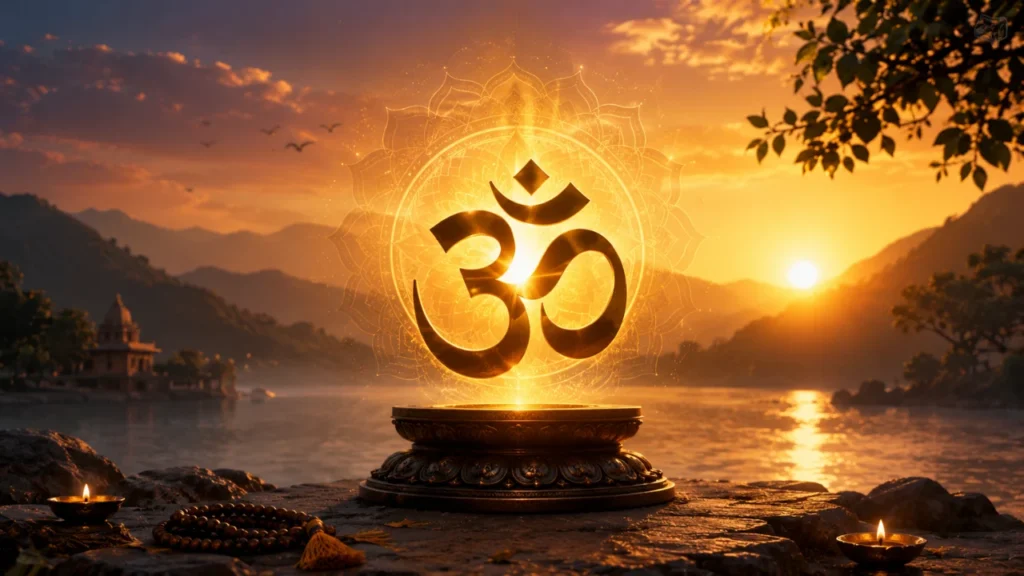
According to Hindu philosophy:
- A represents creation.
- U represents preservation.
- M represents transformation or dissolution.
Together, these three sounds symbolize the continuous cycle of life.
Om is also associated with Lord Brahma, Lord Vishnu, and Lord Shiva, representing the cosmic balance of the universe.
Benefits of Chanting Om
Regular chanting of Om is believed to:
- Calm the mind
- Improve concentration
- Reduce stress
- Create inner peace
- Enhance spiritual awareness
Even just five minutes of chanting Om every morning can help you start your day with a calm and focused mind.
2. Gayatri Mantra – The Mantra of Wisdom
ॐ भूर्भुवः स्वः तत्सवितुर्वरेण्यं भर्गो देवस्य धीमहि धियो यो नः प्रचोदयात्।
“Om Bhur Bhuvah Svah
Tat Savitur Varenyam
Bhargo Devasya Dhimahi
Dhiyo Yo Nah Prachodayat.”
Meaning of the Gayatri Mantra
The Gayatri mantra is one of the oldest and most respected mantras in Hinduism. It is dedicated to Savitr (the divine solar energy that represents light, knowledge, and wisdom).
This mantra is a prayer asking for divine light to guide our thoughts and remove ignorance.
Story Behind the Gayatri Mantra
The Gayatri Mantra is believed to have been revealed to the Sage Vishwamitra, one of the greatest sages in the Hindu tradition. According to scriptures, Vishwamitra performed deep meditation and intense penance for many years to attain spiritual knowledge.
Pleased with his devotion, he received the divine Gayatri Mantra, which later became one of the most sacred verses in the Rig Veda (Mandala 3, Hymn 62, Verse 10).
Benefits of Chanting the Gayatri Mantra
People believe regular chanting helps:
- Improve concentration
- Develop wisdom
- Remove negative thoughts
- Increase confidence
- Strengthen spiritual awareness
- Bring mental clarity
Help your child learn sacred mantras through music and play.
3. Maha Mrityunjaya Mantra – The Conqueror of Death
ॐ त्र्यम्बकं यजामहे सुगन्धिं पुष्टिवर्धनम्। उर्वारुकमिव बन्धनान् मृत्योर्मुक्षीय मामृतात्॥
Om Tryambakam Yajamahe
Sugandhim Pushtivardhanam
Urvarukamiva Bandhanan
Mrityor Mukshiya Maamritat.
Meaning of the Mantra
The Maha Mrityunjaya Mantra is dedicated to Lord Shiva, the destroyer of fear and protector of life.
It is also known as the Great Death-Conquering Mantra, not because it promises immortality, but because it symbolizes freedom from fear, suffering, and attachment.
This mantra compares human life to a ripe fruit that separates itself from its stem and prays for freedom from pain while embracing peace and spiritual growth.
Story Behind Maha Mrityunjaya Mantra

The story is connected to the famous sage—Rishi Markandeya.
According to mythology, Markandeya was destined for a life span of 16 years. When he learned this, the child completely devoted himself to Lord Shiva and chanted Maha Mrityunjaya Mantra.
When Yama came, the child hugged the Shiva lingam tightly. Shiva appeared and blessed him with a long life.
Benefits of Chanting the Maha Mrityunjaya Mantra
This powerful mantra is believed to:
- Reduce fear and anxiety
- Bring emotional strength
- Support healing and recovery
- Create inner courage
- Promote peace during difficult times
How to Chant Mantras Correctly
You don’t need any complicated things. Here are a few simple tips:
- Sit comfortably in a quiet place
- Take a deep breath before you begin.
- Chant slowly with proper pronunciation.
- Focus on the meaning instead of just repeating the words.
- Stay consistent, even if you chant for only 5–10 minutes daily.
- You may use a 108-bead mala, but it isn’t necessary.
The most important thing is sincerity. A peaceful mind matters more than perfection.
Can Anyone Chant These Mantras?
Yes.
These mantras are open to all who recite them with respect and a sincere heart. Whether you’re just beginning your spiritual journey or have been meditating for years, these sacred mantras can become an essential part of your daily routine.
Conclusion
For thousands of years, mantras have been an important part of Hindu spirituality. They’re not just words to repeat—they’re reminders to slow down, breathe, and reconnect with ourselves.
You don’t have to be a scholar or a saint to experience their beauty. All you need is a few quiet minutes, a calm mind, and a sincere heart.