
In the Aravalli Hills of Rajasthan, Kumbhalgarh stands silently surrounded by forests, rocky landscapes, and countless views. Its massive fort, built by Rana Kumbha in the 15th century, is a prime example of how architecture and nature can blend so perfectly.
If you are interested in history, architecture, or just looking for a nice weekend getaway, Kumbhalgarh has a lot to offer.
Table of Contents
Where Is Kumbhalgarh?
Kumbhalgarh is in the Rajsamand district of Rajasthan, around 84 km from Udaipur; thus, it’s a convenient option for a short trip from the city.
Unlike Jaipur, Jodhpur or Udaipur, Kumbhalgarh is not a big city destination. The fort sits high up in the Aravalli hills, enclosed by forests and wide-open views. It offers the rare views of old forts, huge gates, mountains and extremely large walls.
Quick Travel Overview
| Things to Know | Details |
| State | Rajasthan |
| Best For | History lovers, couples, road trips, photographers |
| Ideal Trip Duration | 1–2 Days |
| Famous Attraction | Kumbhalgarh Fort |
| Nearest Big City | Udaipur |
| Best Time To Visit | October to March |
| Average Budget | ₹3,000–₹15,000 |
Story Behind Kumbhalgarh
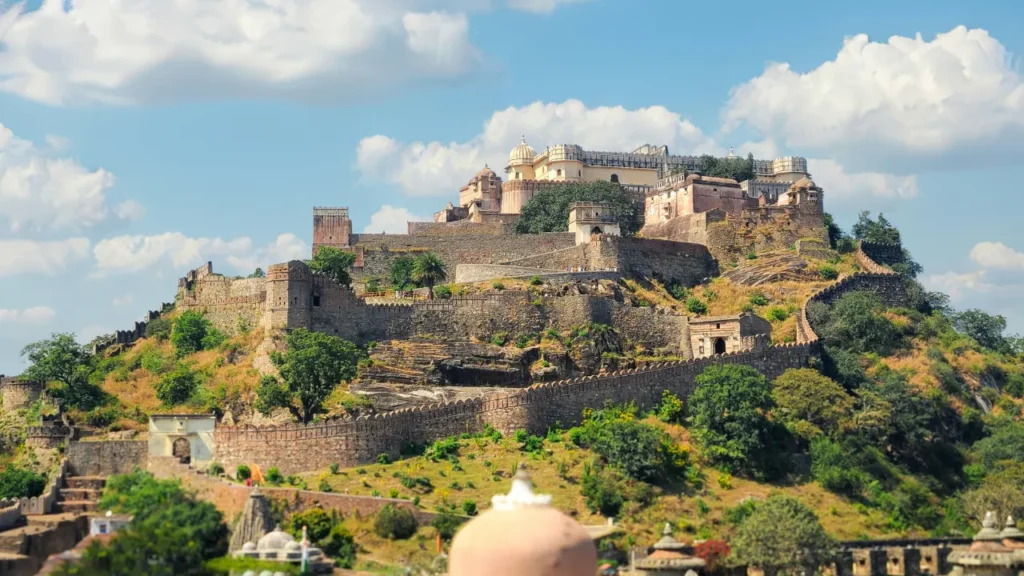
The fort was built in the 15th century by Rana Kumbha and was meant to serve as a powerful defensive fortress for the kingdom of Mewar. The fort’s position among the Aravalli hills made it naturally difficult to attack.
It featured multiple defensive walls, gates, and bastions, with palaces, temples, and other structures located within the fort. The builders didn’t try to fight the landscape. They used it, making the hills part of the fort’s defenses.
Kumbhalgarh has a special connection with Maharana Pratap; the legendary Mewar ruler was born here.
The 36-38 km long wall makes it the second-longest continuous wall in the world; it is also known as “The Great Wall of India.” The fort was also designated a UNESCO World Heritage Site as part of the Hill Forts of Rajasthan.
Seven Gates of Kumbhalgarh Fort
One of the most interesting features of the fort is the series of gates that guard the path leading to the palace area. There are seven large gates of the fort.
- Aret Pol
- Halla Pol
- Hanuman Pol
- Ram Pol
- Vijay Pol
- Nimboo Pol
- Bhairon Pol
Designed with turns and defensive layouts, this approach made a frontal attack very difficult. These gates are just one example of how precisely the fort structure was planned.
Badal Mahal
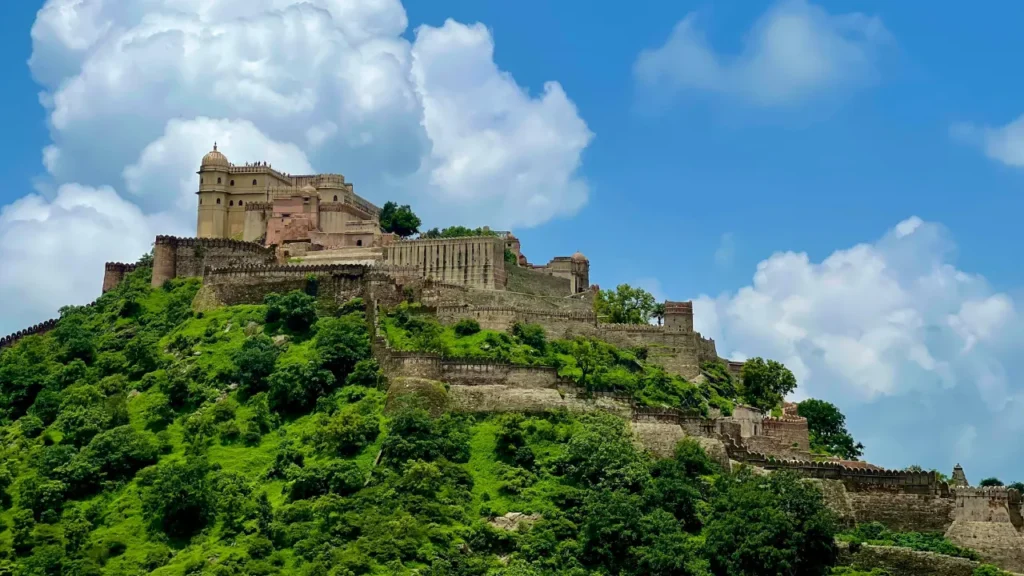
At the top of Kumbhalgarh Fort sits Badal Mahal, also known as the Palace of Clouds.
The palace is located high above the surrounding viewpoint, offering beautiful views of the hills. It was built under the rule of Maharana Fateh Singh and was divided into two sections—the Mardana Mahal (for men) and the Zanana Mahal (for women).
The rooms of the palace are decorated with colorful details and traditional artistic elements.
This is one of the quietest spots in the whole fort, featuring a cool breeze, panoramic views, and surrounding mountains. This place is especially beautiful during the monsoons, winter mornings, and sunset hours.
Temples Inside Kumbhalgarh Fort
The fort houses a total of 360 ancient temples, in which around 300 are Jain temples and 60 are Hindu shrines.
The Neelkanth Mahadev Temple is one of the best-known temples inside the fort. It is dedicated to Lord Shiva and features a six-foot-high stone Shivling made from a single stone. Rana Kumbha used to worship the Shiva Linga here.
The Golerao Jain Temples are another interesting stop. This group of nine temples is known for its detailed carvings on the walls and pillars. These temples are located near the Devi Temple and offer a more peaceful experience than the larger parts of the fort.
Kumbhalgarh Wildlife Sanctuary
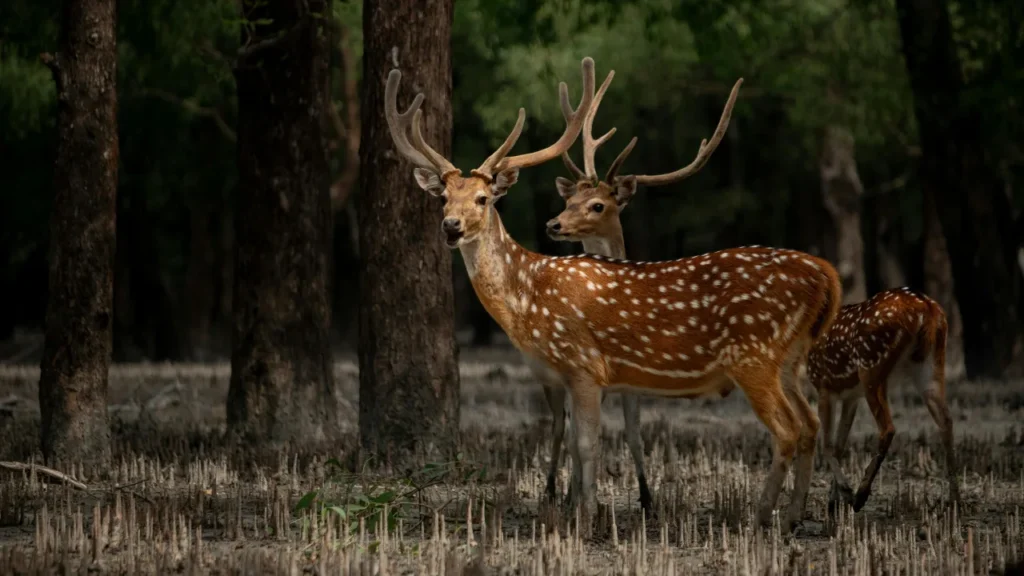
The Kumbhalgarh Wildlife Sanctuary, spread across the Aravalli range surrounding the fort, is home to leopards, sloth bears, wolves, hyenas, nilgai, chinkaras, and a variety of birds.
The forest area is peaceful, raw, and quite beautiful. The landscape here offers a great experience. Here you can enjoy the history and nature together.
Monsoon season changes this place to a whole different scene with green hills and foggy roads.
Places to Visit Near Kumbhalgarh
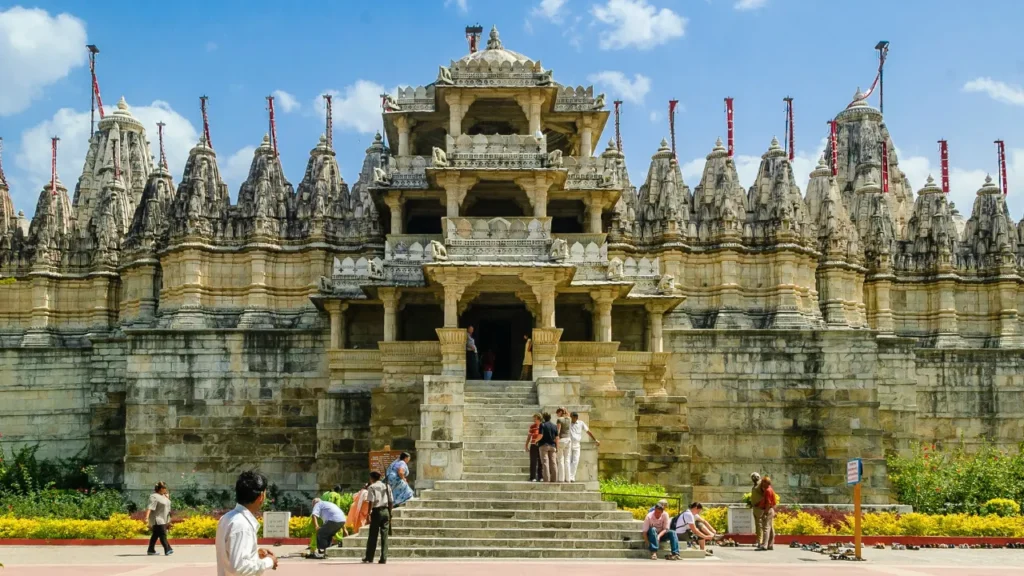
One of the best things about Kumbhalgarh is that you can combine it with several other places in Rajasthan.
- Udaipur
- Ranakpur
- Nathdwara
- Chittorgarh
Best Time To Visit Kumbhalgarh
The best time to visit Kumbhalgarh is generally October to March. The weather is pleasant and the skies are clear, making it comfortable to explore. It’s ideal for fort visits, photography, wildlife spotting, and road trips.
Monsoon (July to September): This time is really amazing. The Aravalli hills turn greener during the rainy season, and Kumbhalgarh looks surprisingly beautiful.
Summer (April to June): Summer can be quite hot, so if you’re visiting during this time, start your fort tour early in the morning. Carry water, wear comfortable shoes, and don’t underestimate the amount of walking you’ll have to do.
How To Reach Kumbhalgarh
By Air: The nearest airport is Maharana Pratap Airport, a domestic airport in Udaipur. It is around 90 km away from Kumbalgarh, and from there, you can take a taxi or a self-driving car. Get the best offers on flight bookings.
By Train: Kumbhalgarh doesn’t have a major railway station of its own. Travelers generally use nearby railway stations like Udaipur City or Falna Railway Station. Udaipur is usually the most convenient choice for many travelers.
By Road (Highly Recommended): The road trip to Kumbhalgarh is honestly one of the best parts of the experience. Popular routes are from Udaipur, Mount Abu and Jodhpur.
The mountain roads in the Aravalli ranges are beautiful, especially during winter and the monsoon.
Where To Stay In Kumbhalgarh
The place has various accommodation options with good facilities.
- Luxury Resorts: Perfect for honeymoon trips, luxury vacations & relaxing stays.
- Mid-Range Hotels: Best option for most travelers. Comfortable, scenic, and budget-friendly.
- Budget Hotels & Guesthouses: Available near the fort. Great for backpackers and short stays.
Important Travel Tips
- Wear comfortable shoes; you have to walk a lot.
- Bring water, especially if you’re exploring during the day.
- Visit in the morning for cooler, less crowded atmospheres.
- Stay at least one night; it is much more magical at sunrise, sunset, and night.
- Carry Cash: Digital payments are accepted in most places, but smaller shops may still prefer cash.
How Many Days Are Enough for Kumbhalgarh?
For the fort alone, one day is enough for most travelers.
Stay for a night if you can. The Light and Sound Show at Kumbhalgarh Fort brings the history of the fort to life with an evening presentation.
If you have two days, you can also include the wildlife sanctuary and nearby attractions.
Is Kumbhalgarh Worth Visiting?
Yes, especially if you enjoy history, architecture and quieter places. Kumbhalgarh is a kind of place where the atmosphere is the entire experience. Here, the story of Mewar and Maharana Pratap that follows you around the entire place.
So, if you are planning a Rajasthan trip and have already seen the Jaipur-Udaipur-Jodhpur circuit, consider changing your route a bit.