Have you ever thought about why Lord Vishnu appears in different forms in Hindu scriptures?
He comes as a fish, as a strong warrior, and as a humble prince. Each of these forms has a purpose, but they all have one common aim. —to protect dharma and restore balance whenever the world is troubled by chaos and evil.
In Hinduism, Lord Vishnu is called the Preserver of the Universe. Whenever darkness dominates righteousness, he comes to earth in different forms, known as avatars.
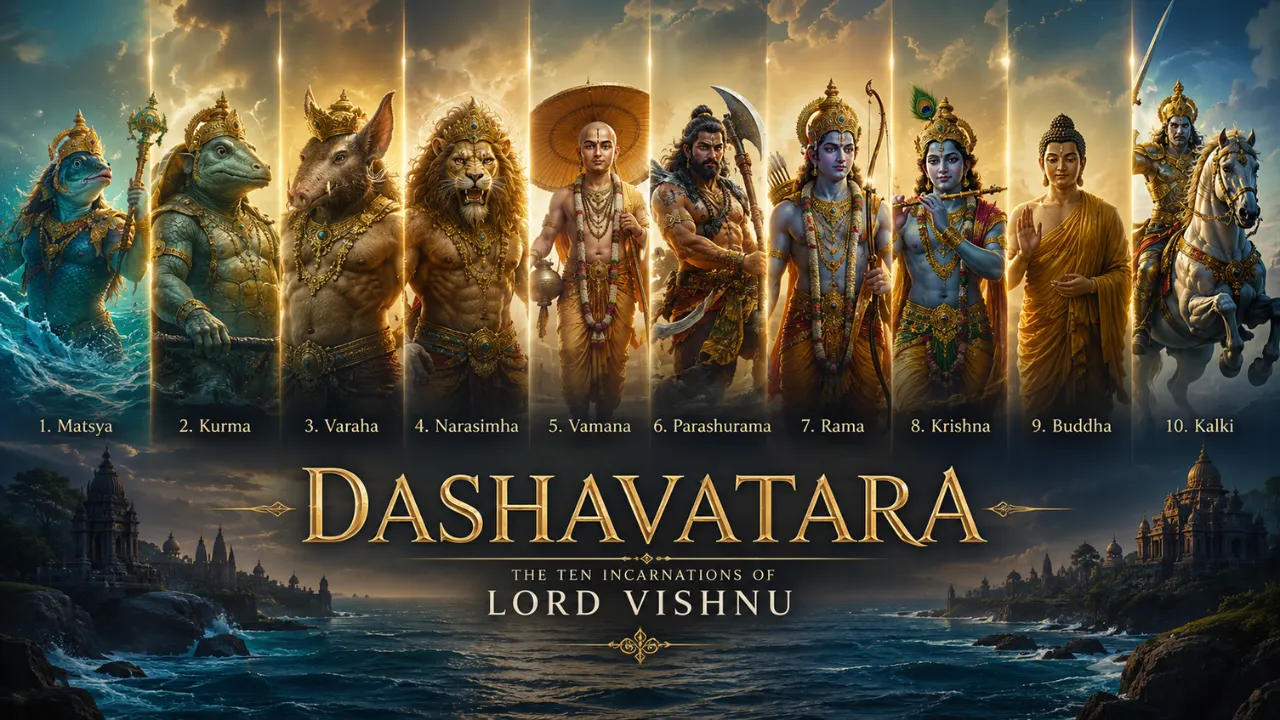
The 10 principal incarnations are known as the Dashavataras. From the very beginning of creation to the end of the Kali Yuga, these avatars tell a story of bravery, wisdom, loyalty, and divinity.
Let’s look at the journey of Lord Vishnu’s ten avatars.
Table of Contents
What Does “Avatar” Mean?
The word “avatar” comes from the Sanskrit word “avatara,” which means “descent or incarnation.“
An avatar is a divine incarnation that appears on Earth for a specific purpose. As per Hindu beliefs, whenever evil gets stronger and it dominates righteousness, Lord Vishnu takes an avatar to protect dharma.
As he said in the Bhagavad Gita:
“Paritranaya sadhunam vinasaya ca duskrtam, dharma-samsthapanarthaya sambhavami yuge yuge.”
When righteousness diminishes, and wickedness rises, I appear to re-establish dharma.
Dashavatara beautifully shows how divine wisdom adapts to the needs of every age.
Dashavatara: Lord Vishnu’s 10 Avatars in Order
- Matsya Avatar – The Divine Fish
- Kurma Avatar – The Cosmic Tortoise
- Varaha Avatar – The Mighty Boar
- Narasimha Avatar – The Half-Man, Half-Lion
- Vamana Avatar – The Dwarf Sage
- Parashurama Avatar – The Warrior with an Axe
- Rama Avatar – The Ideal King
- Krishna Avatar – The Divine Guide
- Buddha Avatar – The Messenger of Compassion
- Kalki Avatar – The Future Warrior
Matsya Avatar
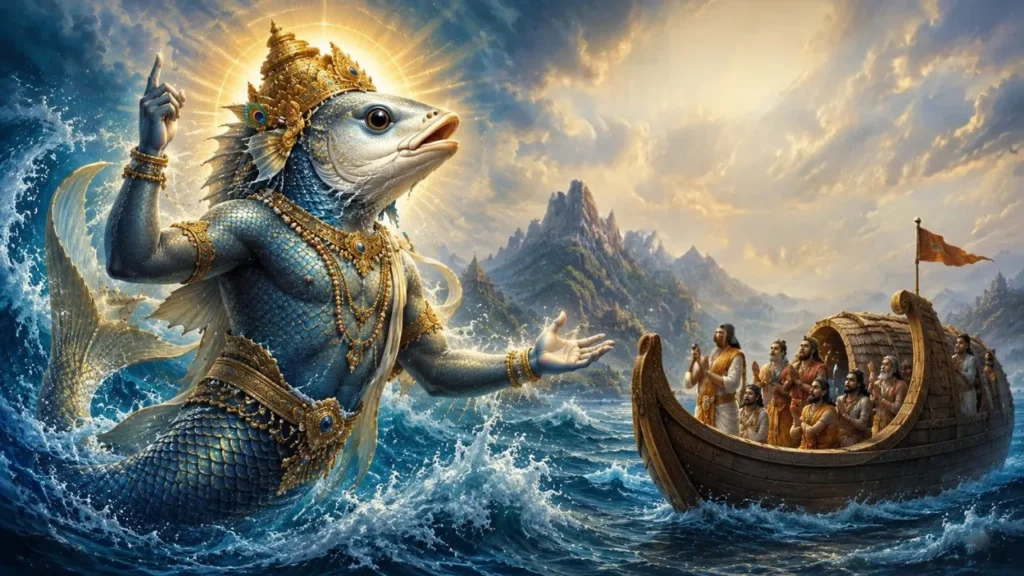
Lord Vishnu’s first incarnation came in the form of a fish.
According to the story, a great flood was about to destroy the world. Lord Vishnu appeared in the form of Matsya and warned King Manu of the coming disaster. He instructed Manu to build a boat and save life, sacred texts, and important knowledge.
When the flood came, Matsya guided the boat safely out of the water.
Symbolism: The Matsya avatar represents protection, wisdom, and survival in difficult times.
Kurma Avatar
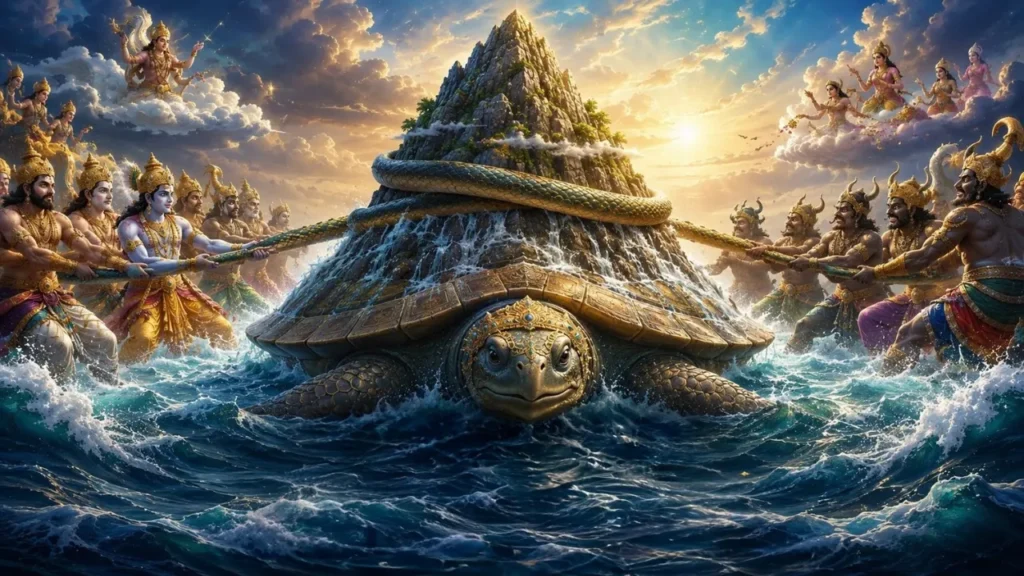
The second incarnation took the form of a tortoise.
When the gods and demons decided to churn the cosmic ocean to obtain the nectar of immortality (Amrit), they used Mount Mandara as the churning rod. However, the mountain began to sink.
To solve this problem, Lord Vishnu became Kurma and supported the mountain on his back.
Symbolism: The Kurma teaches patience, stability, and the importance of staying grounded even when life is turbulent.
Varaha Avatar
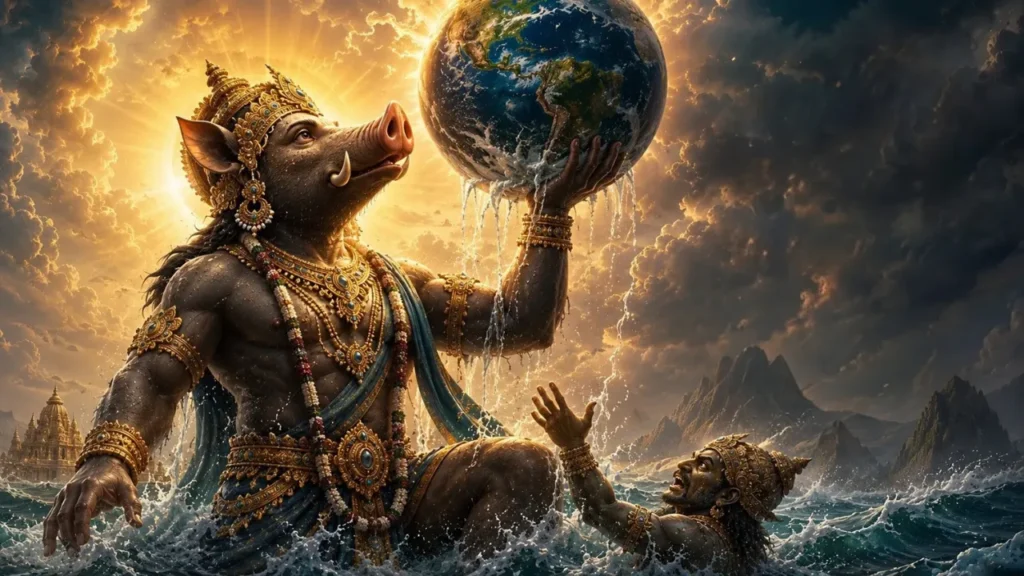
In this incarnation, Lord Vishnu appeared as a boar.
The demon Hiranyaksha had dragged Mother Earth into the cosmic ocean. To save her, Vishnu took the form of Varaha, fought the demon, and used his tusks to restore the Earth to its place.
Symbolism: Varaha represents hope, healing, and the victory of good over harmful forces.
Narasimha Avatar
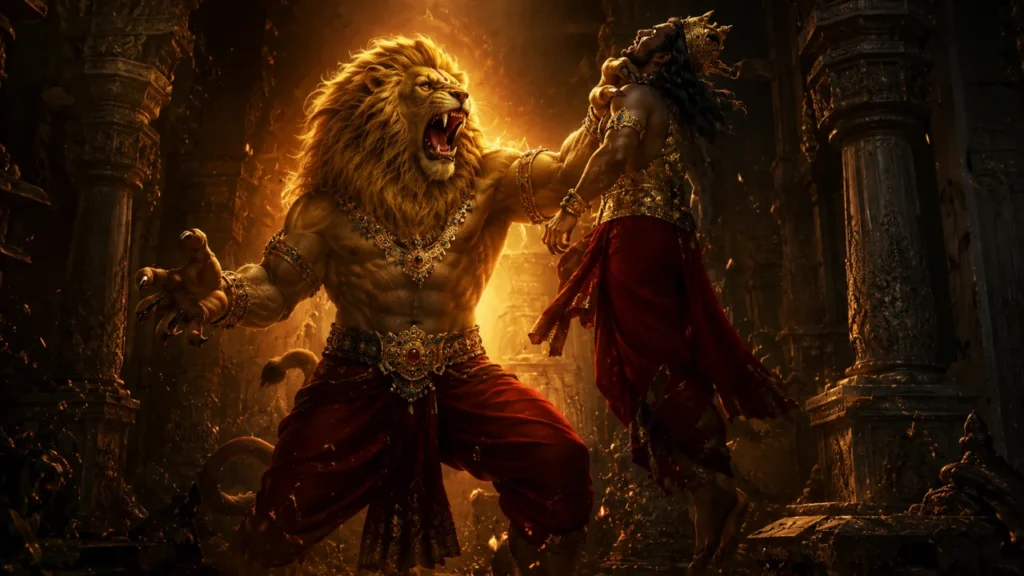
This is one of the most dramatic incarnations of Lord Vishnu.
The demon king Hiranyakashipu received a powerful boon that made him nearly impossible to kill. However, his son Prahlad remained a devotee of Vishnu despite his father’s cruelty.
To protect Prahlad, Vishnu appeared as Narasimha—a being that was neither human nor animal.
In the evening, on the threshold of a palace, Narasimha vanquished Hiranyakashipu without violating any of the conditions of the boon.
Symbolism: Narasimha reminds us that God’s protection always extends to devotees, no matter how difficult the circumstances may seem.
Vamana Avatar
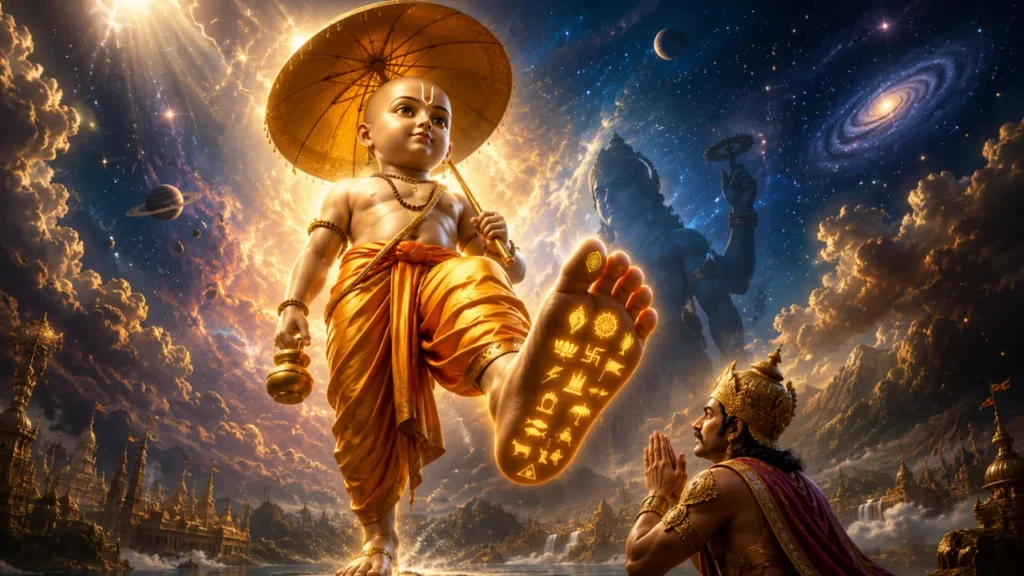
King Bali was a benevolent ruler, but his growing power began to upset the balance of the world.
Lord Vishnu appeared as a young dwarf Brahmin named Vamana and asked for three steps of land. Bali agreed.
Suddenly, Vamana expanded into a cosmic giant. In two steps, he covered heaven and earth. For the third step, Bali offered his head.
Symbolism: Vamana teaches humility and reminds us that true greatness does not depend on physical size or worldly power.
Parashurama Avatar
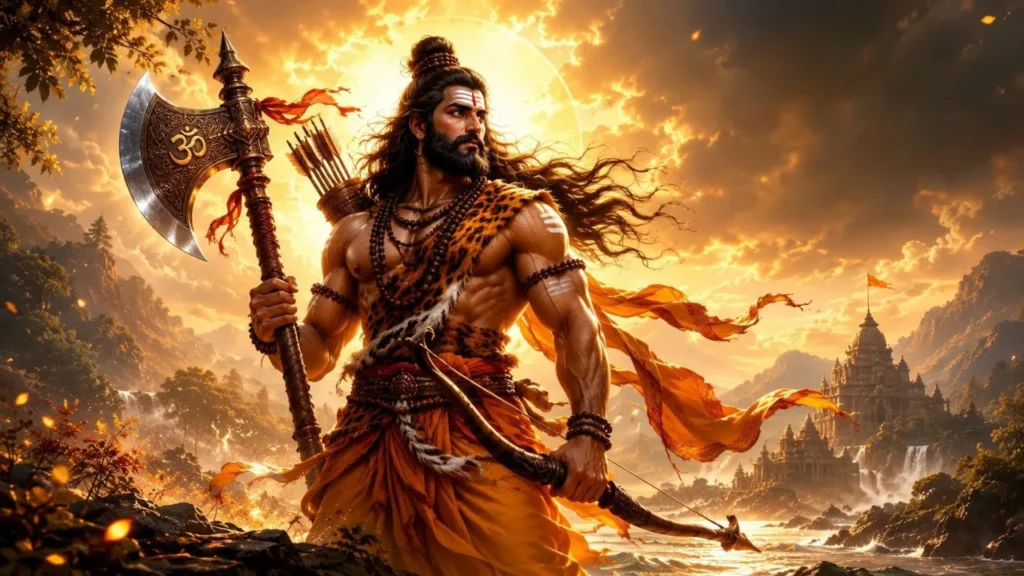
The sixth avatar, Parashurama, was born to restore justice again. During that time many rulers became corrupted and treated people badly.
He protected dharma and justice by fighting against the injustice with an axe that was gifted by Lord Shiva. Parashurama had knowledge of spiritual wisdom, and with that, he was a strong warrior also.
Symbolism: Parashurama represents discipline, courage, and the responsibility to stand against wrongdoing.
Rama Avatar
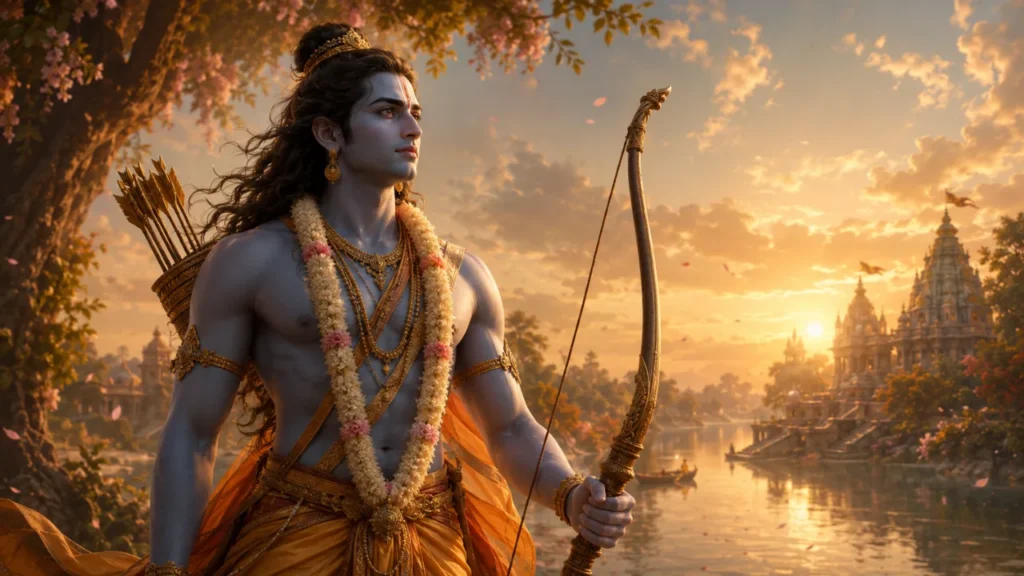
Lord Ram is one of Lord Vishnu’s most beloved avatars.
His life, described in the Ramayana, serves as an example of duty, honor, sacrifice, and righteousness. From his exile to rescuing Sita and defeating Ravana, every part of Ram’s life shows dedication to dharma.
Symbolism: Ram is an ideal son, husband, friend, and king. His story inspires millions of people across the world.
Krishna Avatar
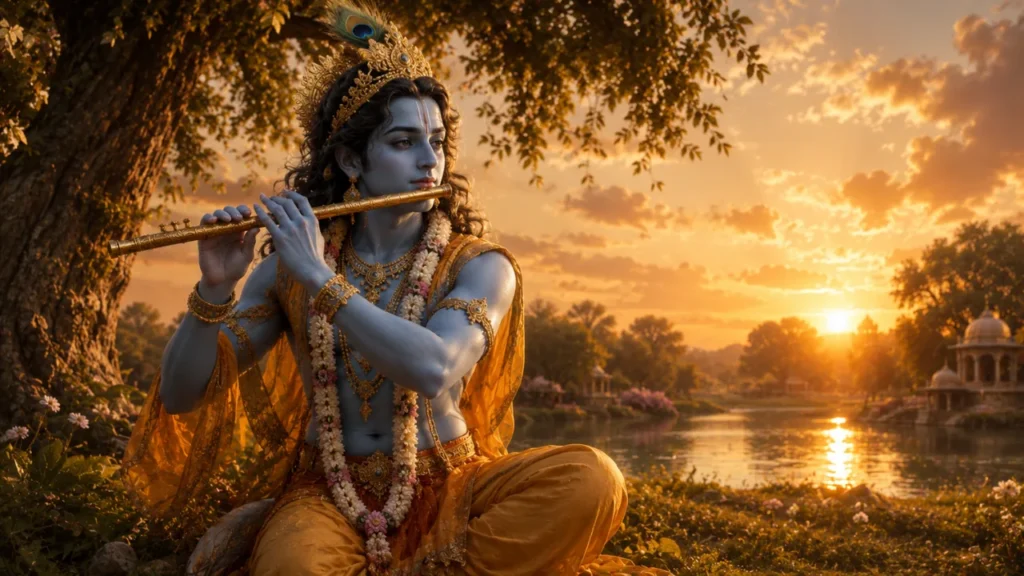
If Rama teaches duty, Krishna teaches wisdom.
Lord Krishna played many roles throughout his life—a playful child, protector, strategist, friend, and spiritual guru.
His teachings in the Bhagavad Gita are among the most powerful spiritual teachings in history.
Whether lifting Govardhan Parvat, defeating oppressors, or guiding Arjuna on the battlefield, Krishna always taught that true wisdom comes from understanding one’s purpose.
Symbolism: Krishna personifies God’s love, wisdom, and the art of living with balance and awareness.
What are the lessons from the Bhagavad Gita that every Gen Z should know?
Buddha Avatar
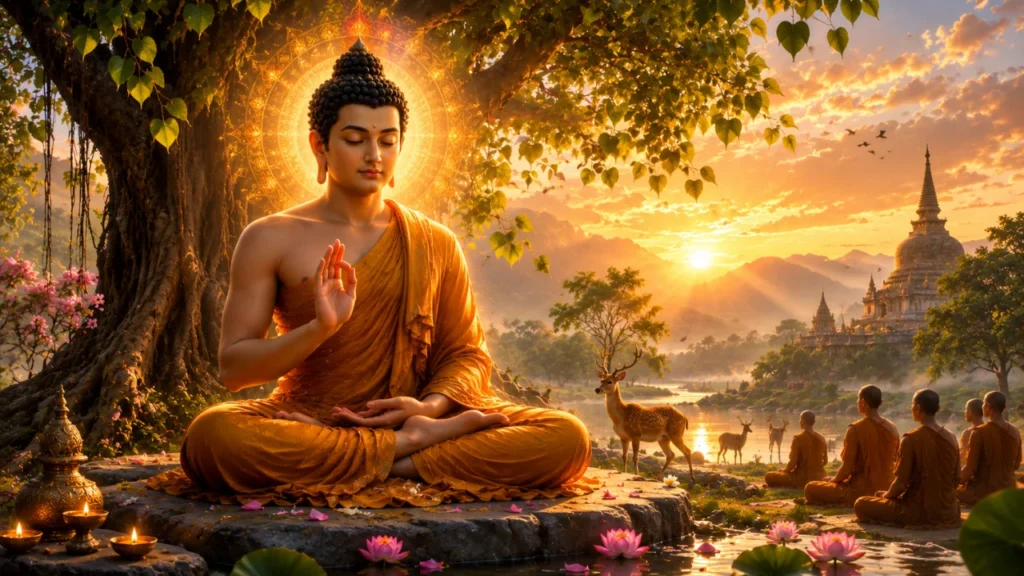
In many Hindu traditions, Gautama Buddha is considered the ninth incarnation of Lord Vishnu.
Buddha emphasized compassion, non-violence, meditation, and inner awakening.
His teachings encouraged people to find truth within themselves rather than remain trapped in ignorance and suffering.
Symbolism: Buddha represents peace, self-discovery, and spiritual enlightenment.
Kalki Avatar
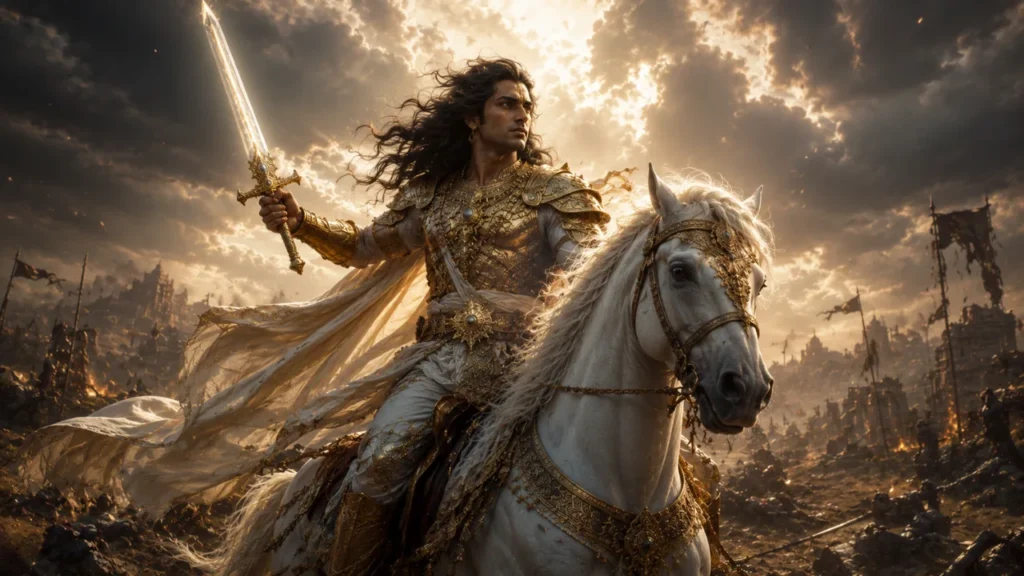
Unlike other avatars, Kalki hasn’t appeared yet.
According to Hindu scriptures, Kalki will come at the end of Kali Yuga, riding a white horse and carrying a flaming sword.
His mission is to destroy evil, restore Dharma, and start a new era of goodness.
Symbolism: Kalki is a symbol of new beginnings, change, and the promise that darkness is never permanent.
Vishnu Avatars by Yuga
In Hindu scriptures, time is divided into 4 Yugas, and Lord Vishnu took different avatars in different ages.
| Yuga | Avatars |
|---|---|
| Satya Yuga | Matsya, Kurma, Varaha, Narasimha |
| Treta Yuga | Vamana, Parashurama, Rama |
| Dvapara Yuga | Krishna, Balarama (in some traditions) |
| Kali Yuga | Buddha, Kalki |
Lesser-Known Facts About Vishnu’s Avatars
- Some scriptures mention not just 10 but 24 incarnations of Lord Vishnu.
- The list of Dashavatara varies slightly in different traditions.
- In some traditions, Balarama is the ninth incarnation instead of Buddha.
- Mohini, the female form of Vishnu, is also considered an important incarnation.
- Hayagriva, the horse-headed form of Vishnu, is worshipped as an avatar in some regions.
Interesting Connection with Evolution
Some modern thinkers have observed an interesting pattern in the Dashavatara.
This sequence seems to mirror the progression of life:
- Matsya – Aquatic life
- Kurma – Amphibian
- Varaha – Land animals
- Narasimha – Transition toward humans
- Vamana – Early humans
- Later avatars – Development of civilization and consciousness
Although this meaning is not part of traditional Hindu teachings, many people find the comparison interesting.
Hidden Meaning Behind the Dashavatara
| Avatara | Meaning |
|---|---|
| Matsya | Survival |
| Kurma | Stability |
| Varaha | Restoration |
| Narasimha | Faith |
| Vamana | Humility |
| Parashurama | Justice |
| Rama | Duty |
| Krishna | Wisdom |
| Buddha | Compassion |
| Kalki | Transformation |
Conclusion
The Dashavatara is not just a series of old stories. It is a lasting reminder that whenever the world loses its balance, God’s wisdom finds a way to right it.
From Matsya to the future warrior Kalki, each incarnation offers a lesson that is still relevant today.
Their stories inspire faith, courage, compassion, and hope—qualities as vital today as they were thousands of years ago.
Perhaps this is why the Dashavatara remains one of the most interesting and meaningful aspects of Hindu tradition.
FAQs
-
Who are the 10 avatars of Lord Vishnu?
The 10 avatars of Lord Vishnu, collectively known as the Dashavatara, are Matsya, Kurma, Varaha, Narasimha, Vamana, Parashurama, Rama, Krishna, Buddha (or Balarama in some traditions), and Kalki.
-
Why did Lord Vishnu take 10 avatars?
Lord Vishnu took different avatars to protect devotees and restore Dharma by defeating the evil.
-
What is the meaning of Dashavatara?
Dashavatara is a Sanskrit term where “Dasha” means “ten” and “Avatara” means “incarnation” or “descent.”
-
Which is the most powerful avatar of Vishnu?
Since all avatars had a purpose, Narsimha and Krishna avatars are usually considered the most powerful.
-
Is Buddha considered an avatar of Vishnu?
Yes, many Hindu traditions consider Gautama Buddha the ninth avatara of Lord Vishnu.
-
Has the Kalki Avatar already appeared?
According to the Hindu scriptures, Lord Kalki will appear at the end of Kali Yuga.