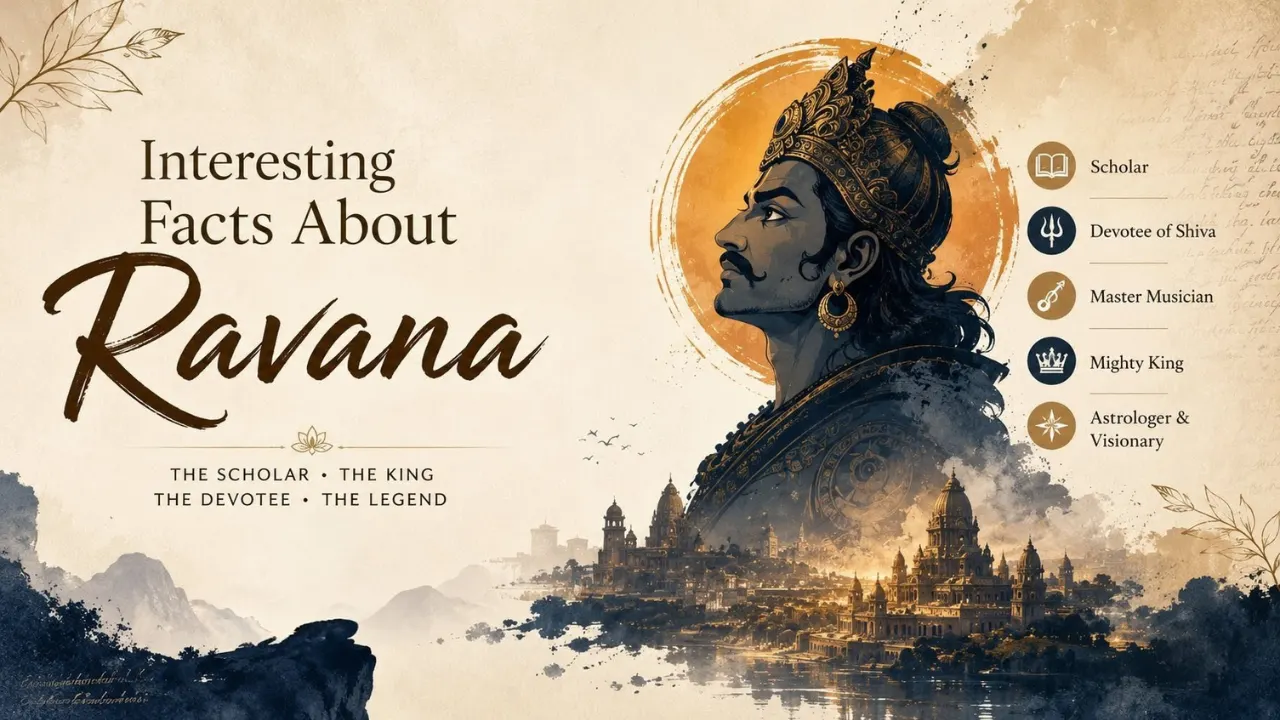
The Hindu scriptures describe Ravana as one of the most powerful figures of his time. He was a brilliant scholar, a master of the Vedas, and a great devotee of Lord Shiva.
Yet despite possessing the ultimate power, prosperity, and knowledge, his own pride led to his downfall. He was the perfect example that wisdom without humility can become the greatest weakness.
Here are the most interesting and lesser-known facts about Ravana that many people have never heard before.
Table of Contents
1. What Was Ravana’s Original Name?
Ravana wasn’t born with the name “Ravana.” As per Hindu mythology, his real name was Dashagriva (or Dashanana), which means “one with ten heads.”
The name “Ravana” was later given by Lord Shiva when he was impressed by his devotion. According to legends, when Ravana tried to lift Mount Kailash, Shiva pressed the mountain down, trapping him beneath it.
In pain, he roared a sound that echoed across the world. Impressed by his strength, devotion, and the thunderous cry, Shiva blessed him with the name Ravana, which translates to “one who roars loudly.”
2. Ravana Was Born Into a Family of Great Sages
Ravana was not born as a demon in the conventional sense. He was the son of Rishi Vishrava, a highly respected Brahmin scholar and Kaikasi, who was from a Rakshasa family.
The grandson of Rishi Pulastya (one of Brahma’s mind-born sons).
This unique heritage gave Ravana both intellectual excellence and incredible physical strength.
3. Ravana’s Ten Heads Had a Deeper Meaning
Ravana is also known as Dashanana (one with ten heads). Ravana’s ten heads are one of the most famous aspects.
As per belief, these ten heads represent the 10 emotional human flaws:
- Kama (lust)
- Krodha (anger)
- Moha (attachment)
- Lobha (greed)
- Mada (pride)
- Matsarya (envy)
- Manas (ego)
- Buddhi (intellect)
- Chitta (desire)
- Ahamkara (arrogance)
Many believe that they symbolise his mastery over the 4 Vedas and 6 Shastras.
4. Lord Shiva’s Greatest Devotees
Ravana’s devotion to Lord Shiva was incredible.
According to mythology, he performed penance for many years to gain Shiva’s blessings. He received the divine sword Chandrahas as a boon from Shiva.
He composed the famous Shiva Tandava Stotram that continues to be recited by devotees today.
5. Ravana Once Tried to Lift Mount Kailash
It is one of the most fascinating stories.
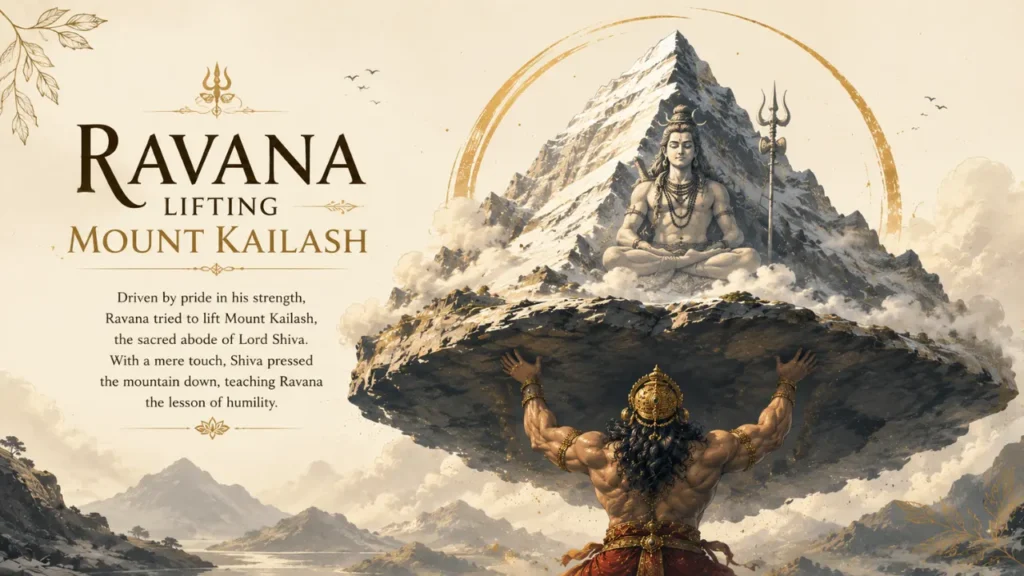
Filled with his pride of strength, Ravana once attempted to lift Mount Kailash. Some beliefs say that it was his mother Kaikasi’s wish to relocate Shiva to Lanka.
Ravana, blinded by the arrogance of his strength, decided to uproot the entire mountain to bring it to her.
When Shiva gently pressed the mountain with his toe, Ravana got trapped beneath it.
Realizing his mistake, Ravana composed the Shiva Tandava Stotram. Pleased by his music and surrender, Shiva forgave him.
6. The Story of Lanka
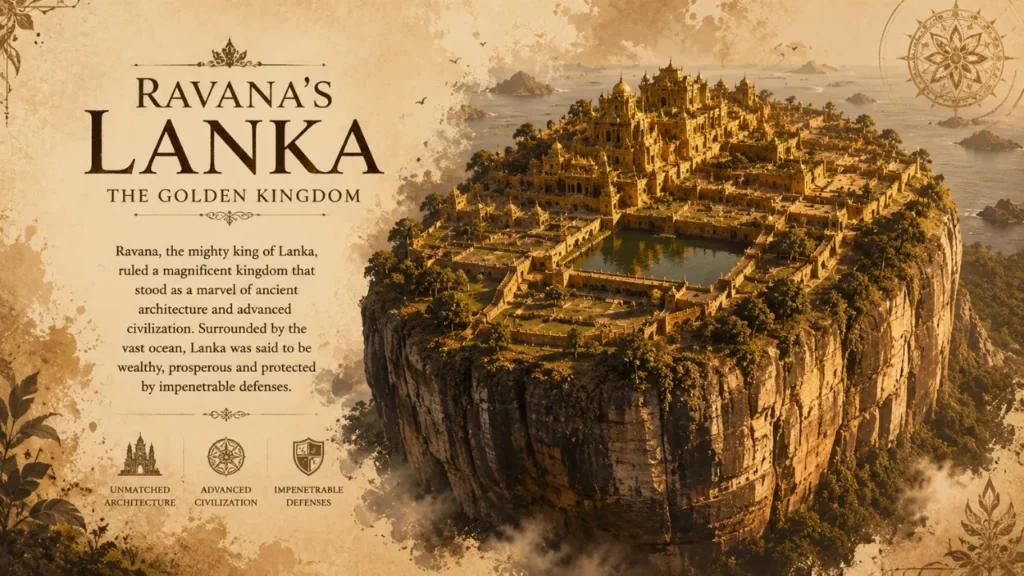
Some beliefs say that Goddess Parvati requested Lord Shiva to build a beautiful and comfortable home for them. Lord Vishvakarma then constructed the Sawarna Lanka (the golden city) for them.
Shiva invited Ravana (as he was a Brahmin) for Grihapravesh Pujan.
When Ravana asked for the priest’s reward (dakshina), he demanded the golden palace itself.
Shiva granted Lanka to Ravana, as he was bound by the rules of dakshina.
7. The Pushpaka Vimana
The flying chariot Pushpaka Vimana was capable of travelling wherever its owner desired.
Originally, it was associated with Kuber (half-brother of Ravana), but Ravana eventually took possession of this amazing vehicle.
8. Ravana Once Imprisoned Lord Shani
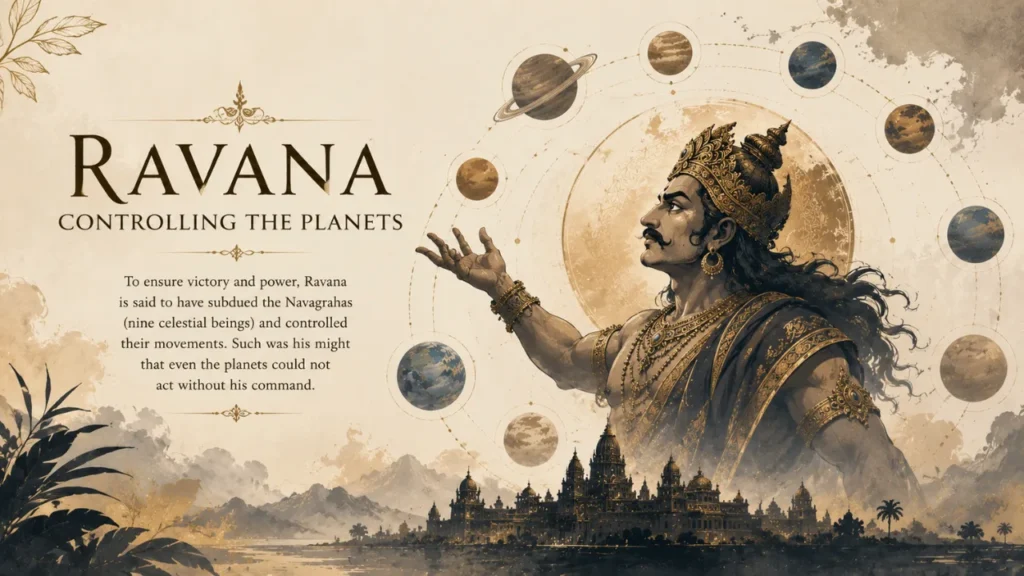
Ravana wanted his son Meghnad to be invincible, so he ordered all Navagrahas (nine celestial deities) to remain in a favorable position during Meghnad’s birth.
Lord Shani (Saturn) refused, so he imprisoned him. Later, when Hanuman reached Lanka in search of Mata Sita, he freed him.
On this, Lord Shani blessed Hanuman and promised that devotees of Hanuman would be protected from the malefic effects of Saturn.
9. His Son Meghnad Defeated Indra
Ravana’s son Medghnad was one of the greatest warriors in the Ramayana.
When he defeated Indra (the king of devas), he earned the name Indrajit, which means “the conqueror of Indra.”
This achievement shows the extraordinary power of Ravana’s lineage.
10. Ravana Was a Talented Musician
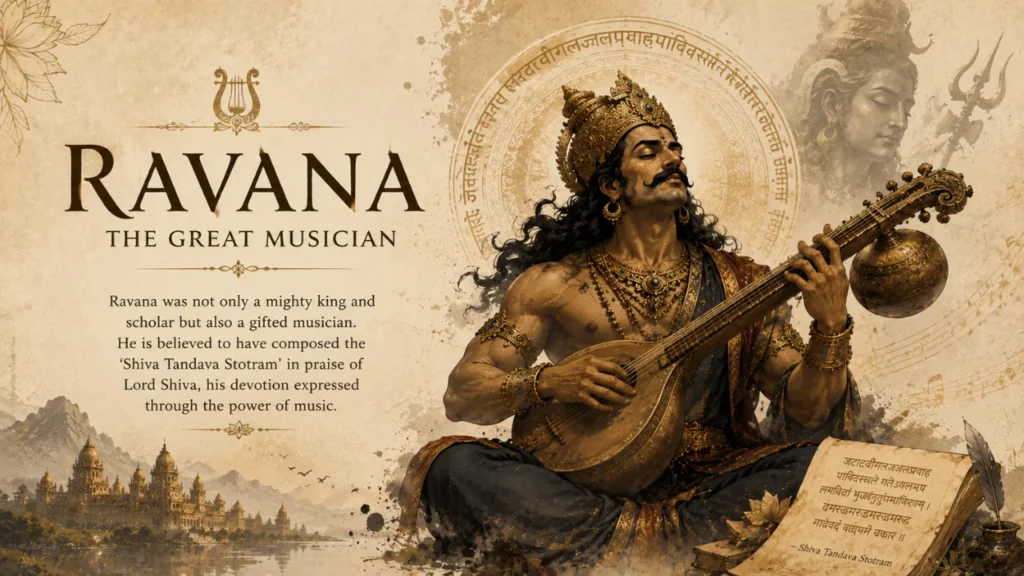
Ravana was a gifted musician.
According to Hindu mythology, Ravana, to impress Lord Shiva with his devotion, created the Ravanhatha, which translates to “Ravana’s hand.”
Ravana sacrificed one of his heads, an arm, and some hair to build this instrument.
It is still played in some parts of India and Rajasthan.
11. He Was an Expert Astrologer
In ancient mythology, the demon king Ravana is revered as the master of Vedic astrology (Jyotish).
Ravana is credited with the authorship of the Ravana Samhita, a text deeply associated with horoscope readings and planetary movements.
Even today, many are highly interested in traditional astrology studies.
Conclusion
Ravana remains the most fascinating figure in Hindu mythology. Despite being a scholar, king, astrologer, musician, warrior, and devotee, he let his pride overshadow everything.
The story of the Ramayana teaches us to strike a proper balance between knowledge and humility and power and wisdom.