The more you learn about Hinduism, the deeper it gets.
From the Vedas and Upanishads to the Ramayana, Mahabharata, and Puranas, Hinduism is filled with stories that still amaze people today. One such interesting topic is the collection of divine weapons mentioned in these ancient texts.
These were not ordinary swords or bows. They were divine weapons received through the blessings of the gods, each possessing unique powers and a story that has survived for thousands of years.
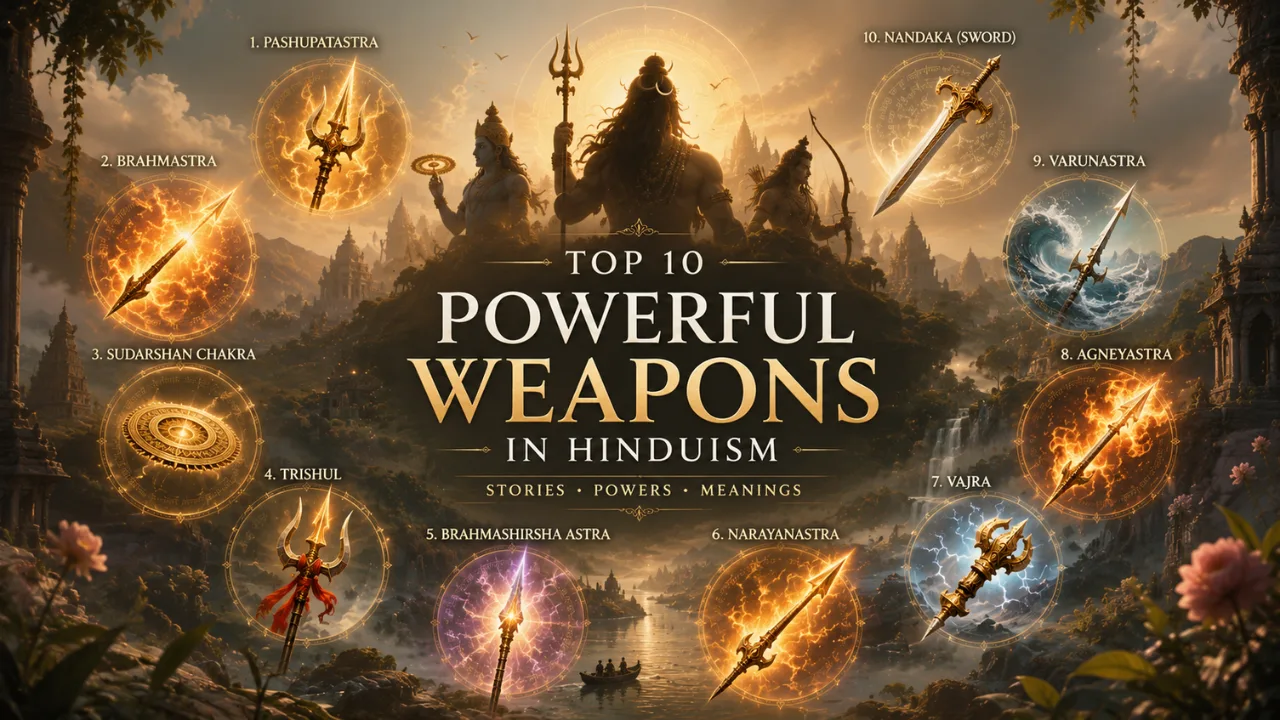
We’ll explore the 10 most powerful weapons in Hinduism and discover what makes each of them so unique.
Table of Contents
Astra vs Shastra: What’s the Difference?
Before we go deeper, it’ll be better to understand two terms that we’ll come across.
- Shastras are physical weapons like bows, swords, maces, and tridents that are held continuously in hand during battle.
- Astras are projectile or divine weapons (activated by sacred mantras, possessing supernatural powers) that are released from hand.
Pashupatastra
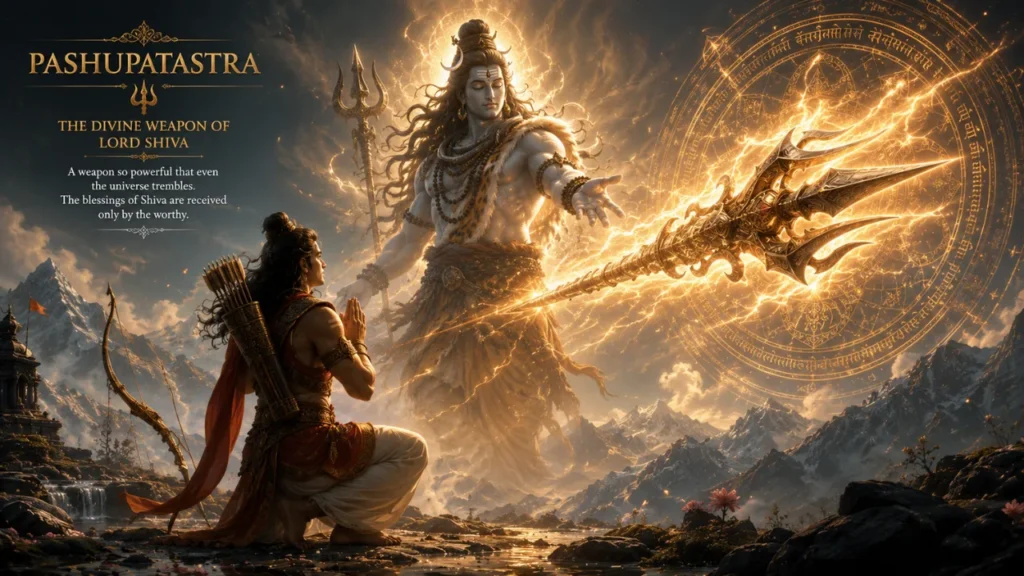
Among all the divine weapons described in Hindu scriptures, the Pashupatastra is frequently regarded as one of the most destructive.
Lord Shiva gifted this to Aruna after intense penance in the Himalayas. Arjuna had to prove his courage by fighting Shiva himself, who had disguised himself as a hunter.
The weapon was so powerful that it could destroy the creation if misused. Arjuna, understanding the consequences, never used Pashupatastra in the Mahabharata war.
Interesting Fact: The Pashupatastra could be launched in four different ways: by the eyes, by the mind, by spoken mantras, and through a bow.
Nandaka
Nandaka is the divine sword of Lord Vishnu.
In Hindu philosophy, Nandaka has a deeper meaning; it represents the knowledge that cuts through ignorance and darkness.
Lord Vishnu used this sword to kill the hundred-armed asura, Lohasura.
In the Ramayana, this is mentioned as the sword of Lord Vishnu’s Avatar Rama
Brahmastra
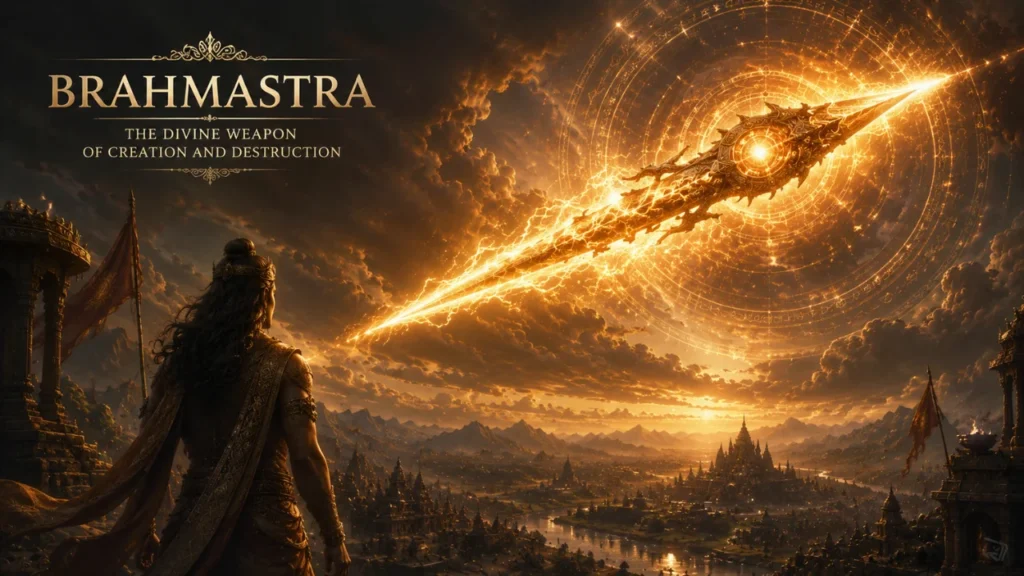
One of the most famous astras in Hindu mythology is the Brahmastra.
Created by Lord Brahma and having the capability of destroying everything in its path.
Warriors like Rama, Arjuna, Karna, and Ashwatthama were said to possess the knowledge of this weapon.
In the Ramayana, Shri Rama used the same weapon to kill the demon king Ravana.
Brahmashirsha Astra
Brahmashirsha Astra means Brahma’s 4-headed weapon.
According to the Mahabharata, this weapon is 4 times more powerful than the Brahmastra. This single weapon could wipe out the regions forever.
Only very few individuals ever learned to invoke this astra. Darona, Bhisma, Arjuna, Karna, and Ashwatthama were among those rare warriors who possessed this extraordinary weapon.
At the end of the Mahabharata, Ashwatthama used this powerful weapon on the unborn child of Uttara (wife of Abhimanyu); however, through the divine intervention of Krishna, the child survived. This was the only surviving child in the Pandava lineage, who later became King Parikshit.
Sudarshan Chakra
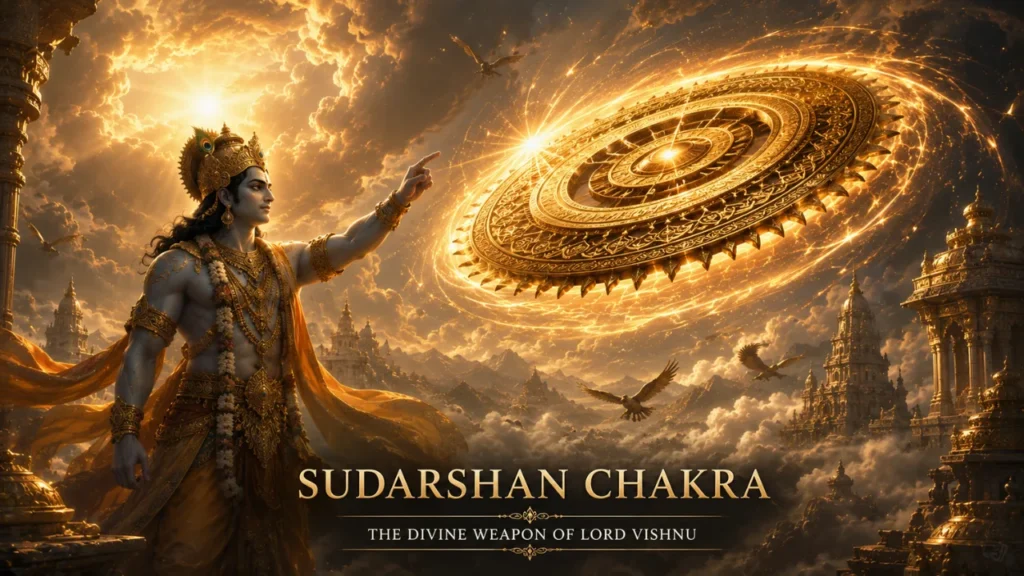
The most recognizable symbol in Hinduism is the Sudarshan Chakra.
Associated with Lord Vishnu, this weapon never misses its target. Once released, it returns to its master after completing its task.
Its most famous moment was when Lord Krishna used it to defeat Shishupala after forgiving his hundred mistakes.
Trishul
The Trishul is considered the weapon of Lord Shiva.
Its three prongs are believed to have a deeper meaning—they are often considered to represent creation, preservation, and destruction—or even the past, present, and future.
It is not only a weapon but also the symbol of cosmic balance.
Lord Shiva used his trident to destroy many powerful demons and restore balance whenever evil threatened the world.
Narayanastra
The Narayanastra is the personified weapon of Lord Narayana (Vishnu).
Unlike other weapons, it has a special feature: the more it is opposed, the stronger it gets.
In the Mahabharata, Ashwatthama used this weapon against the Pandavas’ army to take revenge for his father’s (Dronacharya’s) death.
Krishna then instructed everyone to surrender before the Astra, and everyone survived.
Vajra
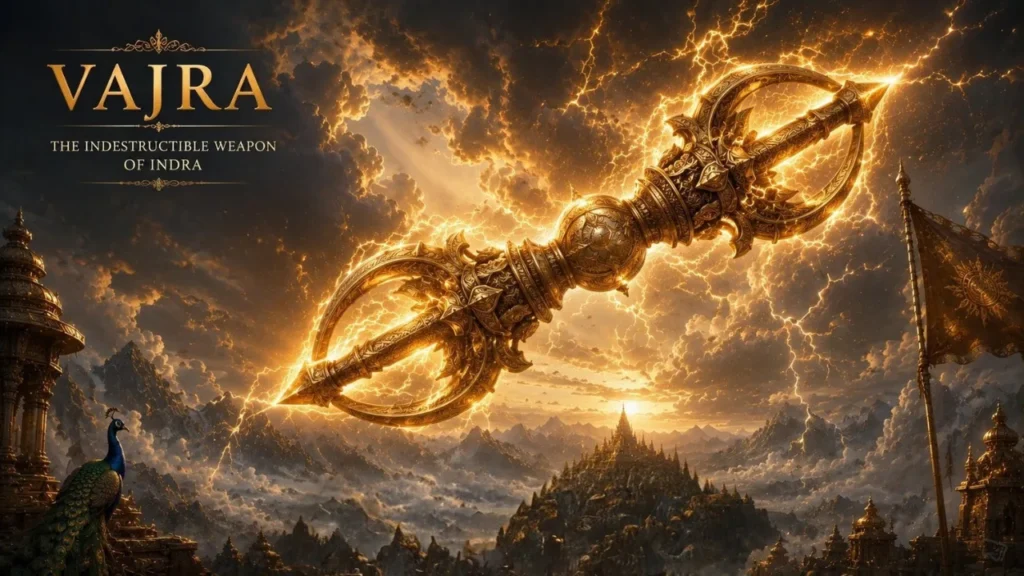
The Vajra is the legendary weapon of the king of Devas, Indra.
As per Hindu mythology, it was created from the bones of the great sage Dadhichi, who gave up his life to protect the universe.
Indra defeated the powerful demon Vritra using the Vajra, which brought rain and prosperity back to the world. This is the same weapon with which Devaraj Indra broke the jaw of Hanuman.
Agneyastra
As the name suggests, Agneyastra is blessed by Agni Deva, the god of fire.
Once summoned, it produced a massive fire that could sweep through armies and forests.
It is included in many Hindu scriptures, including the Ramayana and the Mahabharata.
In the Ramayana, Lakshmana used the Agneyastra, and Atikaya countered it with the Suryastra, burning both of them together. However, the effects of this weapon could be neutralised with water-based Astra, like Varunastra.
Varunastra
The Varunastra represented the power of water.
This divine weapon, received from Lord Varuna, could cause huge floods, extinguish huge fires, and counter the destructive power of Agniastra.
This weapon was obtained from Lord Varuna (the god of water) after intense penance.
Warriors like Rama, Lakshmana, Ravana, Arjuna, Karna, and Abhimanyu possessed this weapon.
Lesser-Known Facts About Hindu Divine Weapons
- Some divine weapons could only be used once.
- Several astras returned to their owner after being used.
- Misusing an astra was considered a serious violation of dharma and could have devastating consequences.
- Many weapons were associated with natural elements such as fire, water, wind, and lightning.
Final Thoughts
The divine weapons in Hinduism are not only about power and strength, but they also represent responsibility, self-control, justice, and the proper use of power.
Each weapon carries a lesson that true power is meaningful only when guided by wisdom and righteousness.
Such stories inspire millions and remind us that the greatest victory is not simply defeating the enemy—but upholding the Dharma with courage, humility, and compassion.