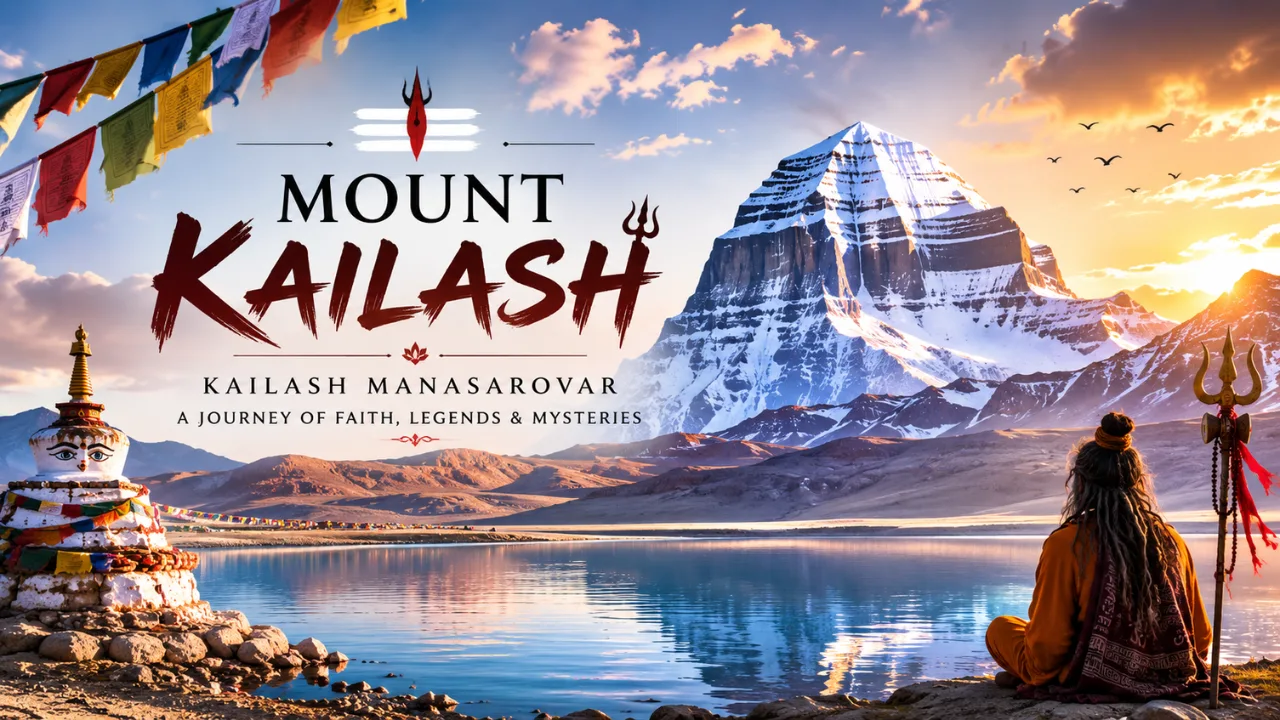
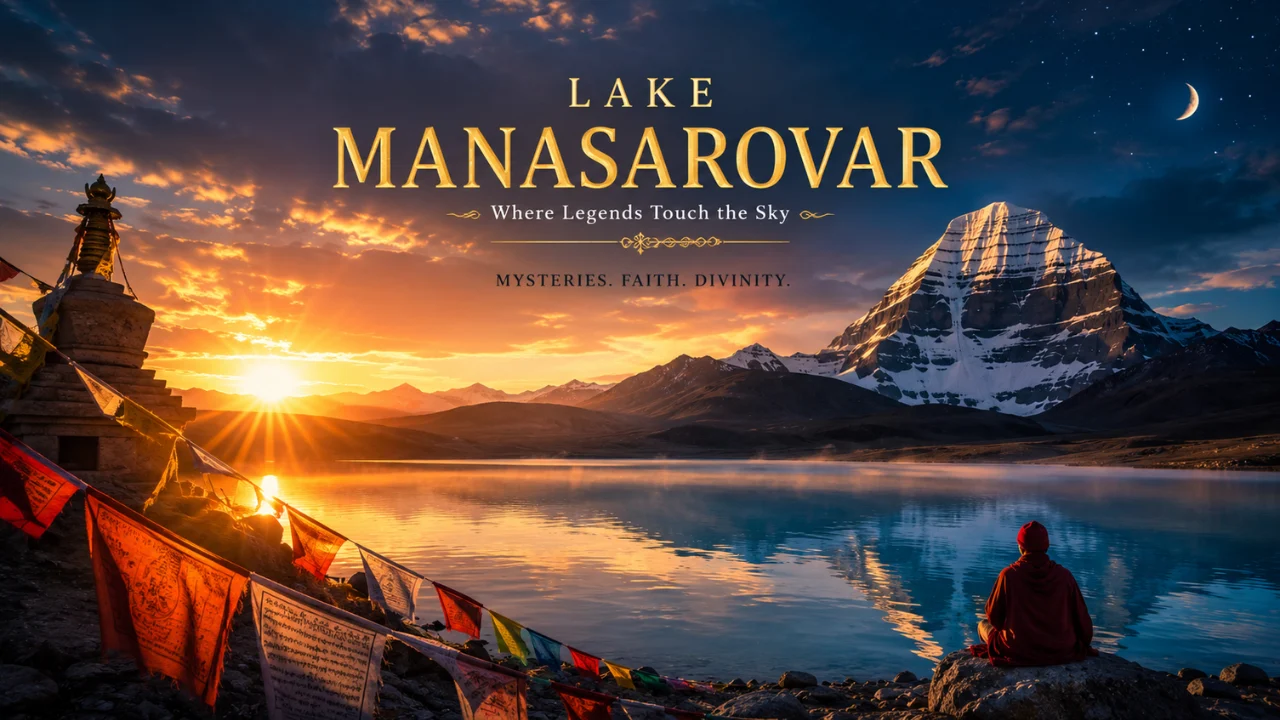
The holy freshwater lake Manasarovar is located in Tibet near Mount Kailash and attracts pilgrims, monks, saints, and travelers every year.
It is considered the purest lake not only in Hinduism but also in Buddhism, Jainism, and even by the followers of the Bon religion.
The crystal-clear water, changing colors, peaceful surroundings, and countless ancient stories make Lake Manasarovar one of the most mysterious places on Earth. Here, we’ll explore the fascinating legends, religious beliefs, scientific facts, and unanswered mysteries surrounding this sacred lake.
Table of Contents
Creation of Lake Manasarovar
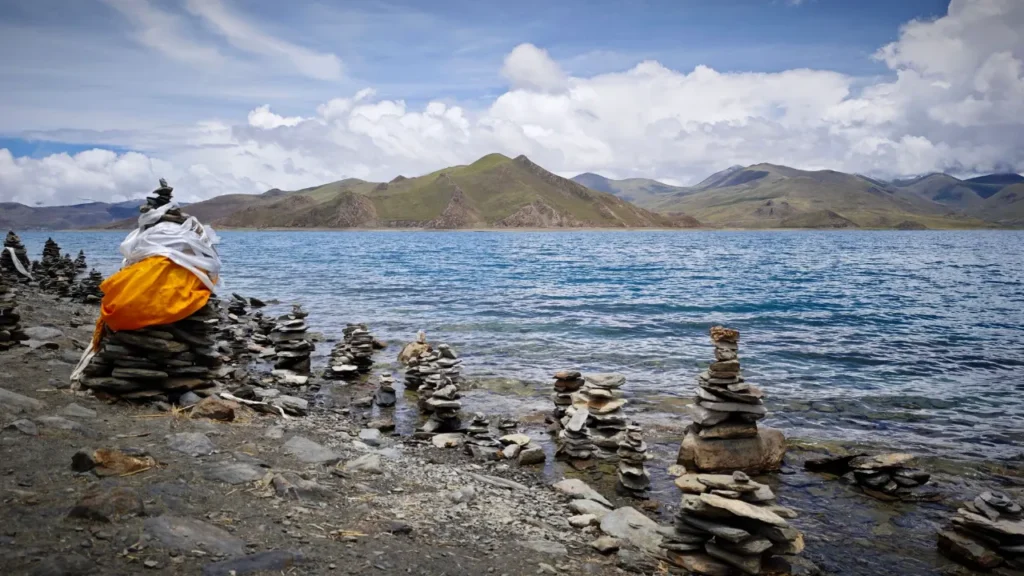
According to Hindu scripture, Lord Brahma created this lake before the Earth was fully formed.
The word ‘Manasarovar’ comes from Sanskrit, which translates to
- Manas – Mind
- Sarovar – Lake
Manasarovar literally means a lake of consciousness.
It is believed that Brahma first imagined this lake in his mind and then brought it into existence, where devas could perform sacred rituals.
Because of its divine origin, many people consider this lake to be filled with spiritual energies.
Many ancient texts also say that even remembering this lake with a pure heart can remove negative thoughts and bring peace.
Why Lord Shiva Chose Mount Kailash
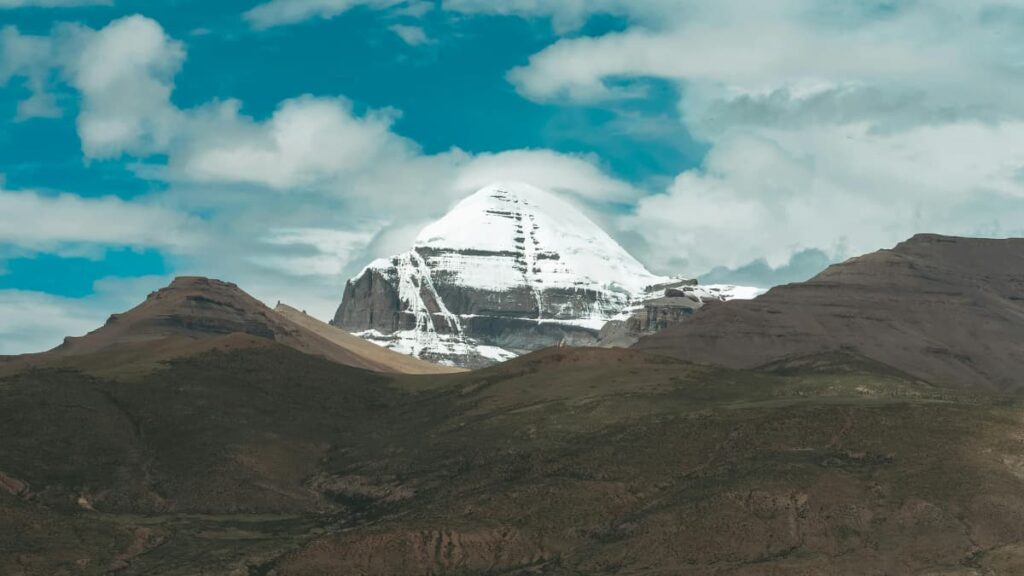
Hinduism gives beautiful explanations on this.
In many spiritual traditions, Mount Kailash is considered the center of the universe. It is the ideal place for deep meditation, with a perfect pyramid shape, peaceful surroundings, and untouched natural beauty.
Lake Manasarovar and the mountain symbolise the balance of masculine and feminine energy.
Many believe that Lord Shiva meditates on the mountain and Devi Parvati blesses the water of the nearby lake.
Mystery of the Two Neighbouring Lakes
One of the biggest mysteries is that two completely different lakes exist side by side—the Manasarovar and the Rakshas Tal.
The water in both the lakes is opposite in nature. Manasarovar is a freshwater lake that supports vegetation and aquatic life. However, the water of Rakshas Tal is salty and has no aquatic or plant life.
In Hindu mythology, Rakshas Tal is considered “the demon lake” and a symbol of negativity; the two lakes together represent the balance of positive and negative energies.
Both the lakes have different shapes. Manasarovar is round like the sun, while Rakshas Tal is like the crescent moon, representing the day and the night.
Story of Ravana’s Penance
It is one of the most interesting stories.
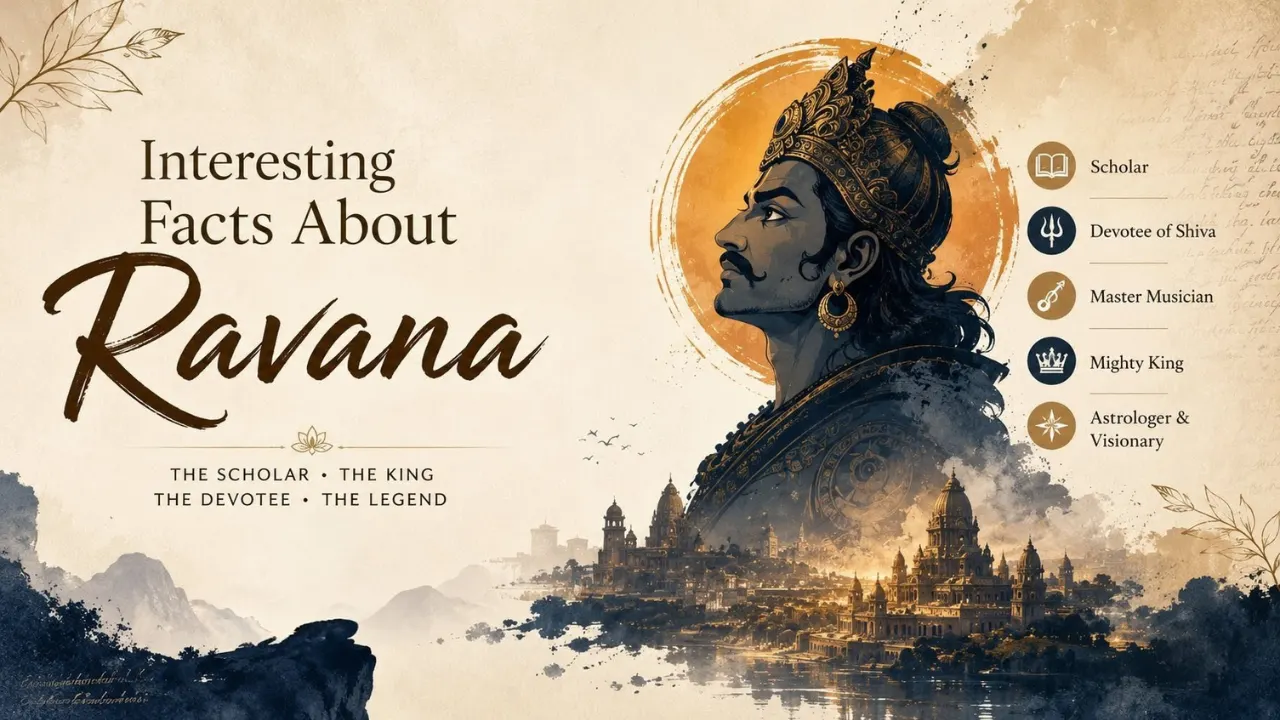
Ravana was a great devotee of Shiva. It is believed that Ravana formed the Rakshas Tal and performed intense penance there for many years.
Some stories say he even offered his heads one by one to Shiva during his tapasya. Pleased by his devotion, Shiva rewarded him with several blessings.
Once, he also tried to lift Mount Kailash; Shiva, to teach him a lesson, pressed the mountain with his toe, trapping Ravana beneath it.
It reminds us that true devotion comes from humility, not pride.
Does the Lake Really Change Colors?
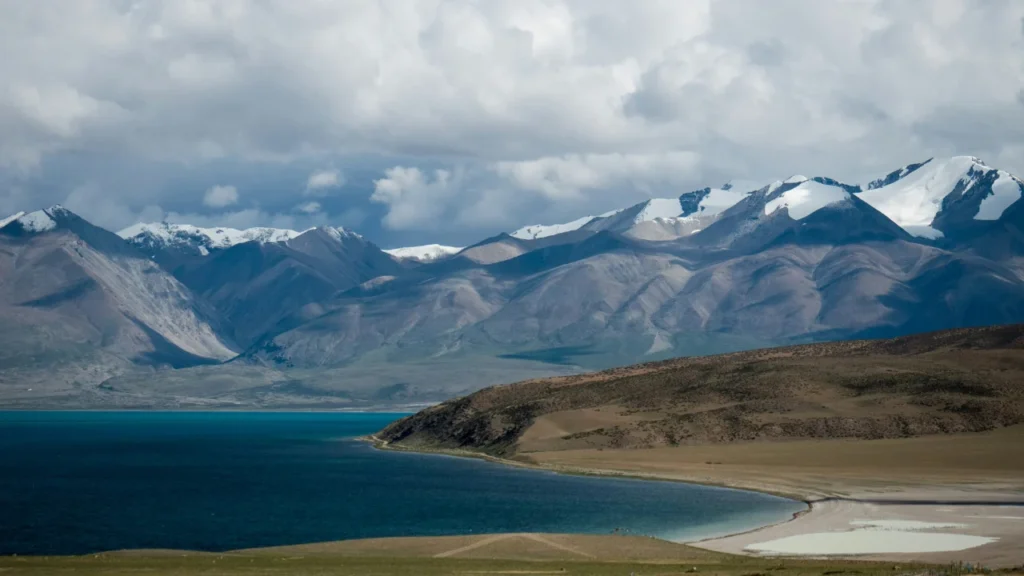
Yes, many visitors have reported seeing the lake change colors throughout the day.
The water appears:
- Deep blue
- Emerald green
- Turquoise
- Golden during sunrise
- Silver under moonlight
The change of colour is due to the weather, sunlight, cloud cover, minerals in the water, and the angle of reflection.
However, devotees believe this is the magic of the divine nature of the lake.
Mystery of the Golden Swans
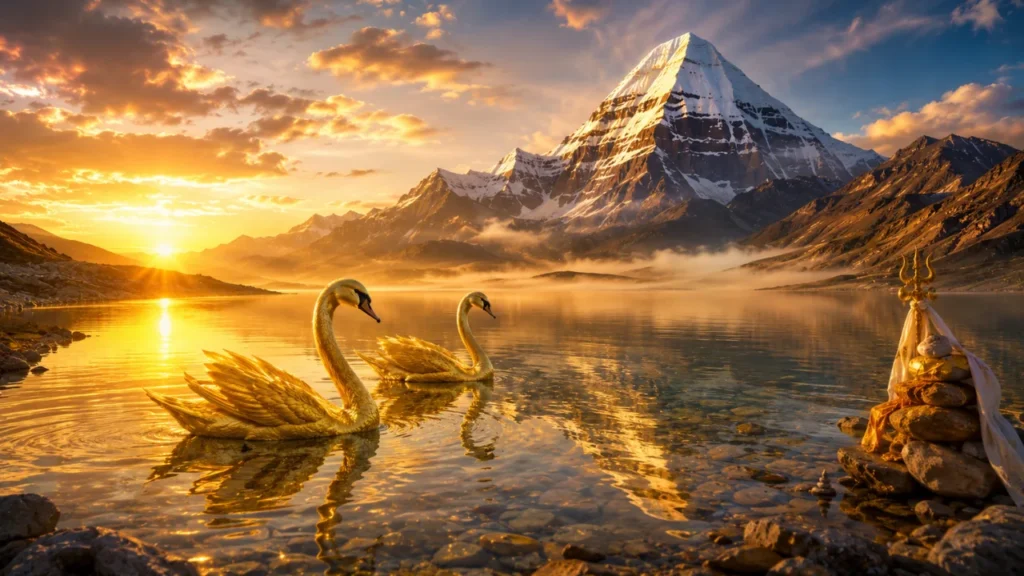
It is believed that golden swans live around the lake.
In Hinduism, a swan has the ability to separate milk from water, representing the power to distinguish truth from falsehood.
The golden swans are considered the representation of purity, wisdom, and spiritual knowledge.
However, many say that only people with high spiritual energies can witness these swans during meditation and special moments.
Why No One Lives Around the Lake Permanently
The area around the lake is genuinely beautiful; despite this, there are no settlements near the shore.
The reasons are very high altitude (around 4590 m), extreme cold winters, harsh conditions, limited vegetation, and thin oxygen levels.
Most pilgrims have a short rest in the area and continue the journey.
Four Great Rivers Connection
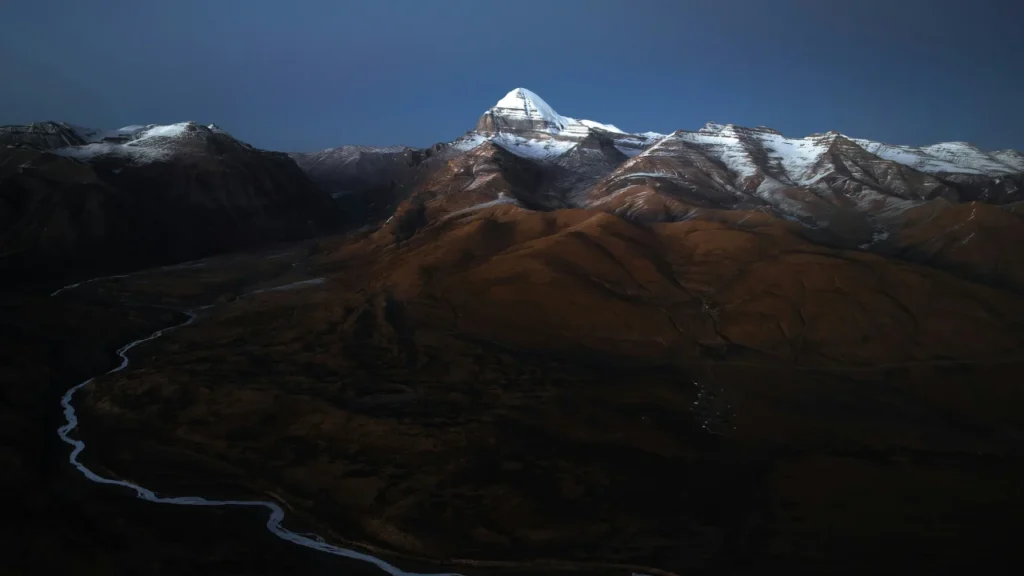
One of the most interesting things is that the area around Mount Kailash and Lake Mansarovar is connected to four major rivers of Asia.
- Indus River
- Sutlej River
- Brahmaputra River
- Karnali River (a major tributary of the Ganges)
Even though these rivers don’t begin right in Lake Mansarovar, they all flow from the glaciers and areas around Mount Kailash.
Because of this, this region is often called the Water Tower of Asia.
Mystery of the Silent Nights
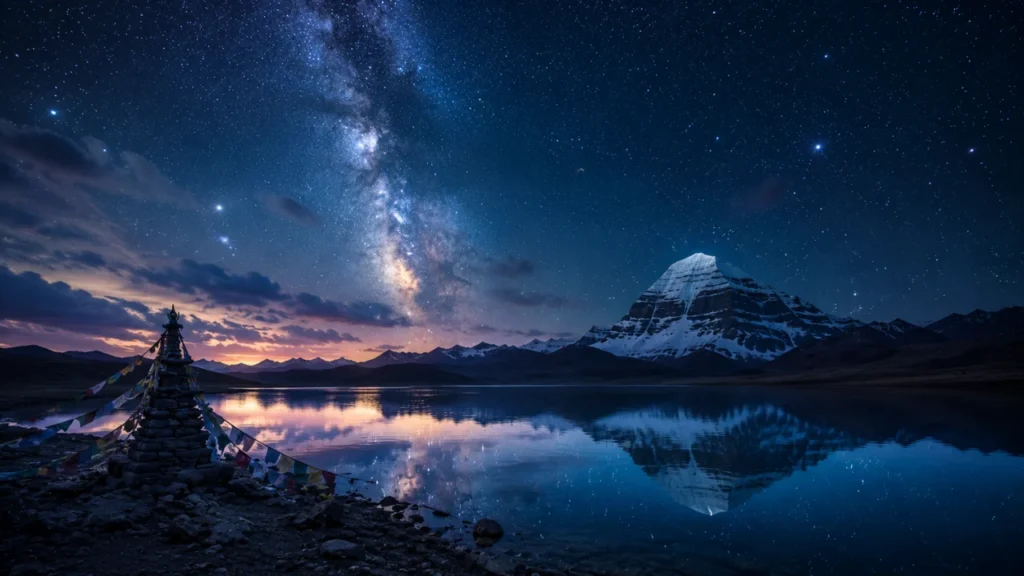
The nights in the area are filled with an unusual silence.
No cities, vehicles, or human activity, just silence that feels incredibly deep.
Some believe that this silence helps in deep meditation and prayer, while others enjoy the unseen beauty of nature.
Manasarovar Parikrama
The journey is around 90-100 km long. Nowadays, people complete it through vehicles like buses or jeeps.
Pilgrims believe this purifies the mind, removes past sins, and increases spiritual strength.
Many combine it with Mount Kailash Parikrama, which is around 52 km long.
Buddhist Stories and Beliefs
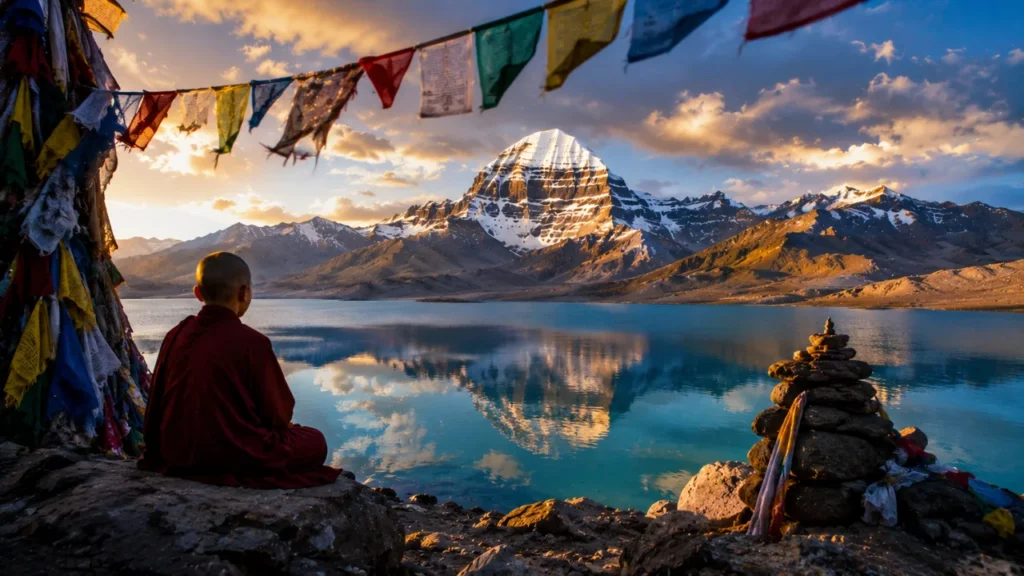
In Buddhism, Lake Manasarovar is also considered deeply sacred.
It is considered the earthly manifestation of the mythical Anavatapta, the heat-free lake.
This represents the mother, and Mount Kailash represents the father. Tradition holds that Queen Maya bathed here to purify herself before giving birth to Shakyamuni Buddha.
They believe the Buddha blesses this lake, and it is a place where wise people used to meditate.
Some Tibetan traditions say the lake represents purity of the mind and compassion.
Jain Beliefs About the Sacred Lake
The Jain community also deeply respects this area.
Jain tradition holds that the first Tirthankara, Rishabhdev (Adinath), achieved moksha near Mount Kailash, referred to as Ashtapada Parvat in Jain texts.
Because Lake Mansarovar is close to this holy site, many Jain pilgrims include it in their spiritual travels.
Bon Religion and the Sacred Waters
Long before Buddhism spread across Tibet, the ancient Bon religion considered the Mount Kailash-Lake Manasarovar area to be the center of its spiritual world.
Bon followers believe that the founder of the Bon tradition, Tonpa Shenrab, came to Tibet and purified himself by bathing in the sacred waters of Lake Manasarovar. The lake is considered a source of spiritual power, purification, and harmony with nature.
Unlike Hindu and Buddhist pilgrims, Bon followers traditionally perform the sacred “kora” (circumambulation) around Mount Kailash in a “counterclockwise” direction, reflecting their unique religious rites.
Scientific Facts About Lake Manasarovar
Some of the fascinating facts about the lake:
- One of the highest freshwater lakes in the world.
- The water of the lake is crystal clear.
- The lake is at an altitude of 4590 m
- It covers an area of around 320 square kilometers.
Unexplained Mysteries of Lake Manasarovar
Several mysteries remain unsolved, like
- Feeling unusual peace during meditation.
- Seeing mysterious lights over the lake.
- Experiencing vivid spiritual dreams.
- Hearing unexplained sounds at night.
- Feeling an overwhelming sense of positive energy.
- Nails and hair grow faster.
Conclusion
Lake Manasarovar isn’t only a beautiful Himalayan lake but also a place where mythology, history, mysteries, spirituality, and nature come together.
Science is trying to solve the mysteries of the place, but still we are left with so many unsolved questions.
Maybe this is the real beauty of this entire place, something that is beyond the human world.