
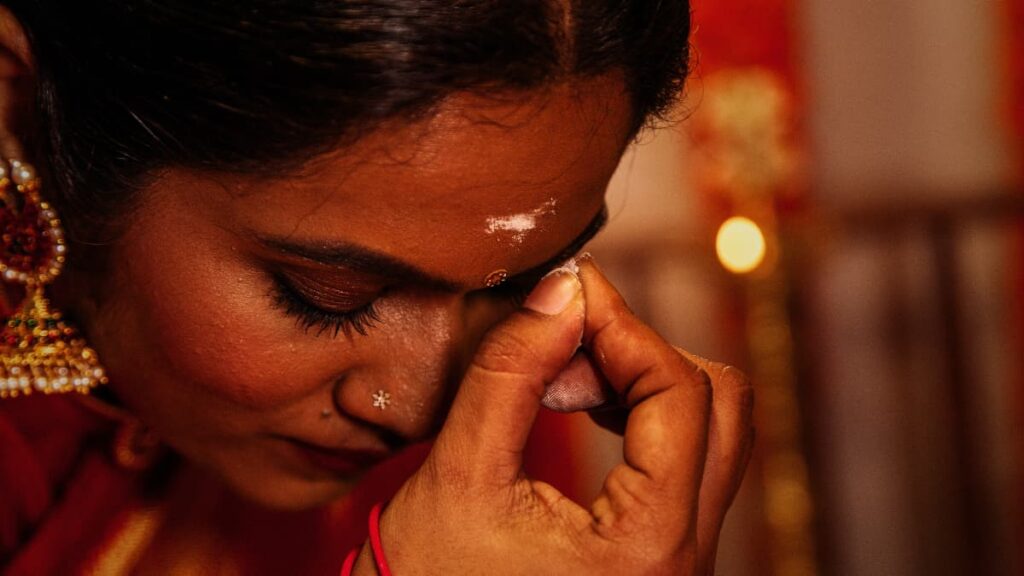
Every single ritual in India has a deep meaning that connects our mental, physical, and spiritual health. In these sacred practices, applying tilak on the forehead symbolizes both faith and science.
It is not just seen as a symbol of devotion; applying tilak to the forehead has a deep significance in both human physiology and ancient yogic wisdom. It’s a practice of awakening and balancing our inner energy centers.
Table of Contents
The Spiritual Science of the Forehead
In yogic philosophy, the area between the eyebrows, where the tilak is applied, is known as the Ajna Chakra, or the “third eye.”
It is considered a center of inner vision, awareness, and intuition. It controls our thoughts, how we connect with our higher consciousness, and how we perceive the truth.
According to ancient sages, focusing energy at this spot can:
• Increase intuition and mental clarity.
• Balanced mental and emotional states.
• Focus and inner peace increase.
The tilak, therefore, is not just symbolic; it acts as a stimulus to activate and protect this vital energy point.
The Scientific Explanation
Modern science reveals interesting facts about this ancient ritual.
The space between the eyebrows—the location of the Ajna Chakra—is connected to important nerves and the pineal gland, often referred to as the “spiritual gland.”
Applying a tilak has the following effects on the body and mind:
- Activates the Pineal Gland: The gentle pressure and coolness of sandalwood or sacred ash helps stimulate the pineal gland, which regulates sleep, mood, and mental balance.
- Regulates Energy Flow: According to Ayurveda, this is where several important nerves meet. Applying tilak helps to maintain the flow of prana (life force) and reduces excess heat in the body.
- Enhances Focus and Calmness: The natural cooling qualities of the turmeric and sandalwood used in tilak help to calm the nervous system and keep the person focused.
- Protects Against Negative Energy: It is said that tilak forms a faint protective barrier across the forehead, protecting the mind from distractions and unpleasant feelings.
- Improves Blood Circulation: Applying tilak with light pressure encourages local circulation, which enhances relaxation and a sense of freshness.
Why Different Substances Are Used
Every item used for applying the tilak has its own scientific and spiritual benefits:
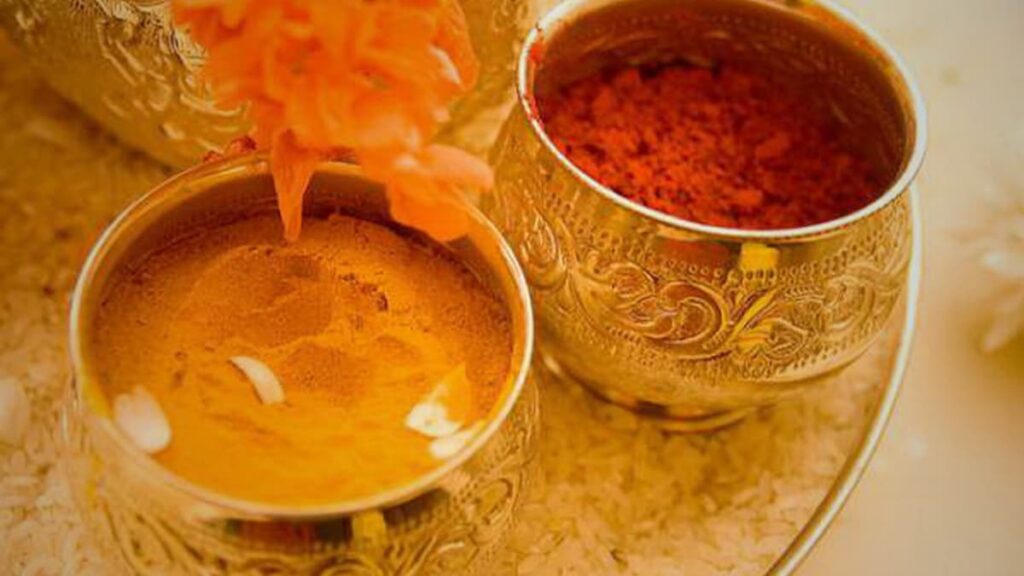
- Sandalwood Paste (Chandan): Provides a cooling effect, reduces inflammation, and soothes the nerves.
- Kumkum (red vermilion): Made from turmeric and lime, it activates energy centers and symbolizes vitality.
- Vibhuti (sacred ash): Has purifying properties and symbolizes detachment from worldly desires.
- Turmeric: Known for its healing, antiseptic, and energy-boosting effects.
Each of these elements contributes to physical well-being and spiritual balance.
A Daily Ritual of Mindfulness
Applying tilak on a daily basis is a moment of inner peace as well as a religious practice. It reminds us to pause, focus on our thoughts, and connect with the divine energy within.
Applying a tilak before meditation was common among sages and yogis, who believed it helped them focus energy inward and align the body’s energy centers.
Many people still find that this small gesture provides them balance, stability, and peace of mind before the day starts.
Meeting Point of Faith and Science
The beauty of tilak lies in the way it integrates ancient spirituality with modern science. It shows that Indian customs are more than just ceremonial practices; they are well-thought-out acts for the welfare of people.
Tilak sets up the perfect balance between body, mind, and soul by increasing brain activity and lowering emotions.
In Essence
True spirituality is science itself.
When you wear a tilak or see someone wearing one, keep in mind that it serves as a reminder that we all possess divine energy that is just waiting to be awakened through awareness, devotion, and balance.
Want to know Why Do Hindus Break a coconut?