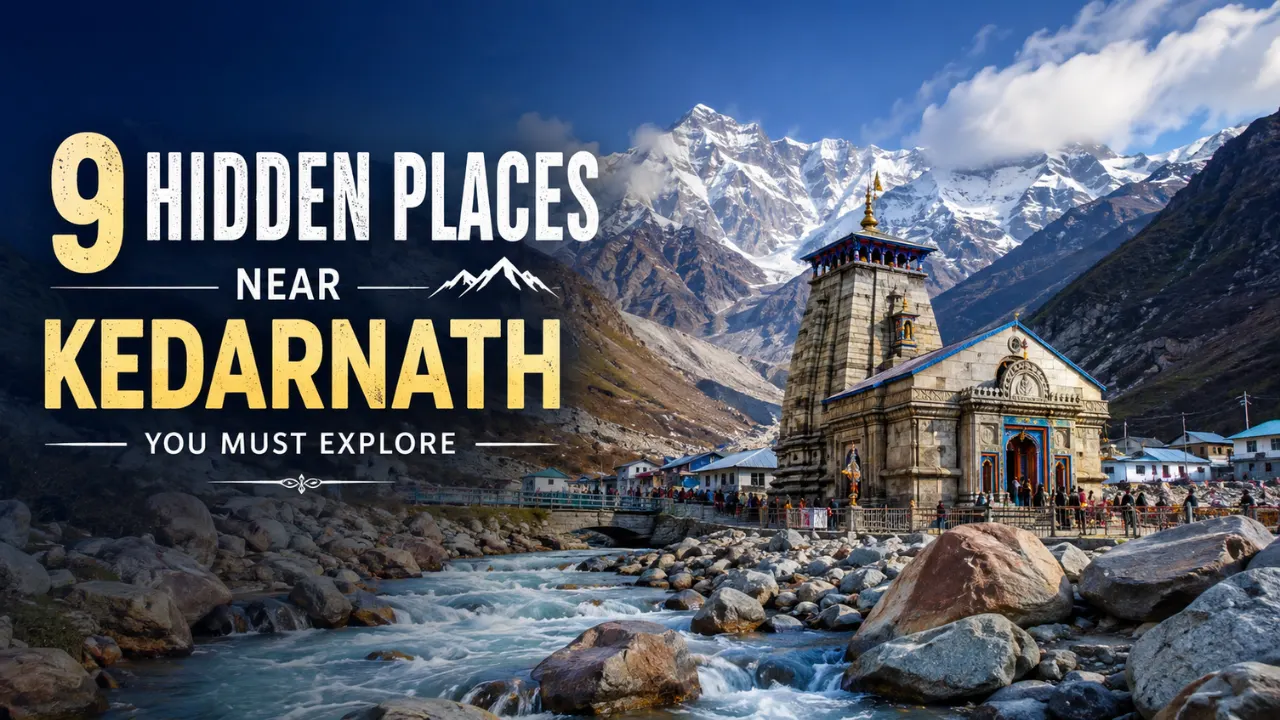

Kedarnath is one of those places that almost every Indian has heard about, whether they have visited it or not. It is one of the 12 jyotirlingas dedicated to Lord Shiva.
This place is filled with faith, fascinating legends, and a journey that is not always smooth. From the trek to the stories of Lord Shiva and the Pandavas, there is a lot to discover about this famous Himalayan shrine.
Table of Contents
Where Is Kedarnath Located?
Surrounded by the mighty peaks of the Garhwal Himalayas, the Kedarnath temple is located in the Rudraprayag district of Uttarakhand.
With an altitude of 3583 m, this town sits near the Chorabari Glacier, from where the Mandakni River flows through the region. This river is also an important tributary of the Ganga River.
Behind the famous Kedarnath Temple, the Kedarnath Peak and Kedar Dome rise high into the sky.
Why Is Kedarnath So Important?
In Hinduism, Kedarnath is having a very special place.
This temple is dedicated to Lord Shiva and is considered one of the 12 Jyotirlingas. It is one of the four temples that form the Char Dham of Uttarakhand—Kedarnath, Badrinath, Gangotri, and Yamunotri. Along with this, it is one of the five Panch Kedar temples located in the Garhwal Himalayas.
For pilgrims, the journey to the temple is also an important part of the pilgrimage.
Story of Kedarnath and Lord Shiva
Like many old temples in India, Kedarnath is also surrounded by interesting stories.
According to a popular story, after the Kurukshetra War, the Pandavas sought Lord Shiva’s blessings. They wanted forgiveness for the destruction caused by the war.
However, Lord Shiva did not want to meet them and hid in the form of a bull.
The Pandavas eventually recognized him. When they tried to capture him, Shiva disappeared into the ground. It is believed that his hump remained at Kedarnath.
It is believed that the other parts of the bull appeared at four distinct locations in the Himalayas: Tungnath, Rudranath, Madhyamaheshwar, and Kalpeshwar.
Together, these five temples are known as the Panch Kedar.
The Kedarnath Temple
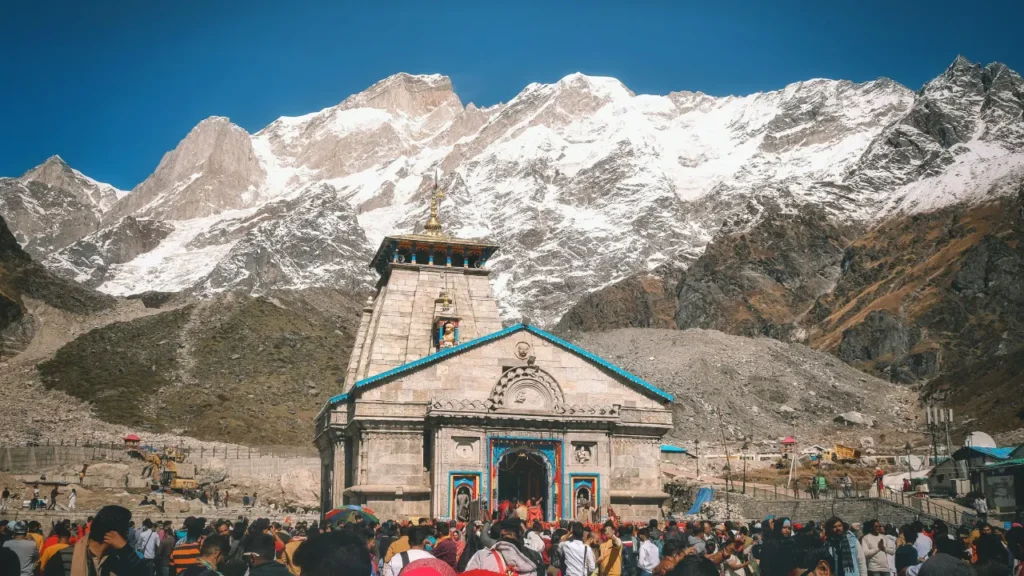
Built with the massive grey stone slabs, the temple features the Nagara-style North Indian temple architecture.
Inside the temple, Lord Shiva is worshipped in a unique conical form, traditionally believed to be the hump of Shiva from the Kedarnath legend. Outside the temple is a statue of Nandi standing facing the temple.
It is believed that this temple is more than a thousand years old, and Adi Shankaracharya played an important role in the establishment of the temple.
Kedarnath After the 2013 Floods
Kedarnath holds the memories of one of the most terrible natural disasters in the history of Uttarakhand.
In June 2013, Kedarnath and the surrounding regions were devastated by massive floods and landslides, resulting in huge casualties and property damage.
Yet the main temple survived. A large rock popularly known as Bheem Shila came to rest behind the temple. It split the water into two sides and saved the temple. Today it is widely regarded by the devotees and is an important part of the Kedarnath Journey.
Kedarnath Trek
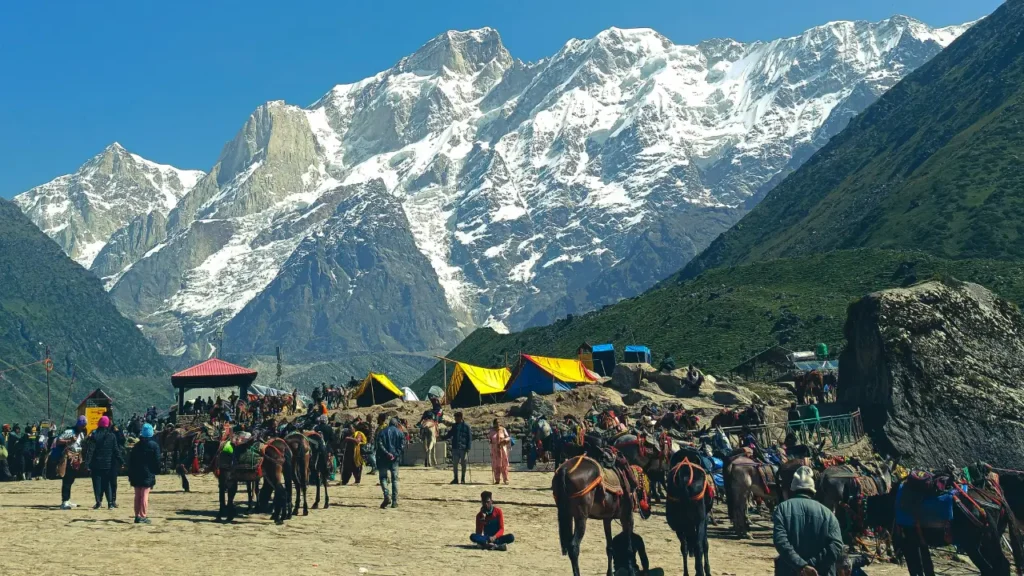
The trek involves a 16-18 km uphill journey starting from Gaurikund. After reconstruction, the trek gets quite longer but ensures safety and better infrastructure. The current path follows:
Gaurikund → Jungle Chatti → Bheembali → Linchauli → Kedarnath
The new route avoids vulnerable river banks and landslide-prone zones. It includes reinforced walkways, steel bridges, and marked rest stops.
Facilities on the Trek
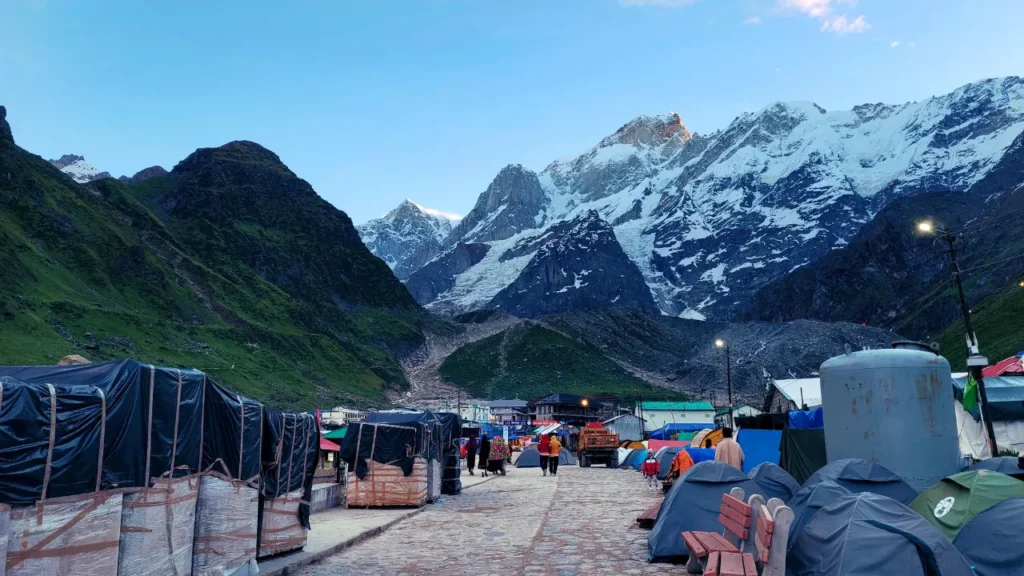
Several basic facilities are provided along the way to make travel easier for pilgrims and travelers.
- Food and Water: There are multiple tea stalls, small food vendors, and temporary camps available.
- Toilets: Public and temporary toilet facilities are provided at multiple locations on the trekking route.
- Medical Facilities: Basic medical and first-aid facilities are available at various places along the route.
- Pony, Mule, and Palki Services: If walking the whole way feels too hard, ponies, mules, and palkis are available for pilgrims.
- Helicopter Services: During pilgrimage season, helicopter services are also available depending on the weather or operational conditions.
Best Time for the Kedarnath Trek
The Kedarnath trek is generally open from late April or early May until November, depending on the weather. Every season has its own unique feel.
If you’re planning a trip, don’t rely solely on a specific month.
Check official updates, weather conditions, and route status for Kedarnath/Char Dham before your trip. Before you pack your bags, don’t forget to book your Kedarnath Yatra from the official portal.
How to Reach Kedarnath
By Road: You can travel by road to Gaurikund, the starting point of the Kedarnath trek. Rishikesh, Haridwar, Dehradun, and other cities in Uttarakhand are generally used as starting points for road trips.
By Train: The nearest major railway junction is Rishikesh. From there, you can go to Gaurikund by road.
By Air: the nearest airport is Jolly Grant Airport in Dehradun. From there, the journey continues by road towards the Kedarnath route. Get the best discounts on flight bookings.
What Can You See Around Kedarnath?
Kedarnath is not only about the temple; there are various hidden places that you can explore.
- Bhairavnath Temple
- Vasuki Tal
- Chorabari Tal
- Adi Shankaracharya Samadhi
- Rudra Meditation Cave
Tips for Kedarnath Trek
- Complete the required yatra registration.
- Carry warm clothes, even in summers
- Wear comfortable trekking shoes with good grip
- Carry basic medicines and personal essentials.
- Avoid carrying unnecessary luggage
- Make sure to carry cash, because digital payments don’t always work here.
- Check weather and route conditions before leaving.
Final Thoughts
Kedarnath leaves a lasting impression long after your trip has ended. You might come for the ancient temple, but the mountains, the trek, the stories, and the peaceful vibe will also become a part of your experience.
The journey to Kedarnath can be tough, but it is this effort that makes the trip memorable. So, if you ever get the chance to visit this sacred Himalayan town, don’t just go to see the temple. Experience the journey itself.