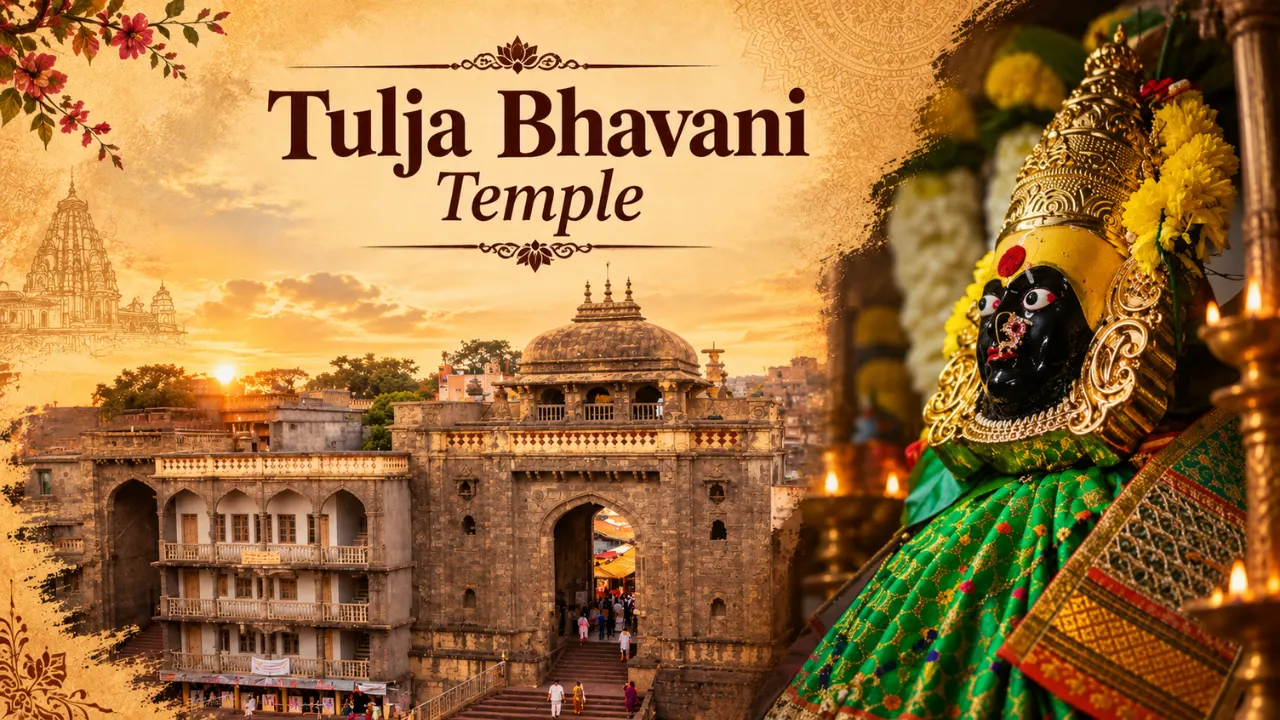
This ancient temple in Maharashtra is a place where history, faith and legend come together naturally. Dedicated to Goddess Tulja Bhavani, this ancient temple has been a major centre of devotion for centuries and also holds a special connection with the history of the Marathas.
Even today, a large crowd of devotees come to the place to seek blessings from the goddess. So let’s take a closer look at the story and significance of this famous temple.
Table of Contents
Who Is Goddess Tulja Bhavani?
Tulja Bhavani is worshipped as a powerful form of the divine mother goddess Parvati. Devotees also call her by names like Bhavani, Ambabai, Jagadamba, and Tukai. She is seen as a symbol of power, protection, and courage.
She is revered as a Kuldevi (family deity) by the Bhosale royal families and several other Maratha clans and communities around Maharashtra.
Where Is Tulja Bhavani Temple?
The temple is located in Tuljapur of Dharashiv district in Maharashtra. It is sitting on the Yamunachala Hill in the Balaghat Range, which is about 45 km from Solapur, making the city one of the convenient options to reach the temple.
This important pilgrimage site is one of the three-and-a-half Shakti Peeths of Maharashtra.
Story of Tulja Bhavani
According to the tradition, a demon named Madhu-Kaitabh became a terror for both gods and humans. To seek help, they turned to Lord Brahma, who advised them to ask for help from the divine Shakti. She vanished the demon by taking the form of a powerful destroyer and restored peace.
Another story says that after the death of the sage Kardama, his wife Anubhuti performed penance to Goddess Bhavani on the banks of the Mandakini River to seek the care of her child. When a demon named Kukur tried to disturb her penance, the goddess came to Anubhuti’s aid and killed the demon.
The name Tulja is derived from “twarita,” which means the goddess who comes in haste to help her devotees.
History of Tulja Bhavani Temple
It is believed that the temple was built in the 12th century CE by Mahamandaleshwara Māradadeva of the Kadamba dynasty. The temple also has mentions in ancient texts like the Sakanda Purana.
This temple holds great significance for the Marathas. Chhatrapati Shivaji Maharaj was a dedicated devotee of the goddess Bhavani; he frequently visited the temple to seek the divine guidance. According to belief, goddess Bhavani blessed him with a divine sword called Bhavani Talwar, which symbolized her protection, ensuring his success in establishing Swarajya.
Architecture of Tulja Bhavani Temple
The architecture of the temple mainly follows the Hemadpanti style, with a structure built largely from black stone. The temple complex also has several smaller shrines and important spaces connected with worship.
The complex feature grand outer entrance gates (Mahadwars). The main entrance, Sardar Nimbalkar Dwar, was designed with a blend of Deccan and Maratha styles. The other two gates are named in honor of Shivaji Maharaj’s parents, Raja Shahaji and Rajmata Jijau.
There are two main tirthas in the temple complex, Gomukh Kund and Kallol Kund. Devotees take a dip in these holy waters before entering the temple.
Idol of Tulja Bhavani
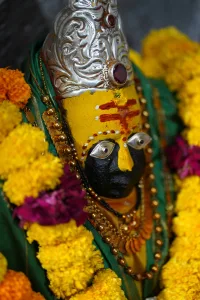
The idol of the goddess in the main scantum (grabhgrih) is a three-foot black granite statue, which is believed to be self-manifested (swayambhu).
The deity is shown with eight arms, holding different weapons and the head of the slain demon Mahishasura. The idol is traditionally adorned with vermilion (sindoor), jewelry, and beautiful garments during daily worship and special occasions.
Important Rituals at Tulja Bhavani Temple
The temple follows several traditional rituals throughout the day. The day begins with the morning prayer known as Kakad Aarti. Additional rituals like Abhishekam, Prasadam, and various other pujas are performed as per temple customs.
One interesting tradition associated with the temple is Gondhal, a traditional devotional performance offered to the goddess. Gondhal holds a special place in Maharashtrian religious culture and is often performed by families on special occasions.
Temple During Navratri
Tuljapur is one of the beautiful temples to visit in Navratri and experience the full vibes of the festival.
During the nine days of the festival, special prayers and rituals are held at the temple, attracting countless devotees. The entire city wears a festive look when devotees gather to seek blessings of Goddess Bhavani.
The festival offers you the opportunity to witness the living tradition of Shakti worship in Maharashtra.
Best Time to Visit Tulja Bhavani Temple
Of course the days of Shakti (Navratri) are the best time to seek blessings from the goddess, except for large crowds during this period.
However, winters and monsoons are considered more comfortable seasons for the darshan. If you visit on a weekday, it is much less crowded. During summers, it is better to have darshan early in the morning to avoid the heat.
It is advisable to check the temple’s official website for the latest timings, special arrangements, and visitor notices before planning a trip.
How to Reach Tulja Bhavani Temple
By Road: Tuljapur has good road connections with different cities across Maharashtra. The temple lies roughly 45 km away from Solapur, and Dharashiv is close by as well.
By Train: Pilgrims coming to Tuljapur can use the Solapur and Dharashiv railway options. From the railway station, you can travel to Tuljapur by road.
By Air: Although Solapur has an airport, Pune is the most convenient and the most preferred option by travelers. Book your flights at the best prices.
Places to See Around Tuljapur
If you have some extra time, you can combine your temple visit with other places around the region.
- Ghatshil Temple
- Dharashiv Caves
- Naldurg Fort
- Papnashi Tirth
For centuries, devotees have travelled to Tuljapur to seek the blessings of Goddess Bhavani. Kingdoms changed, generations passed and the world around the temple changed, but the devotion towards the goddess continued.
Even today, the Tulja Bhavani Temple remains a must-see spiritual and cultural landmark in Maharashtra. Its stories, traditions, and connection to Maratha history make it worth exploring, especially if you enjoy learning the stories behind India’s ancient temples.