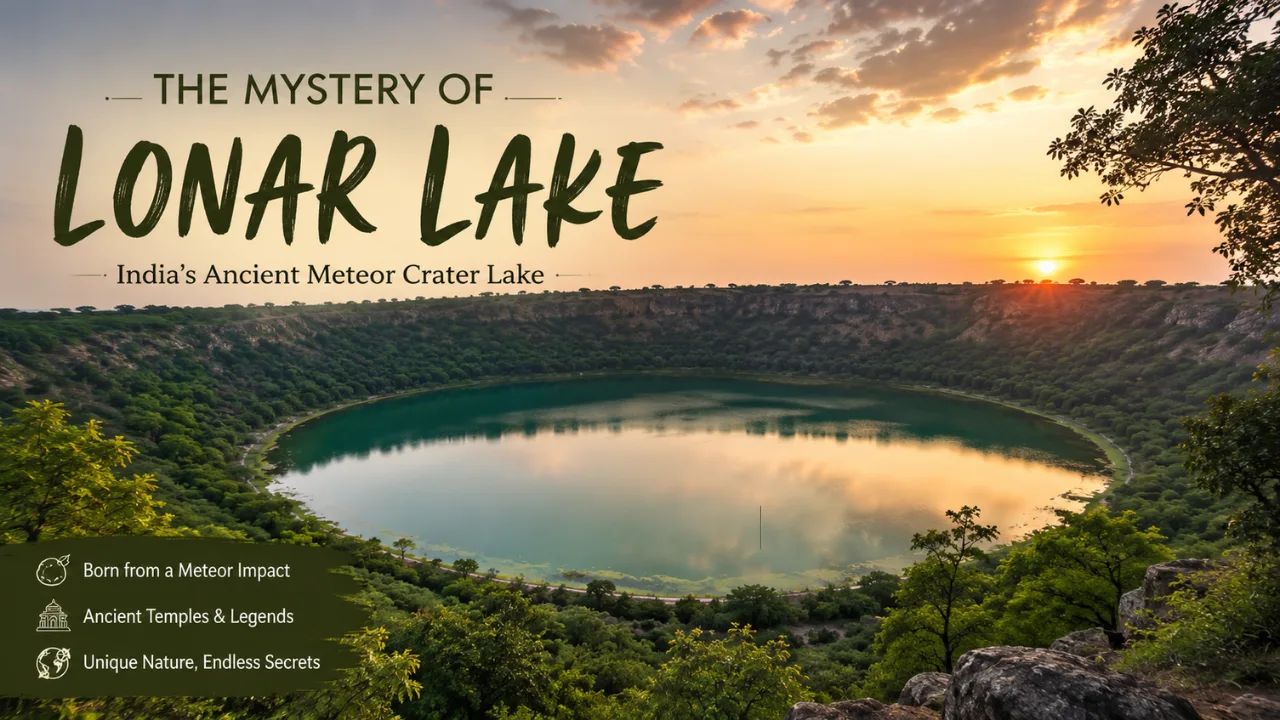
Lonar Lake is one of the most fascinating natural wonders of India. The lake is not just beautiful—it is full of mysteries that continue to amaze scientists, historians, and travelers.
With its mysterious waters and the old temples hidden on its edges, Lonar Lake is a destination where science and history unite. So let’s take a look at the mystery of the most unique place in the world.
Table of Contents
What Is Lonar Lake?
The lake is located in the Buldhana district of Maharashtra and is around 500 km from Mumbai. It is believed that the lake was formed nearly 50,000 years ago, when a meteor hit the Earth at a high speed.
The impact resulted in a large, circular crater that is approximately 1.8 kilometers wide and 150 meters deep. Over time, rainwater accumulated in the crater, forming the lake that exists today.
The special thing is—it is the only hypervelocity crater lake in the basaltic rock in the world.
Two Different Types of Water in the Lake
One of the biggest mysteries of Lonar Lake is its unusual water. The lake has two different water zones.
- The outer part contains fresh water from streams and rainfall.
- The inner part is highly salty and alkaline.
Due to this combination, various rare micro-organisms are found in the lake. Scientists study these tiny life forms because they can help us understand how life can survive in extreme environments—even on other planets.
Why does the Longar Lake change Color?
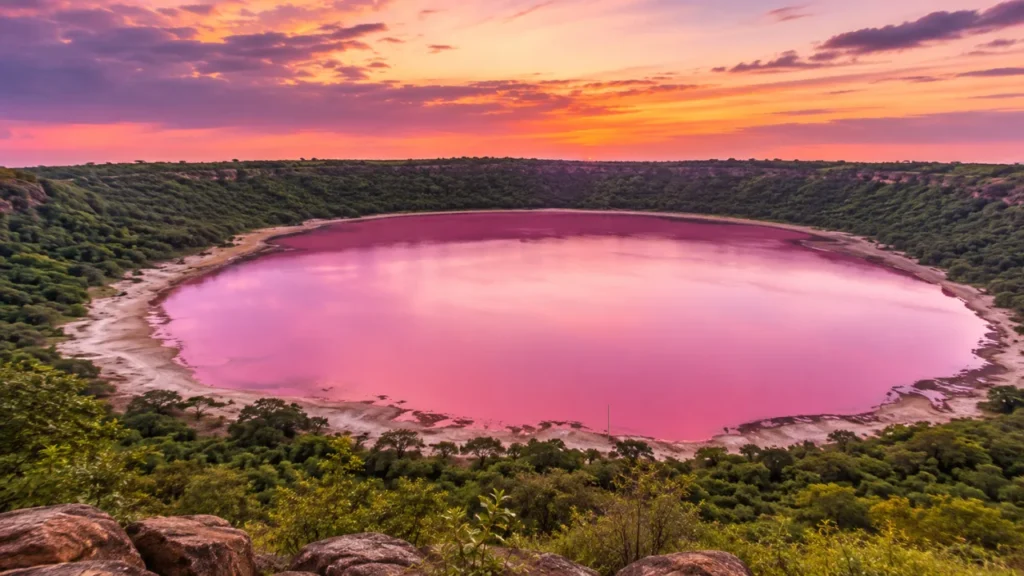
The lake changes its color over time. Sometimes it appears green, while at other times it turns pink or reddish.
Tiny algae and bacteria growing in salty water are responsible for this color change. Shifts in temperature, rainfall, and water chemistry allow these microorganisms to multiply quickly, changing the way the lake looks.
Mystery of the Magnetic Rocks
Many visitors and researchers have noticed something interesting about the rocks around Lonar Lake. The compass and electrical equipment act strangely in the area.
The collision of the meteorite created extreme heat and pressure, which changed the structure of the basalt rocks nearby. Certain rocks possess strange magnetic properties that set them apart from regular volcanic rocks. Research is still underway to get a deeper understanding.
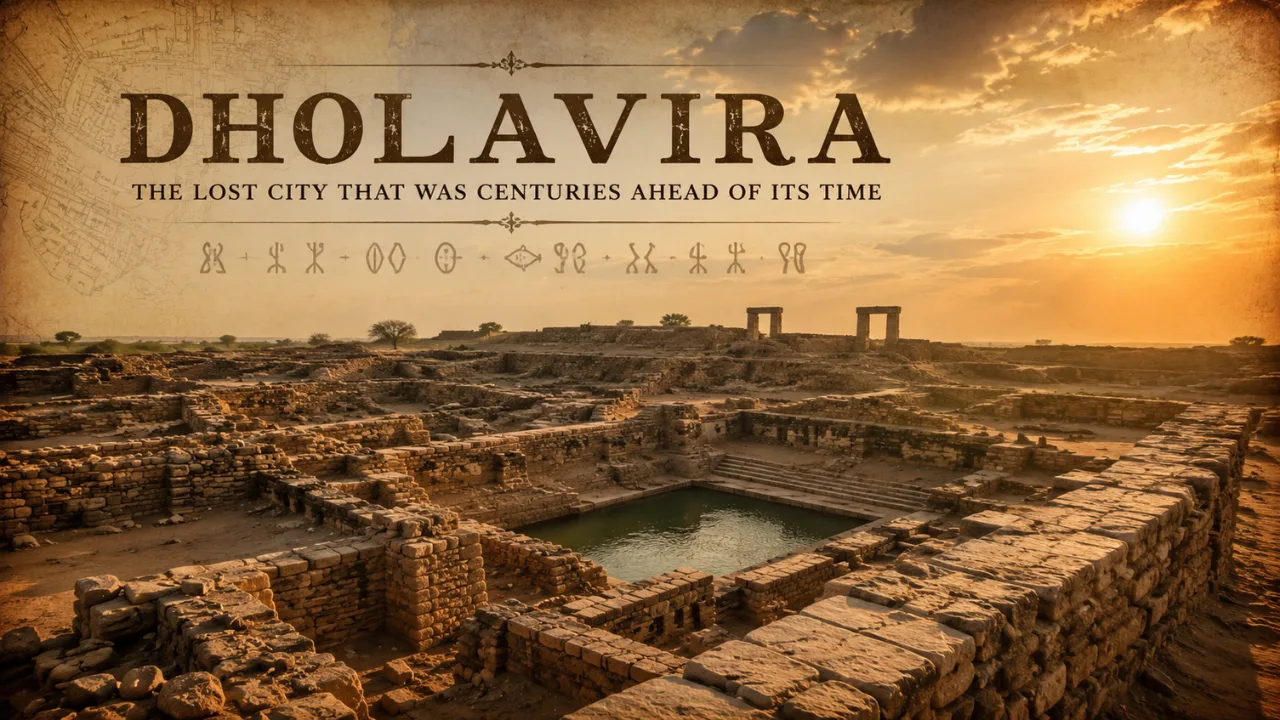
Love ancient mysteries? Don’t miss the fascinating story of Dholavira, one of India’s oldest lost cities.
Ancient Temples & Mythological Stories
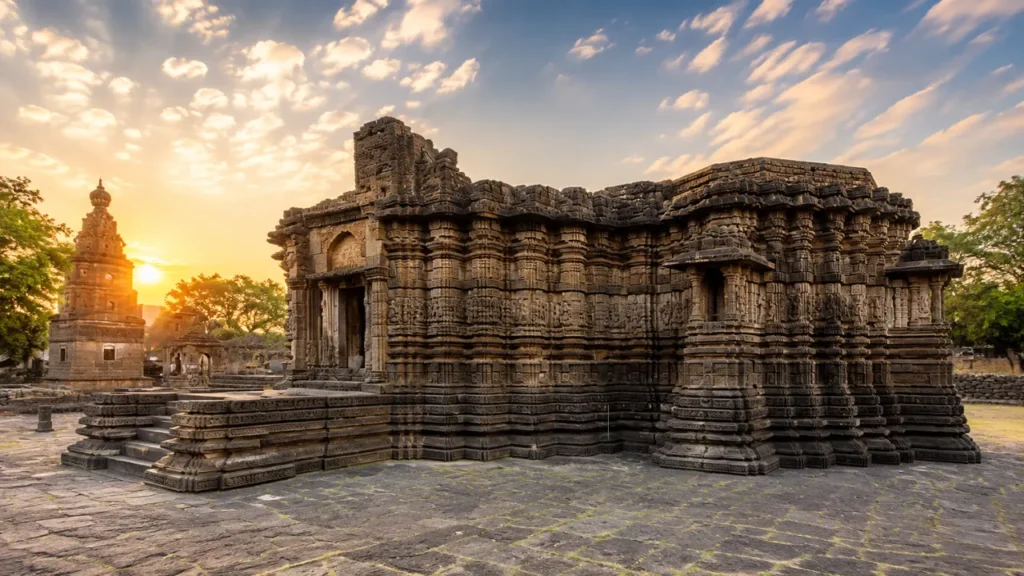
Lonar Lake is also an important historical site. Several ancient temples were built between the 6th and 12th centuries, featuring beautiful stone carvings and peaceful surroundings.
The most famous among them is the Daitya Sudan Temple, dedicated to Lord Vishnu. According to local legends, Lord Vishnu defeated the demon Lonasura here, and many people believe the lake got its name from this story.
It is also believed that this lake is also mentioned in the Valmiki Ramayana, as Panchapsara Lake, which Lord Rama visit during his exile in the Dandaka forest.
If you enjoy places where science and legends meet, Ram Setu is another must-read.
Is Lonar Lake Similar to Mars?
Scientists across the globe show interest in Lonar Lake because it shares similar conditions with Mars.
The crater was formed by a meteor impact, and its unusual soil, rocks, and alkaline water create conditions similar to some places on the Red Planet.
Researchers have used Lonar Lake to study how meteorite impacts alter the ground and how microorganisms survive in extreme conditions. These studies can also help future space missions that are looking for signs of life outside Earth.
Think Lonar Lake is mysterious? Wait until you discover the underwater city of Dwarka.
Wildlife Around the Lake
Even with its unusual environment, Lonar Lake is full of life. The forests around the crater are home to:
- Peacocks
- Langurs
- Monitor lizards
- Deer
- Many species of birds
- Carnivores
Best Time to Visit Lonar Lake
The best months to visit are October to February. With pleasant weather, the surrounding forest becomes lush and green, making the walk around the lake more comfortable.
Early morning and evening are perfect for photography because the sunlight creates beautiful reflections on the lake.
Travel Tips
- Wear comfortable walking shoes.
- Carry enough drinking water.
- Start your visit early in the morning.
- Respect the ancient temples and local culture.
Final Thoughts
Lonar Lake is a place where space, science, history, nature, and mythology meet in one incredible location.
Some mysteries have already been solved, but scientists are still trying to find the answers to others. And maybe that’s what makes Lonar Lake so special—it reminds us that our planet still has many mysteries waiting to be uncovered.