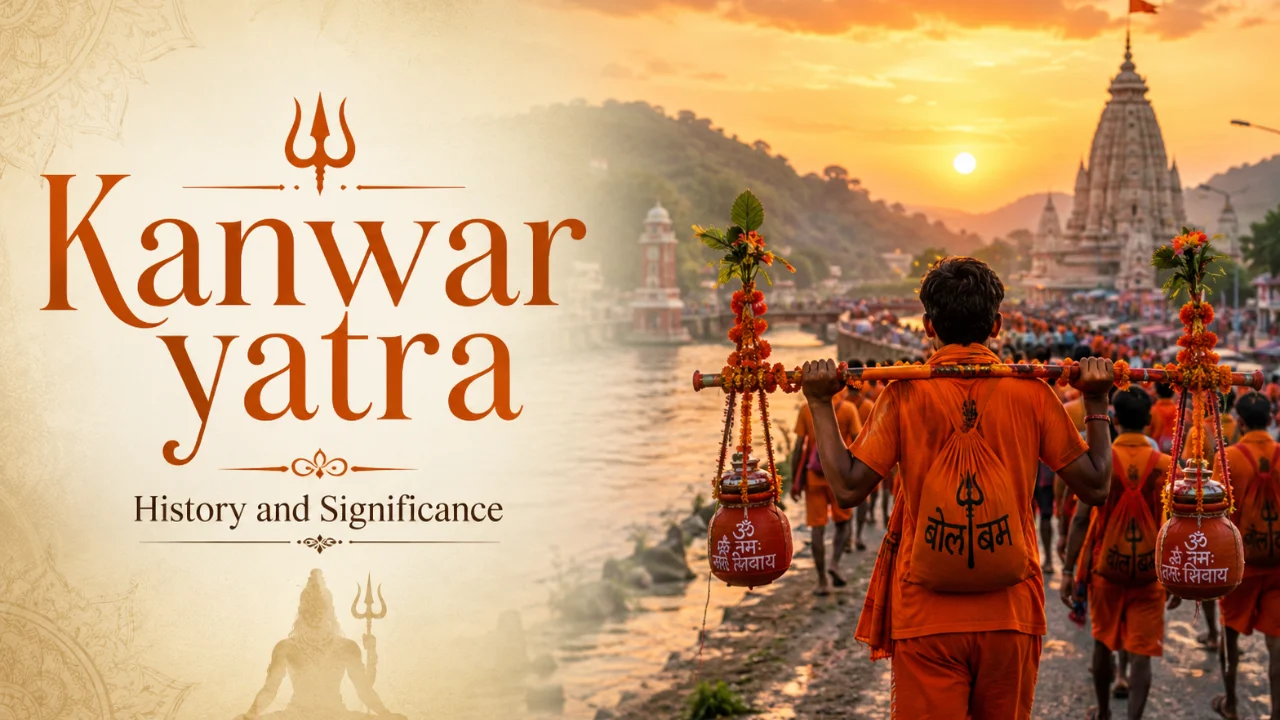
Every year during the month of Shravan, millions of people take part in the Kanwar Yatra. This is a special spiritual journey dedicated to Lord Shiva, a unique combination of devotion, discipline, and faith.
What is the Kanwar Yatra really? Where did it start?. Why do people walk so far carrying holy water from the Ganga River? Let us try to understand.
Table of Contents
What is Kanwar Yatra?
Kanwar Yatra is a pilgrimage dedicated to Lord Shiva. In this journey, devotees known as Kanwariyas carry the holy water of the rivers, like the Ganga, Yamuna, or other sacred rivers, in beautiful decorative bamboo structures called Kanwar (or Kanwad).
They offer the water to the Shiva lingam at the local temple, usually on Shravan Mondays or the last day of Sawan month. The journey is the way of expressing their devotion and gratitude to Shiva.
Story Behind Kanwar Yatra
The exact beginning of the Kanwar Yatra is not linked to any single historical record but is deeply connected to Hindu mythology and old traditions.
A common belief connects it to the story of Samudra Manthan. During this event, a deadly poison called Halahal emerged, which Lord Shiva drank to save the universe. To cool the heat of the poison, devotees began offering Ganga water to Lord Shiva, especially in his Neelkanth form.
Over time, this simple act of devotion gradually became the tradition of the Kanwar Yatra.
Another story connects to Ranvana, a great devotee of Shiva. He carried the holy water in Kanwar and offered it to Shiva to seek his blessings.
Increase your aura energy with this certified 7-mukhi rudraksha pendant.
Why is Ganga Water So Special?
In Hinduism, the water of Ganga is considered one of the holiest.
It is believed that the water purifies the body and the soul. Offering Ganga water to Shiva is considered auspicious, as in Hindu mythology, the river Ganga flows from the matted locks of Lord Shiva.
This sacred connection makes the offering even more meaningful.
Who Can Participate in Kanwar Yatra?
There is no restriction based on the caste or background. Anyone can participate in this yatra. You will find:
- Children with their parents
- Students
- Working professionals
- Families
- Women devotees
- Elderly pilgrims
How the Journey Happens
The Kanwar Yatra is not just travel but a disciplined spiritual practice. Devotees who take part in Kanwar Yatra:
- Walk barefoot
- Wear saffron clothes
- Chant “Har Har Mahadev”
- Carry kanwar filled with Gangajal
- Follow strict discipline: no garlic, onion, non-veg, etc.
There is one important rule. The kanwar with water is never put on the ground until it is given to the Shiva Lingam. This is because the water is considered special and must stay pure. If people need to rest, they use stands or hold the kanwar carefully.
Different Types of Kanwar Yatra
Samanya Kanwar: This is the most common type, where devotees carry the water and peacefully walk to the temples and offer the water to Shiva.
Dak Kanwar: Dak Kanwarias complete their journey without stopping. Groups often take turns running with the Kanwar to keep the journey moving continuously. This is considered one of the most challenging forms of pilgrimage.
Khadi Kanwar: In this tradition, the Kanwar should never touch the ground. Whenever devotees stop, they place it on a special stand or hold it.
Dandi Kanwar: In this tradition, devotees move forward by performing dandavat pranam until they reach the Shiva temple.
Spiritual Significance of Kanwar Yatra
The Kanwar Yatra is very meaningful.
- Shows devotion to Lord Shiva, represents complete surrender.
- It is a time for discipline and self-control. Walking so far is like tapasya.
- Many people believe that the Kanwar Yatra will help their prayers be answered.
- It brings people together. Millions of people travel together. This creates a strong bond between them.
Amazing Community Spirit
Today the Kanwar Yatra is one of the religious gatherings in India. It is well-organized with camps and support systems. Across the routes, volunteers organize:
- Tea and refreshments
- Free food (Bhandaras)
- Drinking water
- Medical camps
- Resting places
- First aid
This spirit of selfless service is one of the highlights of the entire pilgrimage.
Conclusion
The Kanwar Yatra is more than a pilgrimage. It is a journey of faith, discipline, and devotion to Lord Shiva.
From stories to modern times, this tradition continues to inspire many people every year. It stands as a powerful reminder of India’s deep spiritual heritage and collective devotion.