
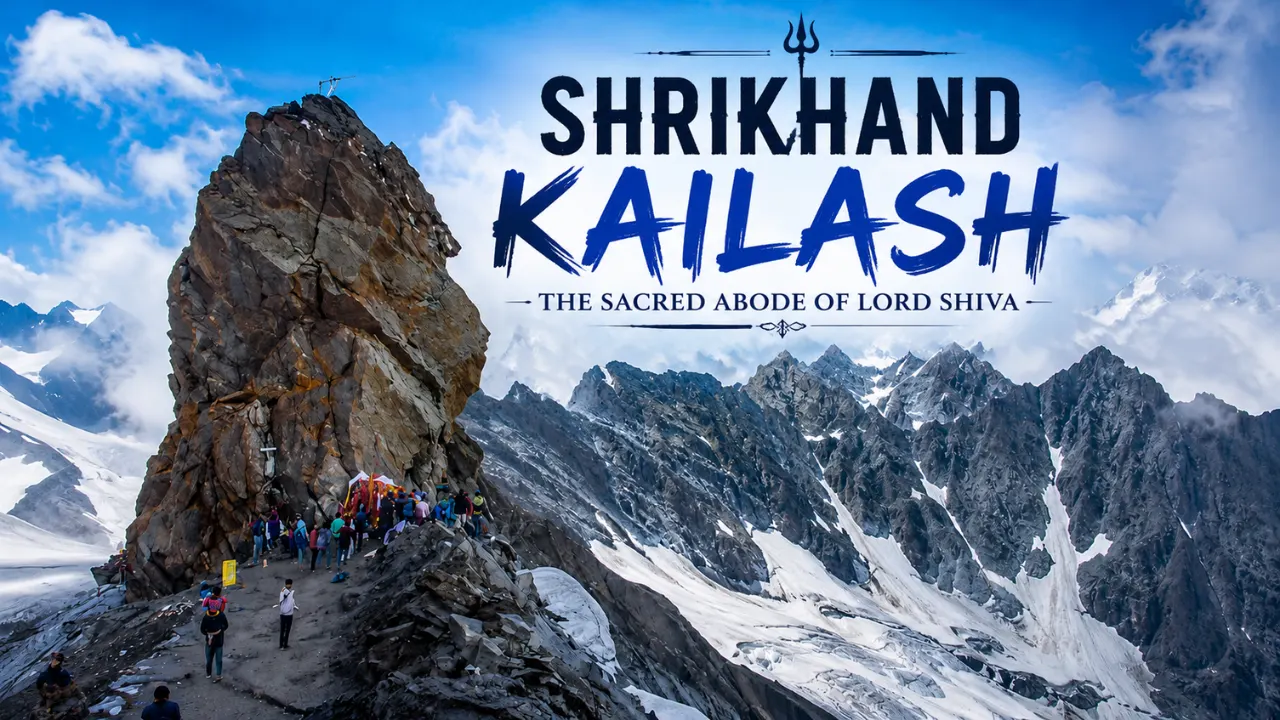
Some mountains are famous for their beauty, while others are known for adventure. But Shrikhand Kailash is different. It is one of the few places where nature, faith, mystery, and devotion come together.
Shrikhand Kailash is the third of the Panch Kailash (the five abodes of Lord Shiva) and the most difficult one. Every year, thousands of devotees and adventurers embark on one of India’s most challenging pilgrimages to reach this sacred peak.
This journey isn’t just about climbing mountains. It’s about faith, patience, and believing in something greater than oneself.
Table of Contents
What is Shrikhand Kailash?
Shrikhand Kailash, also known as Shrikhar Kailash, is a sacred mountain peak in the Kullu region of Himachal Pradesh, inside the Great Himalayan Range. It stands at an impressive height of about 18,570 feet (5,669 meters).
Unlike Tibet’s Mount Kailash, devotees can actually trek to Shrikhand Kailash. Therefore, it has become one of India’s most important pilgrimage sites dedicated to Lord Shiva.
The Shrikhand Kailash Yatra typically takes place in July and August, when the snow begins to melt and the trekking path becomes accessible. Even during these months, the weather can change within minutes, making the journey both exciting and challenging.
Legends of Shrikhand Kailash?
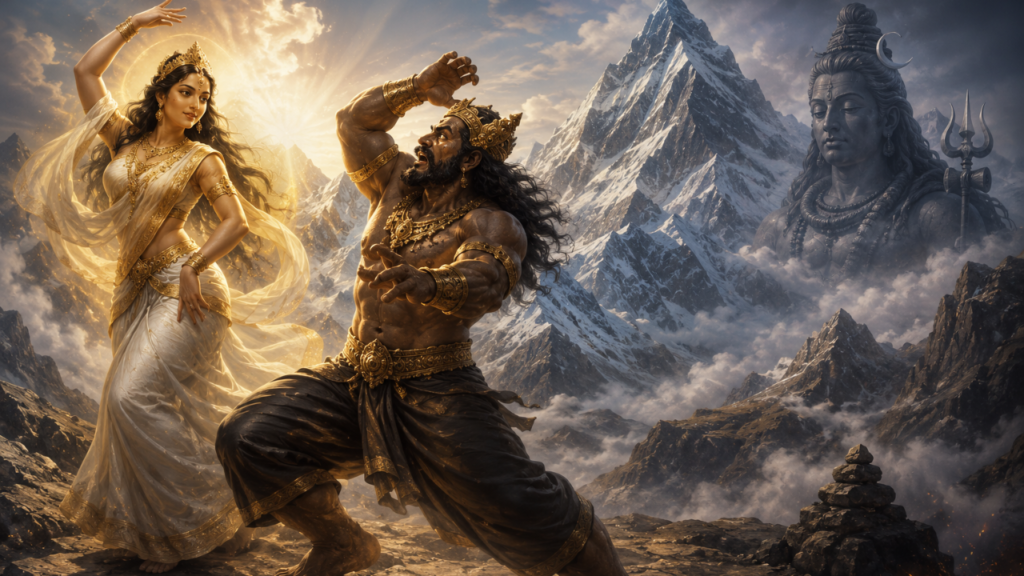
The legend of Shrikhand Kailash is one of the interesting stories of Lord Shiva and is related to the demon Bhasmasura.
According to Hindu mythology, he performed intense penance to please Shiva. Happy with his devotion, Shankara granted him a powerful boon—the ability to turn anyone into ashes simply by placing his hand on their head.
The demon soon became arrogant and even tried to test this power on Lord Shiva himself.
To escape, Shiva fled across the mountain. Then Lord Vishnu appeared in his Mohini avatar. Bhasmasura got mad at seeing her. She challenged the demon to copy her dance, and he did so.
During the dance, Mohini placed her hand on her own head, and Bhasmasura did the same. The boon worked on him, and he was reduced to ashes.
Local traditions say that this legendary event took place somewhere near the Shrikhand region.
Why is it called Shrikhand Kailash?
The Hindu tradition says that after this event, Shiva didn’t come out of the mountain range; he was in deep meditation.
Devi Parvati came here to meet him and waited for many years until Shiva’s meditation was broken. Overcome with grief from his separation, she wept profusely. A lake formed from her tears, shaped precisely like an eye, is now known as Nain Sarovar or Nain Kund.
Lord Shiva finally came out of the mountain. However, upon his ascent, the mountain broke apart. Therefore, it is known as Shrikhand Kailash.
Shri or Shikhar refers to the mountain, and Khand means broken, so Shrikhand or Shikhar Kailash means broken mountain.
Pandavas and Shrikhand Mahadev
According to Hindu beliefs, the Pandavas, during their final journey, known as Mahaprasthan, passed through the region of Shrikhand Mahadev.
Bheem Talai, an important stop during the Shrikhand Mahadev Yatra, is believed to have been made by the second Pandava brother, Bheem.
You can also see some mysterious markings (Bheem Lipi) in an area called Bhim Dawar; locals say that this is where they cut stone to build a stairway to heaven.
72-Feet Shiva Lingam
The biggest attraction of Shrikhand Kailash is its 72-feet-high natural Shiva Lingam.
Unlike idols made by humans in temples, this lingam is a naturally formed stone pillar shaped by nature over thousands of years.
Many devotees believe this Lingam is Swayambhu, meaning it appeared naturally without human involvement.
It is also believed that Hanuman’s face (the 11th avatar of Lord Shiva) can be seen on one side of this rock pillar, which is why it is also known as Rudravatara.
Route Overview
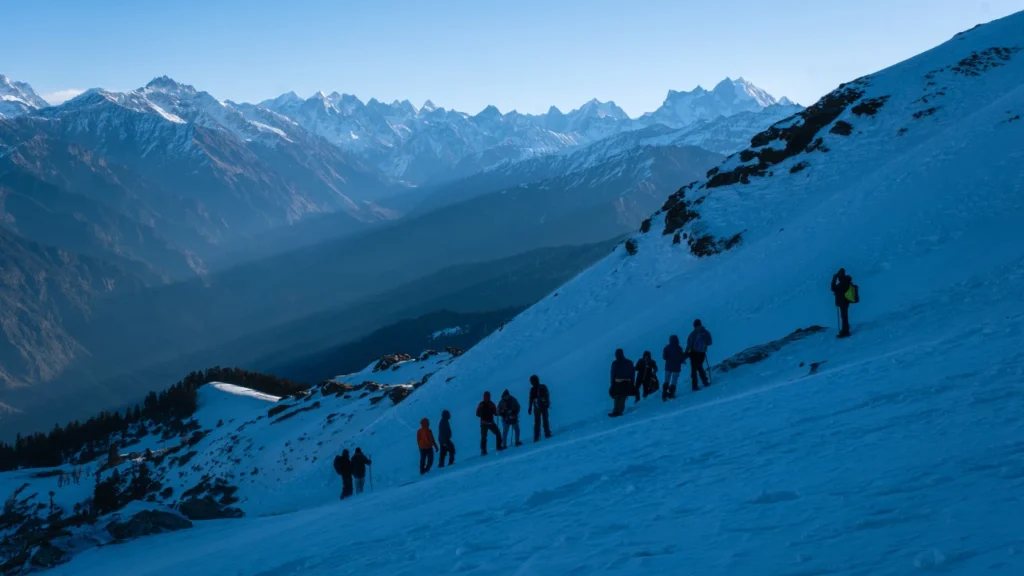
The Shrikhand Kailash is one of the toughest pilgrimages in India, which usually starts from the Jaon village. The journey is around 35 km one way through steep climbs, rocky paths, and glacier crossings.
The common trekking route is
Jaon Village → Singhad → Thachru → Kali Ghati → Bhim Dwar → Parvati Bagh → Nain Sarovar → Shrikhand Kailash
It is not going to be easy, so be prepared before you start, both physically and mentally.
Conclusion
Whether you’re drawn to the stories of Lord Shiva, the magnificent 72-foot-tall natural Shiva Lingam, the mystical views of the Himalayas, or simply the challenge of one of India’s toughest pilgrimages, Shrikhand Kailash offers an experience that will remain etched in your heart forever.
Shrikhand Mahadev tests your faith before allowing you to reach him.