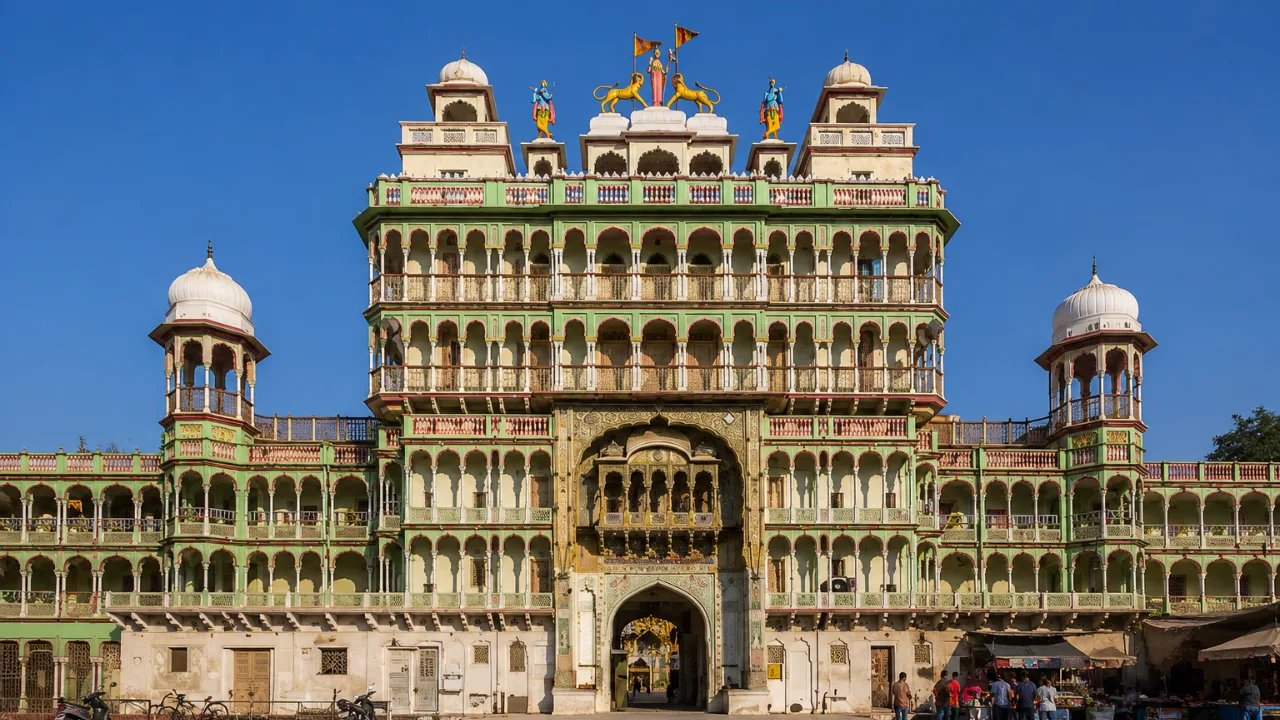
Rajasthan is home to many beautiful temples, but some are special not only for their architecture but also for the stories and beliefs connected with them. One such place is the Rani Sati Temple in Jhunjhunu, a famous pilgrimage site in the Shekhawati region of Rajasthan.
The temple has a history of more than 400 years and attracts devotees from different parts of the country. The temple is known for its grand architecture, peaceful surroundings and a tradition that has continued for centuries.
Table of Contents
Where Is Rani Sati Temple?
Rani Sati Temple is located in Jhunjhunu city of the Shekhawati region in Rajasthan, India. It is one of the important religious destinations in the area and is often included in pilgrimages around Rajasthan.
The temple is dedicated to Rani Sati Dadi, also known as Narayani Devi by her devotees. The temple complex also has shrines of other deities.
Story of Rani Sati
According to the temple’s religious tradition, Narayani Devi was born in the Baniya caste and was married to a merchant, Tandhan Das. After her husband was killed in a local conflict, she took her arms up and defeated the opponents with her manifestation or spiritual powers. She chose to commit sati (self-immolation) on her husband’s funeral pyre.
She is revered as Kuldevi (family deity) by many Marwardi and Agarwal communities. For the devotees, this temple represents faith, power and the everlasting memory of Narayani Devi.
What Makes Rani Sati Temple Special?
1. No idol inside the main shrine
One of the most interesting things about this temple is that it doesn’t have any traditional idol of the deity. Instead, the devotees worship a trishul (trident) that symbolizes the divine feminine power—Shakti. A portrait of Rani Sati Dadi is housed in the main hall, Pradhan Mand.
2. Several Temples Within the Complex
According to the official website of the temple, the complex also houses temples dedicated to Lord Ganesha, Lord Shiva, Lord Hanuman, Satyanarayana, Navagraha and Shodash Matrika.
3. Temple Community Services
The role of the temple is much more than daily worship. Its official website lists facilities and service activities, including a school, a cowshed, a library, a park, and support for girls’ education. These activities show how the temple also serves the wider community, alongside its religious role.
4. Beautiful Architecture and Paintings
The temple is known for its magnificent appearance and detailed decorative work, featuring colonial-Rajput style architecture that resembles a large palace rather than a traditional Hindu temple. It is built of white marble and is decorated with intricate stone carvings, wall paintings, colorful frescoes, and glass mosaics.
Festivals Celebrated at Rani Sati Temple
The Bhadra Amavasya (Bhado Amavasya) is the prominent annual religious and cultural festival held at the temple. It is celebrated on the new moon day of the Hindu month of Bhadrapada, which typically falls in August-September. Millions of devotees, especially from the Marwadi community, gather to offer prayers.
Magha Krishan Navami is another major festival at the temple; it marks the day when Rani Sati committed self-immolation. A large fair is organized, and this day holds great significance for the temple.
The temple also celebrates the Navratri festival twice a year with grand decorations and celebrations.
Best Time to Visit Rani Sati Temple
The best time to visit the temple is from October to March, when the weather is more comfortable. If you are visiting during the summer, make sure to arrive early in the morning, as the summers in Rajasthan are very intense. Monsoon also makes for a wonderful travel vibe.
You can also consider visiting during festivals like Bhado Amavasya and Magha Krishna Amavasya, but expect it to be very crowded.
How to Reach Rani Sati Temple
Rani Sati Temple is accessible by road and can be included in a trip to Jhunjhunu and other parts of Shekhawati.
By Road- Jhunjhunu has good road connectivity with numerous cities across Rajasthan and adjacent states. Visitors can drive, take a taxi, or catch a bus, then use local transit to get to the temple.
By Train- The city has a railway station. If you are travelling by train, check current train services and connections from your departure city before booking.
By Air- Jaipur International Airport serves as a choice for air passengers. You can reach Jhunjhunu from Jaipur by road. Book your flights at the best price.
Places to Visit Near Rani Sati Temple
If you have some extra time, you can explore other religious and heritage destinations in the Shekhawati region. Within Jhunujhunu you can explore these best destinations along with the religious sites like Panchdev Mandir and Khemi Sati Mandir. And if you want to explore the Shekhawati region, then here are some of the best options:
This temple is one of the important religious destinations of the area and a place worth exploring if you are interested in Rajasthan’s spiritual traditions. It offers both the peaceful spiritual experience and a chance to explore the Rajasthani art.