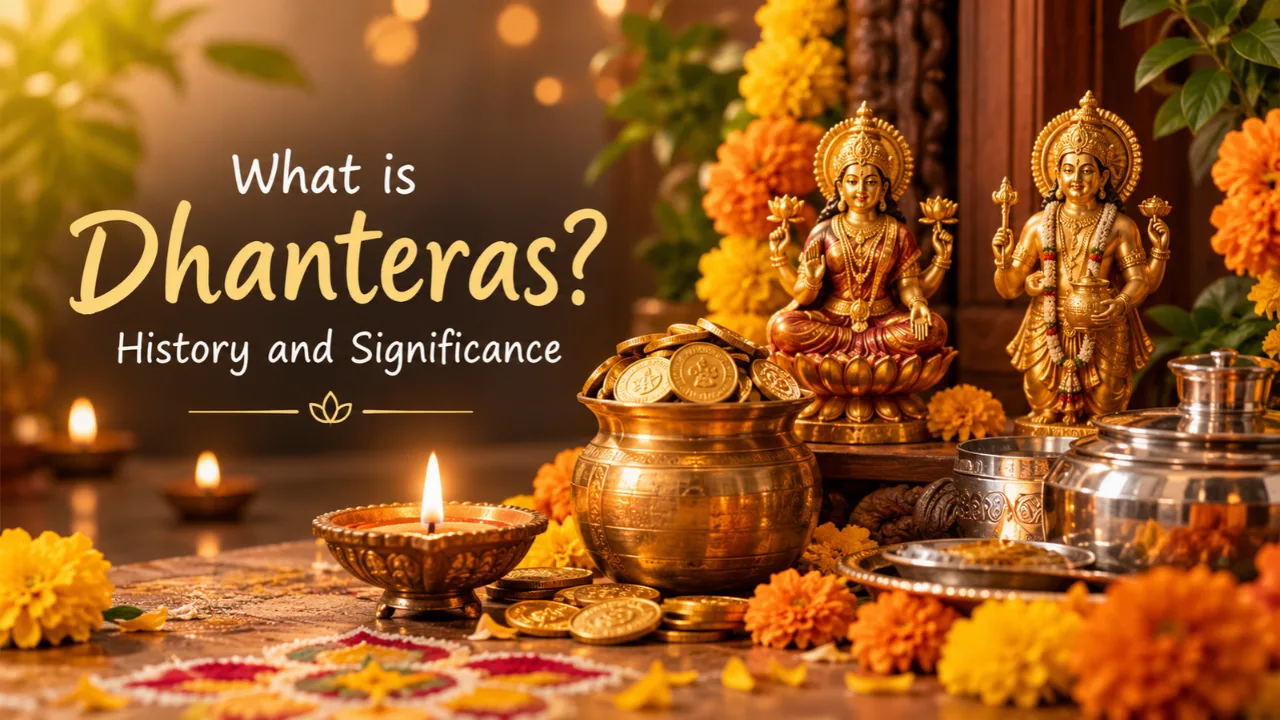
Dhanteras is rooted in some interesting stories from Hindu mythology. The festival is connected to Goddess Lakshmi, Lord Dhanvantari, and Lord Yama as well. Together, these traditions give this festival a deeper meaning, bringing wealth, health, and longevity.
Table of Contents
What is Dhanteras?
The word Dhanteras is made up of two words – Dhan, which means wealth, and Teras, which refers to the thirteenth day of the lunar cycle. The festival is also called Dhantrayodashi.
Dhanteras is considered an auspicious day to bring something new into the home. Traditionally, people buy gold, silver, utensils, or other household items.
It is also associated with Lord Dhanvantari (an avatar of Lord Vishnu), who is regarded as the divine physician in Hindu traditions. It is believed that he appeared during the Samudra Manthan carrying a pot of amrit, the divine nectar.
Story Behind Dhanteras
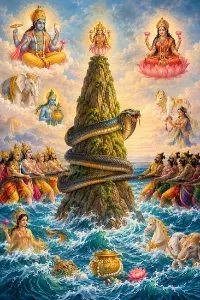
There are many traditional stories associated with Dhanteras. The most important one is the famous story of Samudra Manthan.
According to Hindu mythology, the devas and asuras together churned the cosmic ocean in search of divine nectar. Mount Mandara was used as the churning rod and the serpent Vasuki as the rope.
In the process, many extraordinary things (ratans) emerged from the ocean, and finally Lord Dhanvantari brought the Amrit Kalash. This signifies that health is the ultimate wealth, as without good health, you cannot truly enjoy physical riches. And that’s why this day is also known as Dhanvantari Trayodashi or Dhanvantari Jayanti.
Story of Goddess Lakshmi and the Farmer
According to the story, Goddess Lakshmi came to earth with Lord Vishnu under the strict condition not to look south or give in to worldly temptations. But the goddess, out of curiosity, looked south and was attracted by the yellow mustard flowers and sweet sugarcane fields.
She adorned herself with flowers and tasted sugarcane juice, breaking her promise to Vishnu. Vishnu then ordered her to remain on earth for 12 years as penance, working and serving the poor farmer whose fields she had visited.
She disguised herself as an earthly woman and worked in the fields of the farmer. Her divine presence brought immense luck to the farmer, making him prosperous.
After 12 years, Lord Vishnu came to take the goddess to Vaikuntha. But the farmer did not want her to leave because her presence had brought prosperity to his home. Goddess Lakshmi promised him that she would visit him—and every household that prepares to welcome her—every year on the night of Krishna Trayodashi (Dhanteras).
Story of King Hima and His Son
Another well-known story connected with Dhanteras is the story of King Hima’s son.
According to the traditional legend, the prince was predicted to die from a snakebite on the fourth night after his marriage. His wife decided she wouldn’t let that happen.
On the predicted night, she gathered her gold and silver ornaments and coins and placed them at the entrance. She also lit many oil lamps and kept her husband awake by telling stories and singing.
When Yamaraja, the god of death, came in the form of a snake to take the prince’s life, the glow of the lamps and the pile of jewels prevented him from entering. And the prince survived.
This story is traditionally associated with the practice of lighting the Yama Deep dedicated to Yama on Dhanteras, a ritual to seek protection from untimely death.
What is the significance of Dhanteras?
Dhanteras brings together several ideas that are important in Hindu tradition. Worshiping Goddess Lakshmi represents the desire for happiness and abundance in the household. The connection with Lord Dhanvantari makes health an important part of the festival. It reminds us that good health is itself a form of wealth. And the tradition of Yama Deep is associated with praying for protection from untimely death.
Traditional Customs and Practices
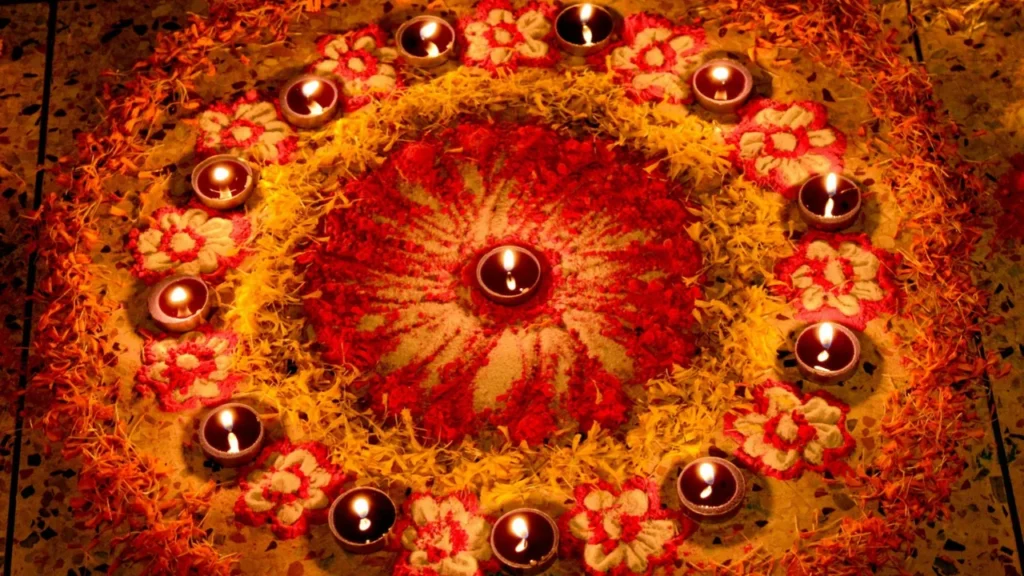
Dhanteras is celebrated in different ways across India, but some traditions are commonly observed in many homes. Most of them revolve around welcoming prosperity, keeping the house clean, and praying for good health and long life.
It often begins with cleaning the house and getting everything ready for Diwali. In some traditions, special attention is paid to the main entrance, as it is believed that this is where Goddess Lakshmi enters the house.
Buying something new is one of the most popular traditions on this auspicious day. People buy gold and silver jewelry, utensils, coins, brooms, and new items for the home. It is linked with the idea of bringing prosperity and good fortune into the household.
Many families perform a special puja during the pradosh kaal on Dhanteras to seek the blessings of Goddess Lakshmi. In some traditions Lord Kuber is also worshipped on this day, who is traditionally regarded as the treasurer of divine wealth. People offer prayers to Lord Dhanvantari on this day, seeking good health and well-being.
There’s also a special tradition called Yama Deep, in which a lamp is lit for Yamaraja, the god of death. Traditionally, it’s placed outside the home, and prayers are offered to protect one from untimely death.
Dhanteras is an important festival in Hindu traditions that brings together prosperity, good health, protection, and a fresh beginning—making it a beautiful way to start the Diwali festivities