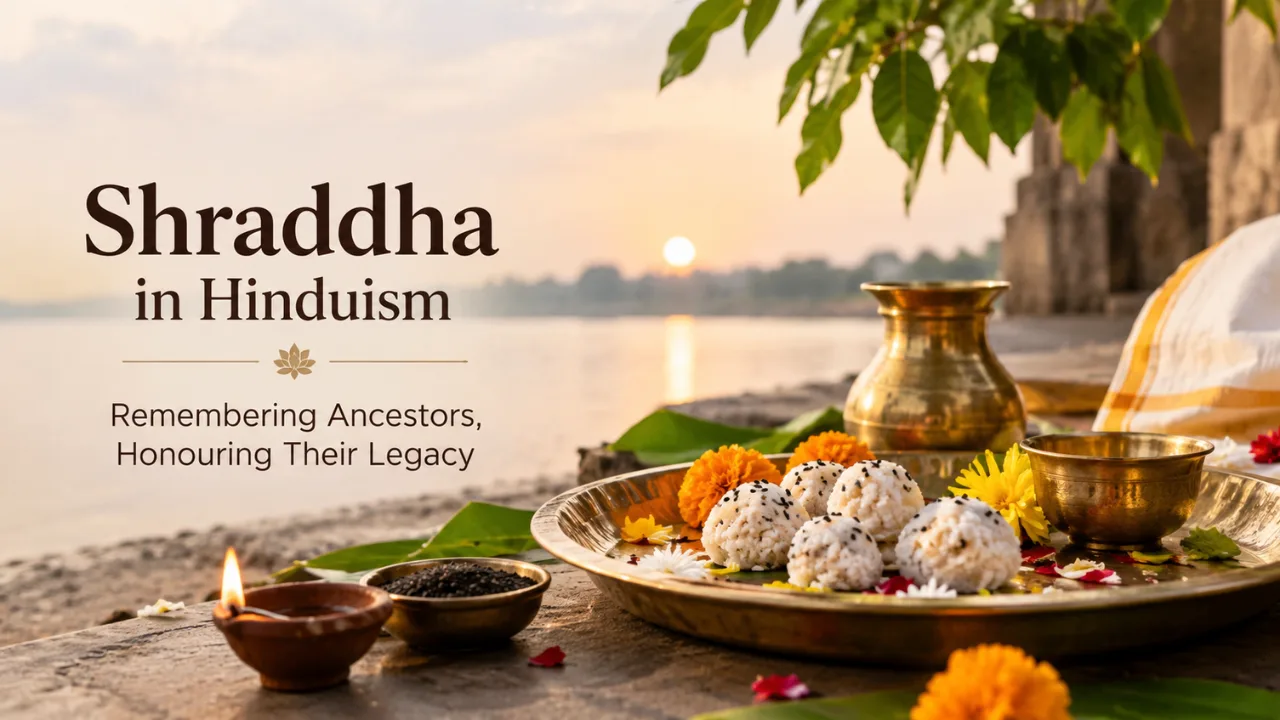
Every culture has its own way of remembering family members who are no longer alive. In Hinduism, the oldest way to do this is through Shradh.
It’s a traditional practice, performed in memory of their ancestors. Families offer prayers, food, water, and other traditional offerings as a way of showing respect to them. It is closely connected to the Pitru Paksha, a special period dedicated to ancestors.
So let’s try to understand this centuries-old tradition and its significance.
Table of Contents
What Is Shradh in Hinduism?
Shraddha, written as Śrāddha in Sanskrit, refers to rituals performed with devotion and respect for one’s ancestors (pitrs). The word is connected with the idea of shraddha, meaning faith, sincerity, or devotion.
It is generally performed by family members for their departed parents, grandparents, and other ancestors on specific lunar dates associated with an ancestor’s death; during Pitru Paksha, it is performed on a broader form.
It gives families an opportunity to remember their earlier generations and their role in shaping the family.
Why Do Hindus Perform Shradh?
Hinduism holds great importance for the relationship between generations.
There is a traditional concept known as Pitru Rina, which is the debt owed to one’s ancestors. This suggests that we receive life, knowledge, traditions, family values, and many other things from our ancestors. It’s not a punishment or a curse, but a natural duty of gratitude we are all born with. Remembering them is a way of thanking and showing gratitude towards them.
According to Hindu belief, performing Shraddha and offering Tarpana brings peace and satisfaction to the departed ancestors.
What Is Pitru Paksha?
Pitru Paksha is a roughly sixteen-lunar-day period dedicated to remembering and honoring one’s ancestors (Pitrs). In various traditions, it is also called Mahalaya Paksha.
As per the Hindu calendar, the period falls during the Ashwin month (or Bhadrapada in the south). Families perform Shraddha according to the tithi, or lunar date, associated with the death of an ancestor.
The final day is especially important, known as Sarva Pitru Amavasya or Mahalaya Amavasya. Traditionally it is used to honor all ancestors, especially when the exact death date of an ancestor is not known.
Shradh Rituals and Practices
Shradha rituals may differ depending on family, region, community, and religious tradition. However, certain customs are commonly associated with this ritual.
Tarpan: The offering of water mixed with black sesame seeds or other sacred substances. It is believed to quench the spiritual thirst of departed souls and express gratitude to ancestors.
Pinda Daan: This includes the offering of pindas, which is traditionally made with rice milk, ghee, sesame seeds, honey, or other prescribed ingredients depending on the tradition. It is part of ancestral rituals.
Brahmana Bhojan: Preparing pure vegetarian (satvik) meals and feeding Brahmins or the needy is one of the most important rituals. It is believed to symbolically feed the ancestors.
Feeding Animals: Giving food to crows (seen as the messengers of ancestors) and cows is also an important ritual.
Daan-Dakshina: Donating useful items like clothes or blankets and charity to priests is seen as a mark of respect and gratitude.
Why Are Crows Associated With Shradh?
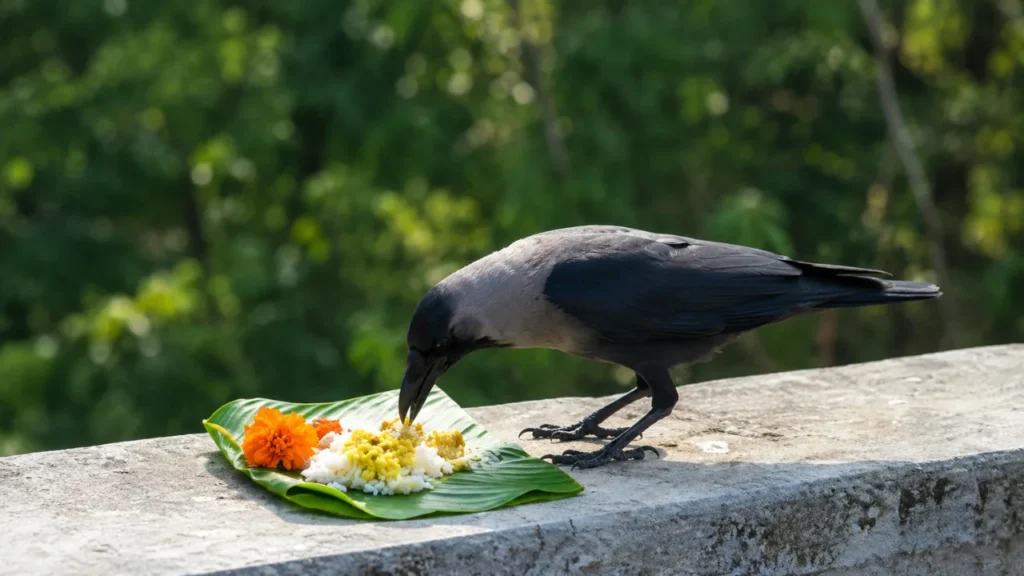
In many Hindu traditions, crows are associated symbolically with ancestors. They are believed to be the messengers between the earthly world and the Pirta Loka (heavenly world of ancestors). People believe that food offered to crows reaches directly to the ancestors.
This practice also reflects the sharing of food with nature.
Why Is Gaya So Important for Shradh?
Gaya in Bihar is one of the most important pilgrimage destinations connected with Pind Daan and ancestral rites. The Falgu River and the Vishnupad Temple are particularly important in the traditions associated with Pitru Paksha.
The Vishnupada Temple houses the sacred footprints of Lord Vishnu. According to scriptures, offering the pindas to these sacred footprints frees ancestors from the cycle of rebirth.
Every year a large number of pilgrims visit Gaya to perform puja for their ancestors. Apart from Gaya, there are various holy places in India to perform Pind Daan and Shradh rituals.
Is Shradh Only for Sons?
Traditionally, in many Hindu communities, the responsibility for performing certain ancestral rituals was placed primarily on the male members of the family.
As per Hindu scriptures, the eldest son (jyestha putra) holds the primary duty of performing the rituals. However, wife, daughter, mother and other relatives can also perform these sacred rituals, particularly in the absence of a son or grandson.
Ultimately, the exact roles of family members depend on one’s sampradaya, local customs, family traditions, and the guidance of the priest performing the ceremony.
What should be avoided during Pitru Paksha?
Pitru Paksha is traditionally viewed as a peaceful and spiritually centered period. Since these days are meant for remembering and paying respects to ancestors, many Hindu families maintain a simple lifestyle and avoid activities that are seen as unsuitable for this period.
- Avoid celebrations and auspicious ceremonies like wedding, housewarming ceremonies, or starting a new business.
- Avoid non-vegetarian food. Many families also avoid onion, garlic, alcohol, and certain other foods according to their own traditions.
- Buying expansive items or beginning new projects should be avoided.
- In many families, cutting nails and hair during Shradh is also prohibited.
Final Thoughts
Life today is very different from generations ago. Families move to different cities, traditions change, and many old customs are gradually becoming unfamiliar to younger generations.
Yet, traditions like Shradh are still meaningful. It encourages us to pause, think about our roots, and appreciate what has been passed down to us.
People are still following the centuries-old traditions and are showing gratitude to their ancestors. Because no matter how modern our lives get, those who came before us will always hold a place in our hearts.