Navratri is one of those festivals that brings together many sides of Indian culture. It includes temple worship and fasting, colorful Garba nights, beautifully decorated Durga Puja pandals, and family traditions that have been followed for generations.
Celebrated for nine nights, it is mainly dedicated to Goddess Durga and her nine divine forms. Each day has its own significance and reminds devotees of a different quality of Shakti.
Table of Contents
What is Navratri?
Navratri is a Hindu festival dedicated to the worship of the divine feminine energy—Shakti. The festival is celebrated for nine nights; each one is traditionally associated with one of the nine forms of Goddess Durga, together known as Navadurga.
These forms represent different qualities like power, devotion, knowledge, courage and compassion.
The word Navratri comes from two Sanskrit words: Nav meaning nine and Ratri meaning night. Although Navratri is celebrated several times a year, Sharad Navratri, celebrated around September-October, is the most widely celebrated. Another important Navratri is Chaitra Navratri, celebrated around March–April.
Why is Navratri celebrated?
One of the popular stories behind this festival is the battle between Goddess Durga and demon Mahisasura.
According to Hindu mythology, he was granted a boon by Lord Brahma that he would not be killed by any god or man. He believed women were too weak to pose any threat to him. As his power grew, he began troubling the gods and spreading fear.
The Trimurti (Shiva, Vishnu and Brahma) came together, and their divine powers combined to create Goddess Durga. She fought a fierce battle with Mahishasura for several days. Finally, on the tenth day, Maa Durga defeated him.
The tenth day is celebrated as the Vijayadashami, which symbolizes the victory of good over evil and divine wisdom over arrogance and destructive power.
Navdurga—Nine Divine Forms of Durga
During the nine days of Navratri, devotees traditionally worship the nine forms of Goddess Durga, called Navadurga. Each form has its own name, form, and significance.
Maa Shailaputri
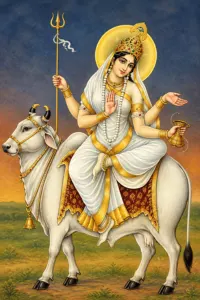
The first day of Navratri is dedicated to Maa Shailputri. She is the first incarnation of Goddess Durga and is associated with Devi Parvati. She is considered a reincarnation of Devi Sati. Her name comes from Shail (mountain) and Putri (daughter), meaning daughter of the mountain king Himavat.
Traditionally, she is depicted riding a bull, holding a trident (tirshul) and a lotus flower, with a crescent moon on her forehead. She governs the Muladhara (Root) Chakra, which is located at the base of the spine and represents stability, grounding, and strength.
Maa Brahmacharini
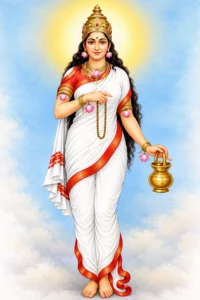
The second form of the Navdurga is Maa Brahmacharini; she is worshipped on the second day of the festival. Her name means ‘one who practices penance.’ She is depicted walking barefoot, dressed in a white or yellow-toned saree. She holds a japamala (Rudrakasha rosary) and a kamandalu (water pot).
Her story is connected with the intense penance performed by Parvati to attain Lord Shiva. She represents devotion, restraint, self-discipline, perseverance, and emotional strength. Her message is very clear: life demands patience, discipline, and faith for certain goals.
Maa Chandraghanta
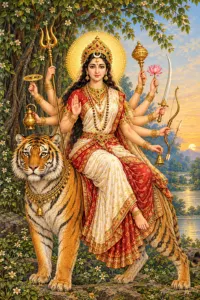
On the third day, devotees worship Maa Chandraghanta, the third form of Navdurga. She has a golden complexion, ten hands and three eyes. Her ten hands hold a trident, sword, bow, arrow, mace, lotus, kamandalu, japa mala and bell, and one hand is in abhaya mudra (blessing posture).
She took this form during her wedding day, when Shiva arrived with the terrifying wedding procession (barat) and asked him to present in a gentle form. Shiva then appeared in the form of Chandrashekhar.
She governs the Manipura (solar plexus) Charka and represents bravery, peace and protection.
Maa Kushmanda
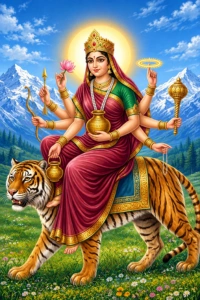
The fourth day is dedicated to Maa Kushmanda, the fourth form of Navdurga. She is often associated with the cosmic energy that brings life and creation into the universe.
It is believed that when there was nothing, Shakti appeared as a divine light. With a gentle smile, Maa Kushmanda created the cosmic egg (the universe) and filled the dark void with warmth, energy, light, and life, bringing galaxies, planets, and living beings into existence.
She represents creative energy, vitality and the power of creation.
Maa Skandamata
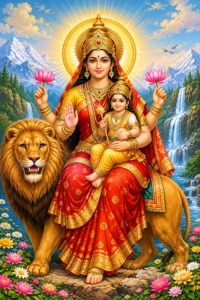
Skandamata is the fifth form of Goddess Durga and is worshipped on the fifth day of the festival. Her name comes from Skanda (another name of Lord Kartikey) and Mata (mother), meaning Mother of Skanda.
She is usually depicted holding the infant Skanda in her lap. This form of the goddess represents motherly love, compassion, and protection. She controls the Vishuddha Chakra (throat chakra), which is associated with purity, clarity, and communication.
Maa Katyayani
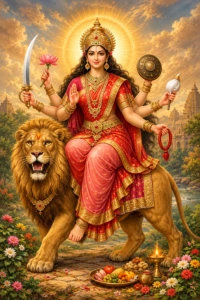
The sixth form is Maa Katyayani. She was born as the daughter of the sage Katyayana after his deep penance and took part in the battle against Mahishasura.
Regarded as a fierce manifestation of Goddess Durga, she is associated with the destruction of evil. She is depicted riding a lion, which represents courage and power. She governs the Ajna Chakra (the third-eye chakra), granting clarity, focus, and spiritual wisdom. Unmarried women often pray to her to remove obstacles to marriage and find a good life partner.
Maa Kaalratri
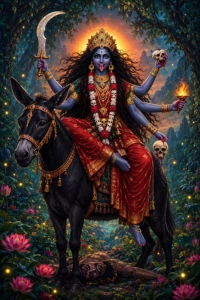
The seventh day is dedicated to Maa Kaalratri, one of the fiercest forms of Goddess Durga. Her appearance may seem frightening, but she is considered to be the protective form of the goddess, who always does good to her devotees, which is why she is known as Shubhankari.
She took this dark, powerful form to defeat powerful demons like Shumbha, Nishumbha and Raktabeej.
Kaalratri represents the destruction of darkness, fear, and evil forces. Her message is interesting—sometimes, you must face your fears instead of running from them.
Maa Mahagauri
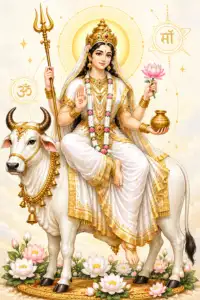
Mahagauri is the eighth form of the goddess and is worshipped on Maha Ashtami. After the fiery energy of Kaalratri, Mahagauri brings a softer and more calm form of the goddess.
When Goddess Parvati performed intense penance to win Lord Shiva as her husband, her skin became covered in dust and black dirt. Pleased with her penance, Shiva accepted her and washed her with the holy water of the Ganges. Her complexion turned glowing and fair, which is why she received the name Mahagauri—Maha (extremely) and Gauri (fair).
She represents purity, serenity and spiritual cleansing.
Maa Siddhidatri
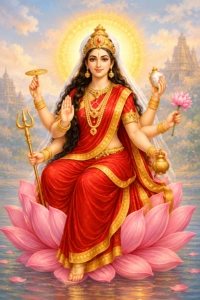
She is the final form of the goddess and is worshipped on Mahanavmi. The word Siddhi refers to spiritual accomplishment or perfection. She is traditionally worshipped as the goddess who grants spiritual wisdom and fulfillment.
Maa Siddhidatri is believed to grant her devotees eight divine spiritual powers (Ashta siddhis): Anima, Mahima, Garima, Laghima, Prapti, Prakambya, Ishatva, and Vashitva. Her worship on the final day signifies the completion of spiritual practices and the fulfillment of worldly and divine desires.
What is the spiritual significance of Navratri?
This festival is not only about celebrations, colorful clothes or Garba, its a period of self-discipline and inner reflection.
Fasting during Navratri is one of the most common practices, but the way people fast differs across families and regions. Certain individuals avoid grains, whereas others opt for a light or satvik diet. Fasting is not mandatory for anyone. Along with fasting, people may spend more time praying, meditating, visiting temples and reading devotional texts.
In simple words, Navratri encourages people to take a break from their daily routine and spend some time with themselves and deepen their spiritual connection.
How is Navratri celebrated across India?
India celebrates this festival in unique regional traditions, honoring the divine feminine energy and the victory of good over evil.
Gujarat- It is known for the high-energy Garba nights and the Dandiya-Raas. Wearing vibrant traditional attire, people gather in spacious open areas and dance in circles around a lamp or a picture of the goddess. Garba is a devotional tradition connected with the worship of feminine energy. Ambaji Temple and Ashapura Mata Temple are among the top spiritual attractions of Gurjarat during this festival.
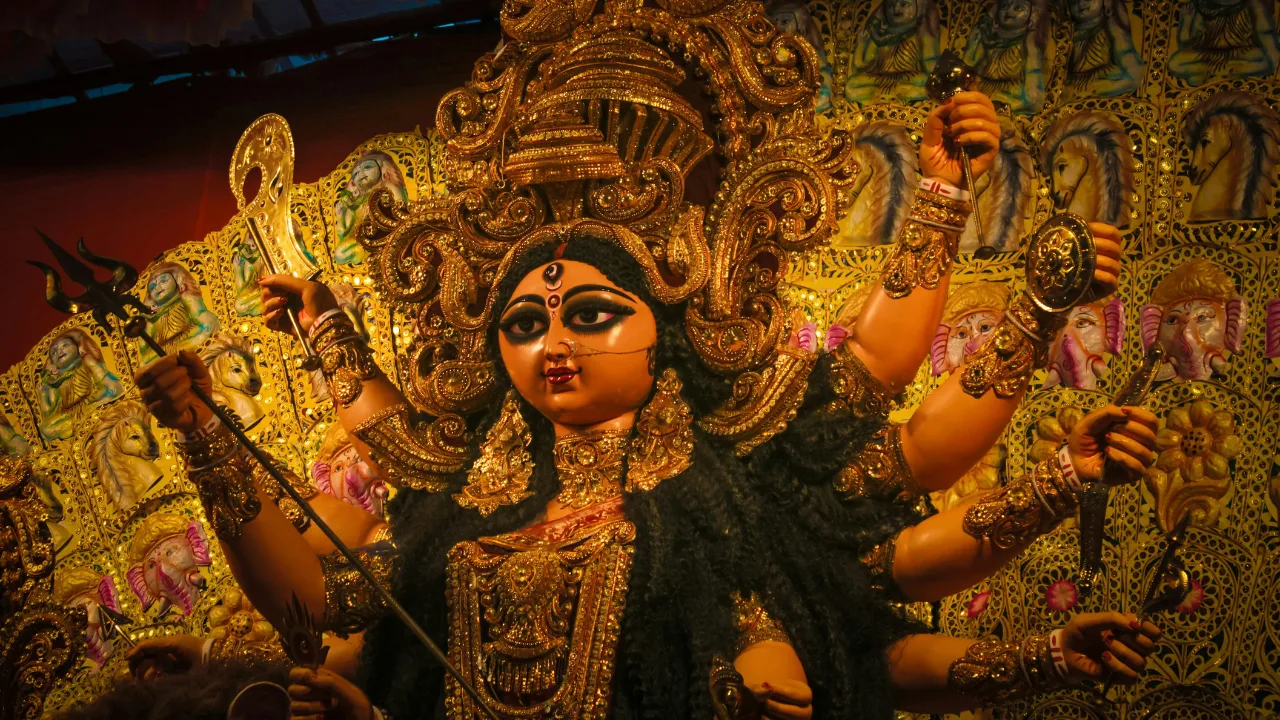
West Bengal- Navratri is associated with the grand celebration of Durga Puja. Huge artistic pandals are created, Goddess Durga idols are beautifully decorated, and entire communities come together to celebrate. Kalighat Temple and Dakshineshwari Kali Temple are the important spiritual sites in the state during this period.
North India- In many parts of North India, Navratri is closely associated with fasting, temple visits and worship of the goddess. The festival also leads to Dussehra or Vijayadashami, marking Lord Rama’s victory over Ravana with Ramlila and by burning effigies of Ravana in many places.
South India- In South India, Navratri has its own beautiful traditions. Families arrange dolls and figurines on decorated steps in a tradition known as Golu or Bommai Kolu. Displays may include gods and goddesses, scenes from mythology, village life, and everyday stories. Meenakshi Amman Temple is among the most beautiful destinations that you can visit in this period.
To experience India’s spiritual dimension during Navratri, the Tulja Bhavani Temple, Karni Mata Temple, and Kamakhya Devi Temple are among the finest devi temples to visit.
Navratri may look different depending on where you are in India, but the heart of the festival remains the same—faith in Shakti and the victory of good over evil.