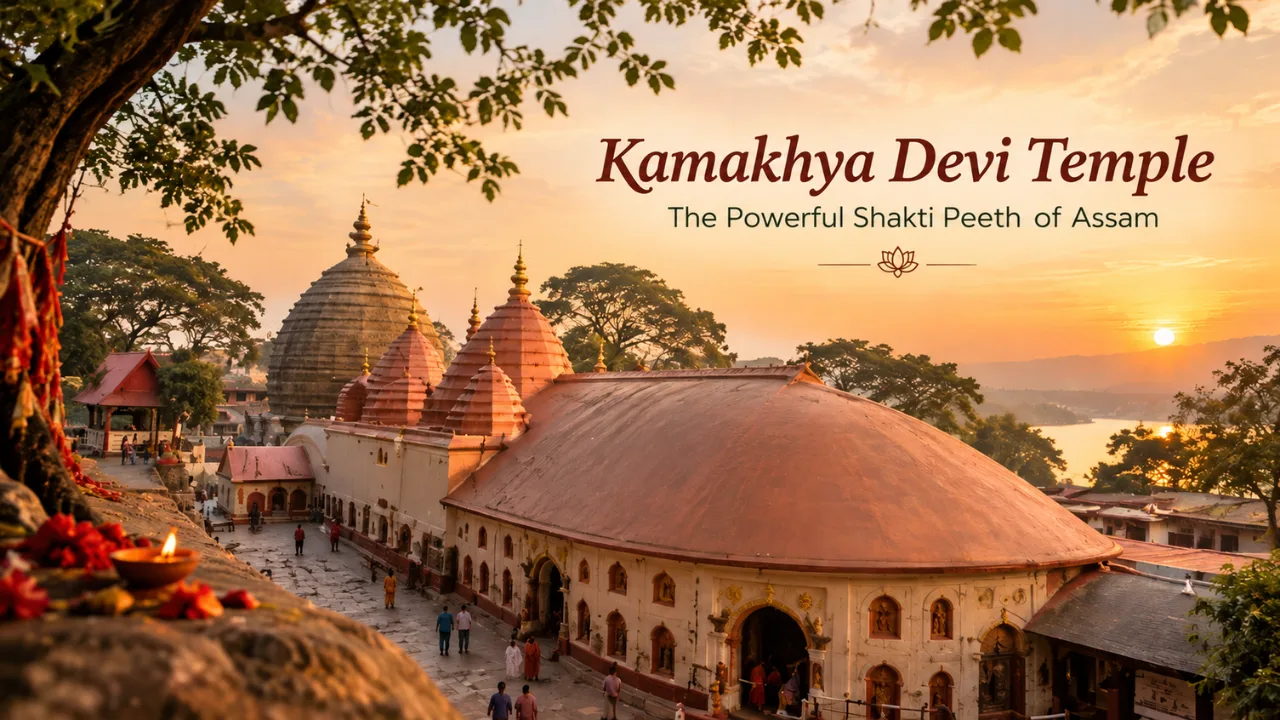
Kamakhya Devi Temple is one of the most important Shakti Peeths in the country. The temple is surrounded by ancient legends, powerful traditions, and a form of worship that may surprise. The shrine doesn’t have a traditional idol of the goddess. Instead, she is worshipped through a natural stone formation connected with the feminine power of creation.
Table of Contents
Where Is Kamakhya Devi Temple?
Kamakhya Devi Temple is located on Nilachal Hill in Guwahati, Assam. This temple is roughly 7-8 km away from central Guwahati and sits quite above the city, offering views of the Brahmaputra River and the surrounding area.
The temple is actually part of a much larger sacred complex. Numerous temples dedicated to various forms of Goddess, Shiva, Vishnu, and other deities are spread across the Nilachal Hill.
Story Behind the Kamakhya Devi Temple
According to Hindu mythology, when Goddess Sati died, Lord Shiva carried her body in grief. To bring Shiva back and stop the destruction caused by his grief, Lord Vishnu used his Sudarshana Chakra. The body of Sati was divided, and different parts are believed to have fallen at different places across the Indian subcontinent.
These places are known as Shakti Peeths.
It is believed that the yoni (womb) of Sati fell on Nilachal Hill. Because of this, the place became closely associated with the creative and feminine power of Shakti.
Another popular story links the place with Kamdeva (the Hindu god of love and desire). When he lost his beauty after angering Lord Shiva, he came to this place to worship the goddess to regain his original form. He performed intense penance and regained his charm again. This is why the place is also associated with desires.
Why is Kamakhya Devi worshipped without an idol?
Inside the main shrine, there is no conventional idol of the goddess. Instead, devotees worship a yoni-shaped stone, which is associated with the creative feminine power of the goddess. The shrine also has a natural spring that keeps the stone moist.
This form of worship is directly connected with Shakti—the feminine energy that represents creation and life. It symbolizes the source of creation and power of Shakti.
Kamakhya and Tantra
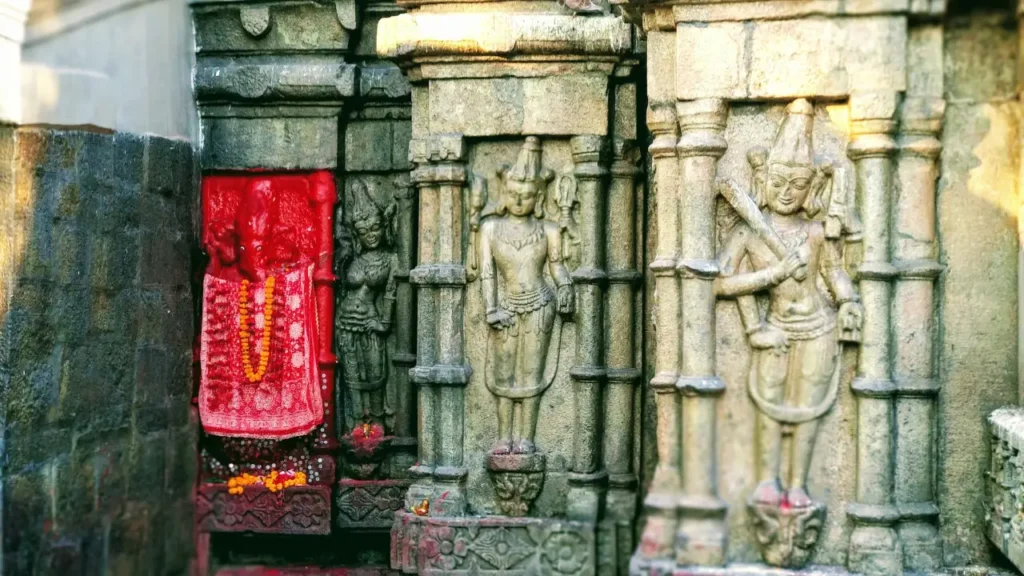
For ages, the Nilachal Hill has been linked to diverse traditions of Shakti worship and Tantric rituals. Assam Tourism likewise highlights Kamakhya as an important center for Shakti worship and Tantra.
Sadhus, spiritual seekers and devotees visit the temple throughout the year. During important festivals, the atmosphere of the temple even gets intense.
But tantra shouldn’t be misunderstood with the mysterious practices. In Hindu traditions, tantras are the spiritual practices that include rituals, meditation, yoga, mantras and more to achieven the spiritual consciousness.
Ten Mahavidyas
The spiritual importance of the Nilalchal Hill goes beyond the main temple. The area has shrines associated with the Ten Mahavidyas, the ten forms of Shakti, also known as Dasa Mahavidya. These are the ten interconnected but distinct forms of the supreme goddess Shakti:
- Kali
- Tara
- Tripura Sundari
- Bhuvaneshwari
- Bhairavi
- Chhinnamasta
- Dhumavati
- Bagalamukhi
- Matangi
- Kamala
Together, these ten forms represent the different aspects of the Divine Mother.
What Is Ambubachi Mela?
Every year, devotees gather at Kamakhya during the monsoon season to observe the traditional belief that Goddess Kamakhya is menstruating.
The temple remains closed for a few days during this period. After the rituals are completed, the temple opens again and devotees gather for darshan. Special kinds of offerings called Angodak (holy water) and Angavastra (a sacred red cloth) are distributed to the devotees.
The belief behind Ambubachi is linked to the idea that nature itself goes through cycles. Just like nature goes through seasons and renewal, the goddess also undergo through her natural cycle. Here, the feminine biology is not hidden from the temple’s religious traditions. Instead, it becomes part of the worship itself.
Best Time to Visit Kamakhya Temple
The temple can be visited throughout the year. But if you want to experience its full vibe, then the Ambubachi festival is the best period to go. It usually held around June-July. If you are visiting during this time, remember this is also one of the busiest periods, with large numbers of pilgrims and visitors.
Navratri is also one of the most beautiful periods to visit this sacred site. And if you prefer a quiet visit to the temple, another time of year may be more comfortable.
Places to Visit Near Kamakhya Temple
The visit to Kamakhya temple can be combined with various spiritual and cultural places.
- Umananda Temple
- Navagraha Temple
- Ugratara Temple
- Basistha Temple
- Sukreswar Temple
With its ancient legends, powerful Shakti traditions, and unique form of worship, Kamakhya Devi remains a place full of mystery and faith. Perhaps that is what makes this temple so fascinating even today.