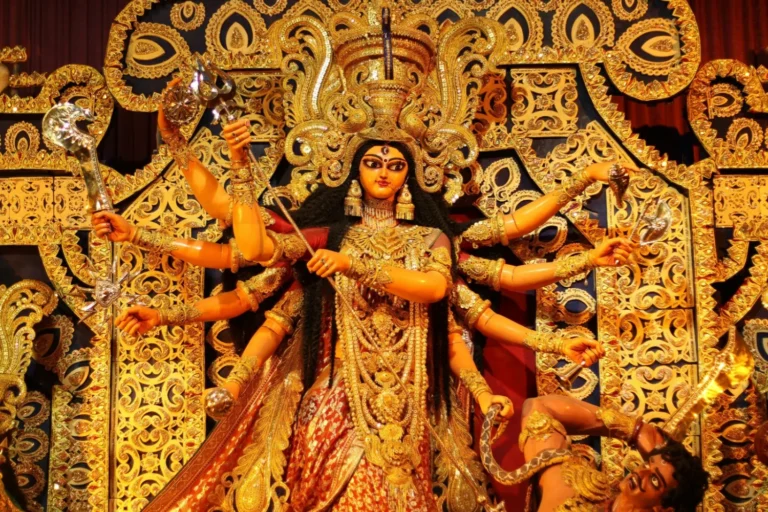

Ashtadasa Maha Shakti Peethas – History and Religious Significance
In India, Shakti is worshipped in many forms; whether it is Goddess Durga, Kali, Lakshmi or Parvati, each form represents a different aspect of the divine feminine power. Among the many sacred temples dedicated to her, the Ashtadasa Maha Shakti Peethas hold a special place.
Ashtadash means eighteen, and these Peethas are eighteen important sacred seats of Goddess Shakti mentioned in a traditional Sanskrit hymn called the Ashtadasa Shakti Peetha Stotram.
Story Behind the Shakti Peethas
According to Hindu mythology, Goddess Sati married Lord Shiva even though her father Prajapati Daksha did not approve of their marriage. Once he organized a grand yajna and invited several gods and kings but deliberately did not invite Shiva and Sati.
Despite Shiva’s refusal, Sati decided to attend the ceremony. However, things took a turn for the worse when Daksha publicly insulted Lord Shiva. Unable to bear her husband’s humiliation, Sati became deeply saddened and sacrificed her life in the sacrificial fire.
Filled with grief and anger, Shiva performed Tandava carrying Sati’s body. To calm him down, Lord Vishnu used his Sudarshan Chakra to dismember Sati’s body, and the pieces fell to different parts of the earth.
These places become Shakti Peethas, also called Shakta Peethas. However, traditionally it is considered that there are 51 or 108 Shakti Peethas, but among them 18 are revered as the supreme Maha Shakti Peethas.
Ashtadasa Maha Shakti Peethas
Here is the traditional list of eighteen Mahashakti Peethas, along with the names of the goddesses and their locations.
- Shankari Devi – Trincomalee, Sri Lanka
- Kamakshi Devi – Kanchipuram, Tamil Nadu
- Shrinkhala Devi – Pandua, West Bengal
- Chamundeshwari Devi – Mysuru, Karnataka
- Jogulamba Devi – Alampur, Telangana
- Bhramaramba Devi – Srisailam, Andhra Pradesh
- Mahalakshmi Devi – Kolhapur, Maharashtra
- Ekaveerika Devi – Mahur, Maharashtra
- Mahakali Devi – Ujjain, Madhya Pradesh
- Puruhutika Devi – Pithapuram, Andhra Pradesh
- Biraja Devi – Jajpur, Odisha
- Manikyamba Devi – Draksharamam, Andhra Pradesh
- Kamakhya Devi – Guwahati, Assam
- Madhaveshwari Devi – Prayagraj, Uttar Pradesh
- Jawalamukhi Devi – Kangra, Himachal Pradesh
- Mangala Gauri Devi – Gaya, Bihar
- Vishalakshi Devi – Varanasi, Uttar Pradesh
- Sharda Devi – Kashmir
Shankari Devi Temple

The Shankari Devi Temple, traditionally considered the first of the eighteen Mahashakti Peethas, is located in Trincomalee, a beautiful coastal town in the northeastern part of Sri Lanka.
The temple stands on a rocky cliff overlooking the Indian Ocean within the Koneswaram temple complex. The original Shankari temple is believed to have been destroyed during a Portuguese invasion in the 17th century. A temple dedicated to the goddess was later rebuilt in the area by the local Hindu Tamils.
Kamakshi Amman Temple
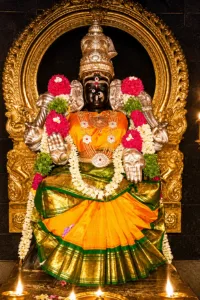
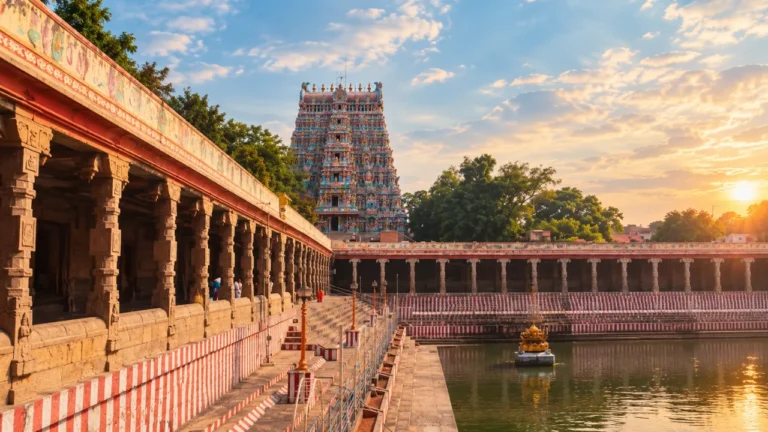
As one of the prime temple towns in Tamil Nadu, Kanchipuram is famous for its historic temples, great architecture, and strong Hindu connections. Among its many temples, the Kamakshi Amman Temple holds a special place. It is dedicated to Goddess Kamakshi, a powerful form of Goddess Parvati.
The devi is seated in Padamasna (a yogic posture), holding a sugarcane bow, flower arrows, a pasha, and an ankusha. It is believed that Kamakshi is the fierce (ugra) form of the goddess. To calm her energy and channel it for the universal well-being, Adi Shankaracharya established a Sri Yantra (Kamakoti Yantra) in front of the deity.
The Kamakshi Amman Temple looks especially beautiful during Navratri and other important festivals, when the temple is decorated and special rituals are performed.
Shrinkhala Devi Temple

Shrinkhala Devi is the third goddess mentioned in the Ashtadasa Shakti Peetha Stotram. Her sacred seat is described as Pradyumna, believed to be present-day Pandua in West Bengal. The name Shrinkhala is associated with binding chains. It is believed that the goddess frees her devotees from difficulties and negative influences.
The old temple was destroyed during Muslim invasions. Today, there is no active Hindu temple or idol at the traditional site. Only the ruins of the temple remain in front of the minaret (constructed by Shah Sufiuddin).
Despite the absence of the shrine, a 30-day festival called Mela Taala is celebrated during the month of Magha.
Chamundeshwari Temple

Situated on the beautiful Chamundi Hills, the Chamundeshwari Temple is one of the most famous temples in Karnataka. The temple is dedicated to Goddess Chamundeshwari, a fierce form of Goddess Durga. She is believed to have defeated the demon Mahishasura, who was troubling the gods and causing problems throughout the universe.
According to local tradition, the city Mysuru got its name from Mahishasura. The temple is particularly popular during Mysuru Dasara, when Goddess Chamundeshwari is worshipped with great devotion. During this period the idol is adorned with beautiful Navdurga decorations.
Jogulamba Devi Temple
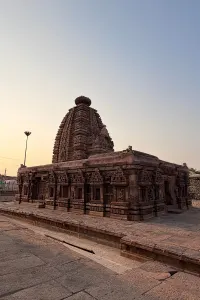
Jogulamba Devi Temple is located in the historic temple town of Alampur in Telangana, near the confluence of the Tungabhadra and Krishna rivers. The name Jogulamba is derived from Yogula Amma (Mother of Yogis). It is believed that the upper teeth (or upper jaw) of the goddess fell here.
Goddess Jogulamba is worshipped in a rare, fierce form, seated on a corpse and adorned with scorpions, frogs and lizards on her head. The complex is located right next to the historic Badami Chalukya style Nava Brahma temples of the 7th to 8th centuries dedicated to Lord Shiva.
Alampur is sometimes called Dakshina Kashi due to its religious significance. Its old temples are also fine examples of early Chalukya architecture.
Bhramaramba Devi Temple

Srisailam is one of the most sacred pilgrimage sites in Andhra Pradesh. Located in the beautiful Nallamala Hills, it is surrounded by forests and the Krishna River.
It is the place where Goddess Sati’s neck is believed to have fallen, making it a part of Ashtadasa Maha Shakti Peethas. This is a rare and sacred site where a Shakti Peetha and a Jyotirlinga (Mallikarjuna Swamy) reside together in the same temple compound.
According to legend, the goddess took the form of a bee (Bhramari) along with a swarm of six-legged bees to kill the demon Arunasura, who had a boon that he could not be killed by two or four-legged beings.
Mahalakshmi Temple

Mahalakshmi Temple of Kolhapur is one of the most famous Shakti temples of Maharashtra. The goddess is also popularly known as Ambabai. The goddess is worshipped here as a form of Shakti and the consort of Lord Vishnu.
It is counted among the three and a half Shakti Peethas in the Shakta tradition. This ancient temple is built in the Hemadpanti style, using black stones joined together without mortar.
One of the most interesting features of the temple is the Kirnotsav festival, also known as the festival of sun rays, which is held twice a year. During this special event, the rays of the setting sun fall directly on the idol of Goddess Mahalakshmi.
Ekaveerika Devi Temple
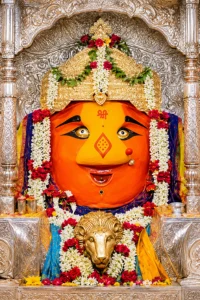
The Ekaveerika Devi Temple is situated in the Mahur village of Maharashtra. It is often believed that the head or shoulder of Goddess Sati fell here.
Goddess Ekaveerika is associated with Renuka Devi, who is the mother of Lord Parashurama, the sixth avatar of Lord Vishnu. Mahur village is also the birthplace of Lord Dattatreya (a composite form of Brahma, Vishnu, and Shiva) and therefore holds great significance in Hindu traditions.
The sacred connection with Renuka Mata and the ancient religious traditions of Mahur make this temple an important part of the Ashtadasa Maha Shakti Peethas.
Mahakali Temple

Ujjain is one of the oldest and holiest cities in India. It is famous for the Mahakaleshwar Jyotirlinga, but the city is also home to the significant Harsiddhi Mata Temple. The temple was built by the king Vikramaditya.
The Harsiddhi temple is traditionally identified with the Mahakali Peetha mentioned in the Ashtadash Shakti Peetha Stotra. Goddess Mahakali is worshipped here as a powerful form of the divine mother. She represents the strength that destroys evil and protects the universe.
The temple is famous for its two tall stone Deep Stambhs (lamp pillars), which are illuminated with hundreds of lamps during the evening aarti and Navratri.
Puruhutika Devi Temple
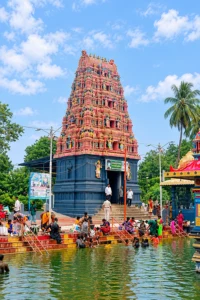
Pithapuram is an important religious town in Andhra Pradesh, known for its ancient temples and spiritual traditions. The Puruhutika Devi Temple is located within the Kukkuteswara Swamy Temple complex and is dedicated to Goddess Puruhutika.
Kukkuteshwara Swamy Temple is dedicated to Lord Shiva and is an important part of the pilgrimage here. The site is also known as Pada Gaya, one of the three sacred Gaya Kshetras (Trigaya Kshetrams) associated with rituals for ancestors.
It is believed that the king of gods, Indra Deva, had performed penance here to please Shakti.
Biraja Devi Temple

Biraja Devi Temple is located in Jajpur, Odisha, an ancient religious center situated near the Vaitarani River. Biraja Devi is worshipped as a form of Goddess Durga and is also known as Girija in the Ashtadasa Maha Shakti Peetha tradition.
The idol of Biraja Devi is depicted with two arms, holding a spear in one hand and pulling the tail of Mahishasura with the other. This place is also known as Nabhi Gaya, where Sati’s navel is believed to have fallen. It is also part of the Trigaya Kshetras, an important center for the Shradh rituals.
The temple complex features the traditional Kalinga architecture and houses shrines for Bagalamukhi Devi and numerous Shiva Lingams.
Manikyamba Devi Temple

Manikyamba Devi Temple is located in Draksharamam, a famous pilgrimage center in Andhra Pradesh. It is part of the famous Bheemeswara Swamy Temple complex, which is one of the Pancharama Kshetras dedicated to Lord Shiva. According to belief, the left cheek of Goddess Sati fell here.
The Bheemeshwara Swamy Temple is famous for its grand architecture, intricately carved pillars, and massive stone structures, and is beleived to date back to the Eastern Chalukya era. The combination of the Shiva temple and the shrine of Goddess Manikyamba makes Draksharamam an important destination for devotees.
Kamakhya Devi Temple

The Kamakhya Temple an important centre of Tantric traditions. Built on the Nilachal Hill in Guwahati, Assam, this temple is dedicated to Goddess Kamakhya, a powerful form of the divine feminine.
The main temple has a natural rock formation depicting the yoni, which is worshipped as the source of creation and feminine energy. One of the most unique festivals celebrated here is the Ambubachi Mela. It is believed that Goddess Kamakhya undergoes her annual menstrual period during this time. The temple is closed for a few days and reopens after special rituals.
The temple complex also houses shrines to the Dasa Mahavidyas, the ten great goddesses of wisdom in Hindu traditions.
Madhaveshwari Devi Temple

Prayagraj is famous for the Triveni Sangam, the sacred confluence of the Ganges, Yamuna, and the mythical Saraswati rivers. It also houses the temple of Goddess Madhveshwari, which is referenced in the Ashtadash Shakti Peetha Stotram.
There is no traditional idol in the main sanctum, but a wooden cradle is worshipped which symbolises the invisible presence of the Divine Mother and thus the temple is also known Alopi Devi temple.
The city has been an important centre of Hindu pilgrimage for centuries and the atmosphere here becomes completely different during festivals like Navratri, Magh Mela and Kumbh Mela.
Jwalamukhi Devi Temple

Located in the Kangra district of Himachal Pradesh, the Jwalamukhi Temple is one of the fascinating Shakti Peethas where the goddess is worshipped through eternal divine flames. It is believed that the tongue of the goddess Sati fell here.
There are nine distinct flames that are burning continuously from a rock without any oil, wick or human intervention. Each flame represents a different form of the divine feminine and are considered extremely sacred by devotees.
According to local lore, Mughal Emperor Akbar tried to extinguish the fire but failed. He offered the goddess a golden chhattar, but she refused the gift and the chhattar turned into an unknown metal.
Mangala Gauri Temple

Gaya is an important pilgrimage site as it is associated with Pind Daan and rituals for departed ancestors. The Mangala Gauri Temple holds a special place in the region and is dedicated to Goddess Mangala Gauri who is worshipped as a form of Goddess Parvati.
The deity represents benevolence and vatsalya (or the motherly affection). It is believed to be the sacred place where the breast of Goddess Sati fell. It also has mentions in Agni Purana, Vayu Purana, Padma Purana, and Devi Bhagwat Purana.
Built around the 15th century, this temple features a cave-like sanctum. It is believed that an eternal flame has burned within the temple for centuries.
Vishalakshi Devi Temple

Varanasi also known as Kashi is one of the oldes cities in Hinduism and a major centre of Hindu spirituality.Along with the famous Kashi Vishwanath Temple, the city also houses the Vishalakshi Devi Temple, dedicated to Goddess Vishalakshi.
The name Vishalakshi means the goddess with large, beautiful eyes. She is revered as an avatar of Goddess Parvati and viewed as a protector of her devotees. The temple is located near Manikarnika Ghat, which holds an important place in Hindu tradition with the belief of attaining moksha.
Sharada Peeth

The Sharada Peeth is traditionally regarded as the eighteenth and final sacred seat in the Ashtadasa Shakti Peetha Stotram.
It is located in the Neelam Valley of the Kashmir region, which is currently under Pakistani occupation. The temple is dedicated to Goddess Sharada, a form of Goddess Saraswati and a symbol of knowledge, wisdom, education and music.
Sharada Peeth was once an important centre of learning and religious knowledge and holds a special place in the cultural and spiritual history of Kashmir. Sharada Peeth is not currently an easily accessible pilgrimage destination because of its location across the Line of Control. Its ruins stand near the Kishanganga River.
The Ashtadasa Maha Shakti Peethas beautifully depict the importance of Goddess Shakti in Hindu tradition. They remind us of the many forms of the Divine Mother and the deep devotion associated with her worship.