Shrinathji – History, Significance and Nathdwara Temple
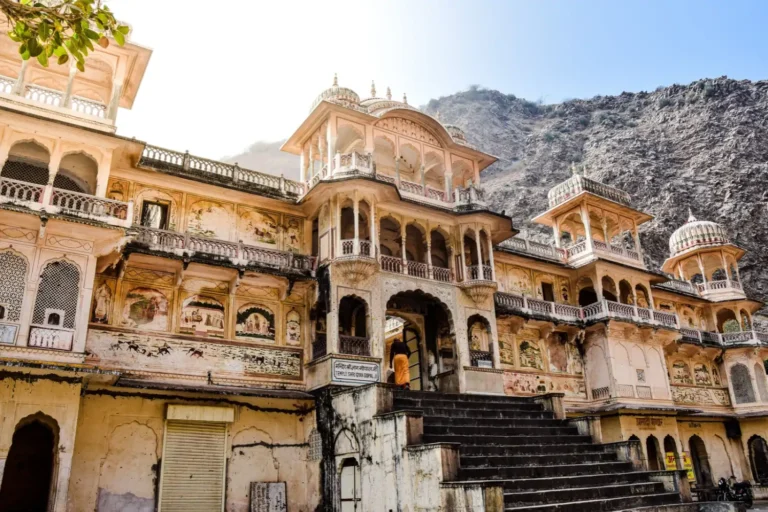
There is an interesting story behind every form of Lord Krishna. Shrinathji is one of the most beloved forms of Lord Krishna, especially among devotees of the Pushtimarg tradition. His famous temple in Nathdwara is known for its beautiful darshan, unique daily rituals, and colorful Pichwai paintings.
Who is Shrinathji?
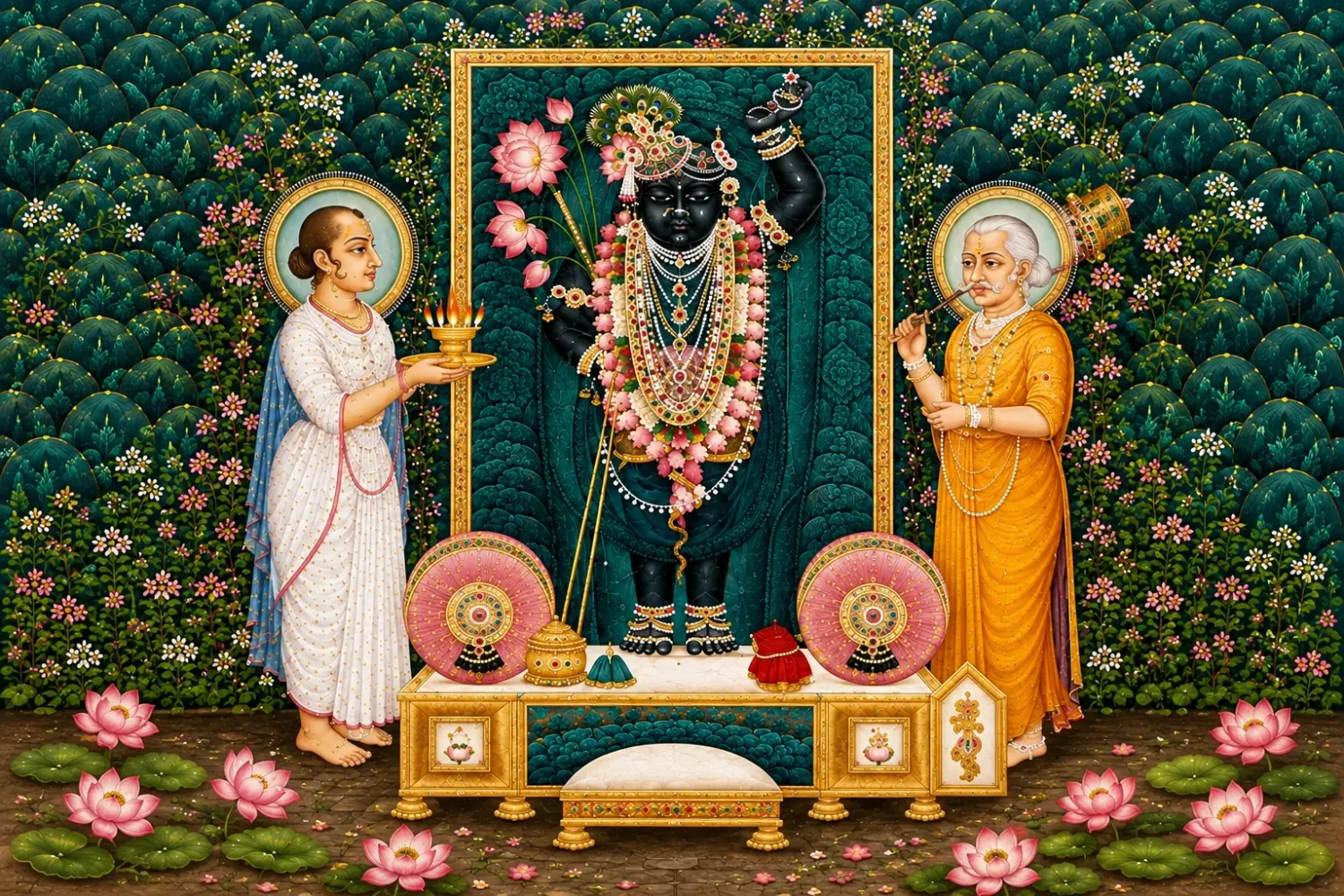
Shrinathji is a form of Lord Krishna, worshipped as a seven-year-old boy lifting Govardhan Parvat in his left hand, with his right hand resting near his waist. His name means Lord of Shri, where Shri signifies prosperity, auspiciousness, or the goddess Lakshmi. The name is also associated with Shri Govardhannathji.
Shrinathji is worshipped as a living child, devotees believe that he wakes up, gets dressed, eats, rests, and enjoys different activities throughout the day, and this belief is also part of the temple traditions in Nathdwara.
Where is Shrinathji Temple located?
The famous Shrinath Ji Temple is located in Nathdwara, a small town in the Rajsamand district of Rajasthan. It is situated around 45–50 km from Udaipur and is easily accessible by road. The town is also known for its traditional paintings, religious shops, sweets, and local markets.
Story of Shrinathji’s Appearance
According to tradition, a cow of a local herd climbed Govardhan Hill each afternoon and poured her milk over a spot on the hill. When her owner followed her, he discovered a black stone arm emerging from the hill.
People believed that Lord Krishna himself appeared from the hill. Over time, more parts of the idol became visible. The appearance of Shrinath ji became an important event for the Krishna devotees.
Why Does Shrinath Ji Lift His Left Hand?
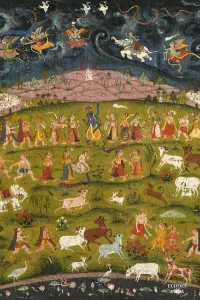
According to Hindu mythology, people of Braj worshipped Lord Indra (god of rain) to receive good rainfall. However, Krishna asked them to worship Govardhan Parvat instead, as it provided them with food, grass, and shelter for their cattle.
This made Indra angry, he sent heavy rains and thunderstorms to the area. Seeing the villagers in trouble, young Krishna lifted the entire Govardhan Hill on his little finger and asked everyone to take shelter beneath it. He held the mountain for seven days, protecting everyone from the storm. Eventually, Indra realized his mistake and accepted Krishna’s greatness.
Shrinathji’s raised left hand represents this moment. It signifies Krishna’s love and protection for his devotees.
Why are Shrinathji’s eyes half closed?
One of the most unique features of Shrinathji is his half-closed eyes, which is completely different from many other forms of Lord Krishna. Traditionally, his eyes are depicted looking slightly downward toward his feet. This is not just an artistic choice but also has a spiritual meaning.
In Pushtimarg tradition, Shrinath Ji’s downward gaze is associated with divine grace (Pushti). It symbolizes the Lord showering his grace upon devotees who seek refuge at his feet. His gentle expression is also seen by devotees as a sign of compassion, acceptance, and love.
However, the half-closed eyes also describe the calm and meditative appearance of Shrinathji.
Shrinathji and Shri Vallabhacharya
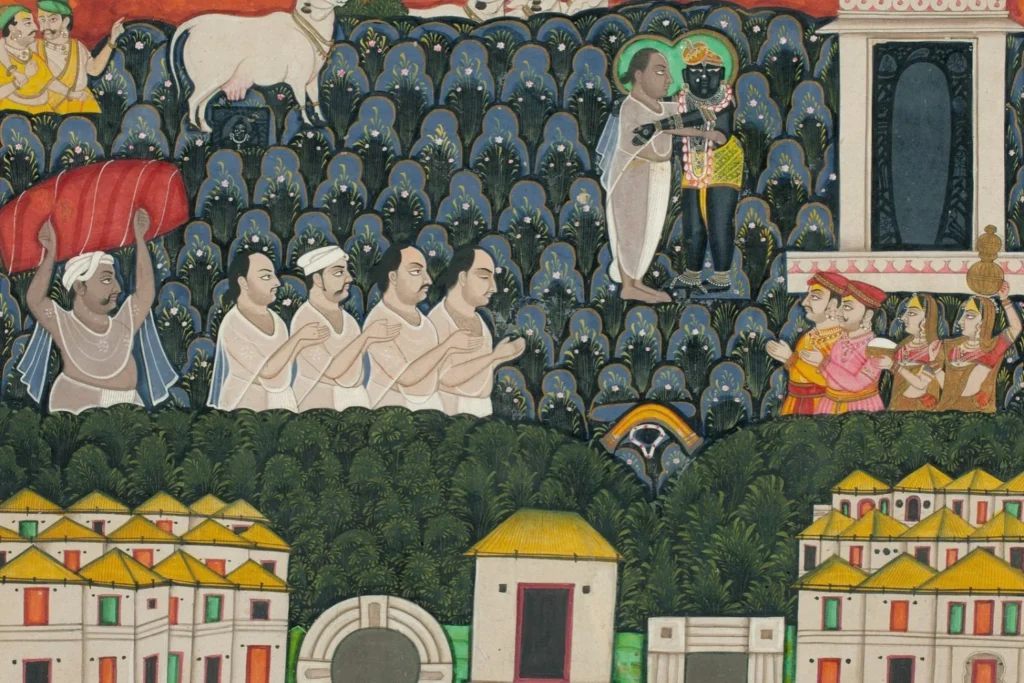
Sri Vallabhacharya was born in 1479 into a Telugu Brahmin family and dedicated his life to spreading the teachings of Krishna. He taught that a devotee could develop a loving relationship with Lord Krishna through devotion and his divine grace.
His teachings became the foundation of the Pushtimarg, which means the Path of Grace. In this tradition, Krishna is worshipped not as a distant deity but as one very close to the devotee. Therefore, devotees treat Shrinathji like a beloved child who needs food, clothing, rest, and care.
Shri Vallabhacharya’s son, Shri Vitthalnath Ji, also played an important role in developing and organizing the tradition of Shrinath Ji’s seva.
How Did Shrinathji Reach Nathdwara?
Under the rule of Mughal Emperor Aurangzeb in the late 17th century, followers of Shrinathji were concerned about the protection of the deity and decided to move him away from the Govardhan Hill.
Under the leadership of the then Tilakayat, Shri Dauji Maharaj, the idol was taken to Mewar in Rajasthan. This journey was not easy, as the group had to travel with the deity and his belongings.
The chariot carrying Shrinathji finally stopped at a place called Sinhad in Mewar. Despite attempts to move it, the wheel remained stuck in the ground. Devotees considered this as a sign that Shrinathji wished to remain there. Maharana Raj Singh, the local ruler of Mewar, offered protection, and a temple was built at the site. The temple is popularly known as Shrinathji Haveli.
This place gradually came to be known as Nathdwara, which means Gateway of the Lord.
Eight Daily Darshans of Shrinathji
One of the most beautiful traditions at the Nathdwara temple is the Ashtayam Seva, which includes eight daily darshans.
Mangala Darshan: This is the first darshan of the day when Shrinath Ji is lovingly woken up in the morning.
Shringar Darshan: Shrinath Ji is bathed and dressed in beautiful clothes, jewelry, and flowers.
Gwal Darshan: This darshan represents Krishna going out with his friends and cows to enjoy his time in the fields.
Rajbhog Darshan: A grand meal is offered to Shrinath Ji. This is one of the most important darshans of the day.
Utthapan Darshan: After resting in the afternoon, Shrinath Ji is woken up.
Bhog Darshan: Afternoon food offerings are made to Shrinath Ji.
Sandhya Aarti: This is the evening worship when lamps are offered and devotional songs fill the temple.
Shayan Darshan: This is the final darshan of the day when Shrinathji prepares to rest for the night.
The timings for these darshans are not fixed throughout the year and may vary depending on the season, festivals, and special occasions.
Festivals Celebrated at Shrinathji Temple
Festivals are celebrated with great devotion at the Shrinathji Temple. The temple looks especially beautiful during these occasions, with special decorations, traditional clothes, music, and food offerings. Some of the important celebrations include:
Janmashtami– Celebrates the birth of Lord Krishna. The temple is beautifully decorated, and devotees gather to celebrate the occasion with prayers, devotional songs, and special rituals.
Annakut– Celebrated on the day after Diwali and is connected with the story of Govardhan Puja. On this day, various food items are prepared and offered to Lord Shrinathji.
Holi– It is celebrated with great excitement in special Pushtimarg traditions, special colors, flowers, and music make the celebration even more special.
Diwali– The temple is decorated with lights and beautiful arrangements during Diwali. Special offerings and rituals are performed to celebrate the festival.
Sharad Purnima– Another special occasion when the temple follows beautiful seasonal traditions to celebrate the full moon night.
Pichwai Paintings
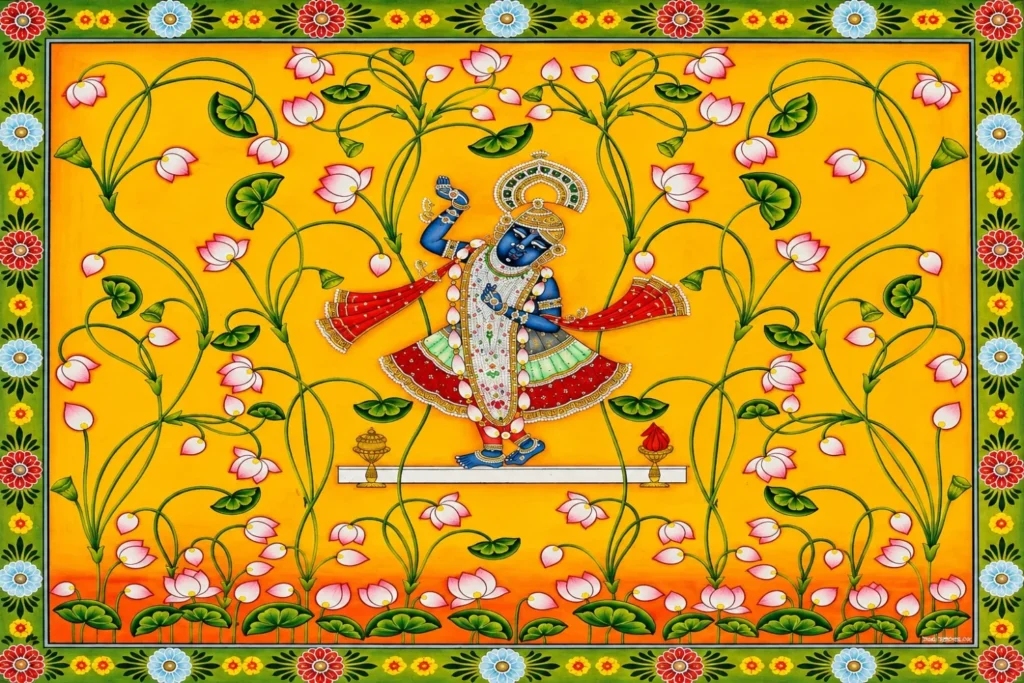
Nathdwara is especially famous for its Pichwai paintings, which are closely associated with the worship of Shrinathji. They are traditionally created on cloth and placed behind the deity in the temple as a decorative background. These paintings often depict Shrinathji in various forms and settings. Some feature beautiful lotus ponds, while others show cows, peacocks, trees, and scenes from Krishna’s life.
The designs also change according to festivals and seasons. For example, special Pichwai paintings are made for Annakut, Janmashtami, and Sharad Purnima. With time this art has become an important part of Rajasthan’s cultural heritage.
How to Reach Shrinath Ji Temple?
If you are planning to visit Shrinath Ji Temple, here are the different ways to reach Nathdwara.
By Air– The nearest major airport is Maharana Pratap Airport in Udaipur. From there, you can hire a taxi or travel by road to Nathdwara. Get best deals on flight bookings.
By Train– Udaipur City Railway Station is a convenient major railway station for reaching Nathdwara. You can continue your journey by taxi or bus.
By Road– Nathdwara is well connected to Udaipur and other major cities of Rajasthan by road. Buses, taxis, and private vehicles are available.
Best Time to Visit Shrinathji Temple
The best time to visit Nathdwara is generally from October to March, when the weather is more pleasant for travelling and exploring the town. However, if you want to experience the temple on a special occasion, you can plan your visit around Janmashtami, Annakut, or Holi. These festivals bring a different energy and crowd to the temple.
Places to Visit Near Shrinathji Temple
If you have some extra time after visiting Shrinath Ji Temple, you can explore a few other interesting places around Nathdwara.
- Eklingji Temple
- Haldighati
- Dwarkadhish Temple
- Rajsamand Lake
For devotees, Shrinathji is a member of their family, someone they love, care for, and serve every day. The story of Shrinath Ji shows how devotion can become a beautiful part of everyday life. If you ever plan a trip to Rajasthan, you can include Nathdwara in your journey and experience the special atmosphere of Shrinath Ji Temple.